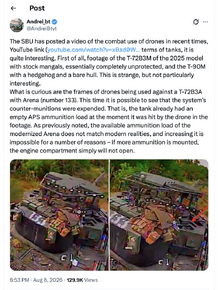
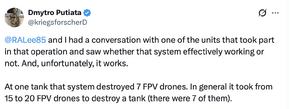
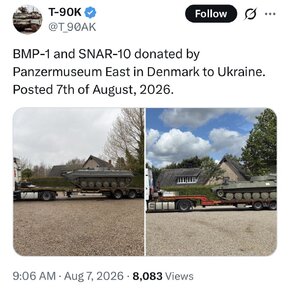
View attachment 55385
He says he hasn’t even touched on the cost. Say $50,000 per drone (probably some slightly less, but many are likely significantly more, so I will call this a conservative estimate) 550 come at a price tag of 27.5M USD or $850M per month, likely a lot more. Even this number, however, represents about 12% of the total 2025 defense
budget. Again, in my opinion, this is a conservative estimate (but I stand to be corrected). Moreover, this includes only the cost of drones themselves, no other expenses associated with these strikes. And this is mostly to hit irrelevant infrastructure. And in 2025, Russia reportedly
lost about $13B in oil revenue due to these strikes. And… You are catching my drift.
Many are completely deluded on the subject though. This is a normal perception:
View attachment 55387
Here is a bit more of reality:
We parsed the main Russian monitoring channels for reports of drone interceptions in Moscow and Moscow Oblast. In total, we recorded around 1,500 reported detections and interceptions.
To understand the scale:
According to Sobyanin, 6,225 drones flew toward the Moscow region in July alone. Of those, 780 were reportedly intercepted on the approaches to Moscow.
- Map 1 — interceptions only.
- Map 2 — air-defense positions in Moscow and Moscow Oblast.
- Map 3 — both layers combined.
Now to the results of our sample. To put it mildly, they are disappointing:
- Around 1,400 drones — approximately 93% — were intercepted on the first and second defensive lines in the region.
- Around 100 drones — approximately 6% — reached the third defensive line around the Moscow Ring Road.
- Inside Moscow itself — exactly one drone, or 0.07%.
One. A single drone.
And what actual targets were hit over the past two months? This is almost the entire list:
- The Kapotnya oil refinery, several times in June
- The Dubna Space Communications Center
- Wildberries warehouses and logistics centers
- Several industrial zones and residential buildings damaged by debris
That is all.
Against the backdrop of thousands of launches, this is not even a drop in the ocean. It is almost ridiculous.
If the strategy was to force Russian air defenses to waste all their missiles in this area, it has failed. Their systems remain operational, their missile stocks appear sufficient, and the defensive ring is working.
If the goal was to find routes for a breakthrough, the map shows that approaches were tested from every direction. There are no open corridors.
Decide for yourselves whether this is acceptable or not.
I simply copied this post (legit and respectable UA OSINT account, for those who are not familiar with it):
DroneBomber (@DrnBmbr) on X
I am certain that there's little to no economic sense in these strikes (most definitely the latter for Moscow region, it is extremely ineffective and overwhelmingly costly). I would love to see a similar table for the Ukrainian strikes like one in the following article for the Russian weapons:
As Ukraine devises ingenious ways to defend its population from Russia’s precision aerial bombardment, Russia’s Shahed one-way attack drones continue to operate with a cruel logic of attrition.

www.csis.org
Note how that table fully explains reduced number of Geran UAVs (and reported likely transition to jet-powered Grans), reduction in production of cruise missiles, as well as Kinzhal, and lean on Iskander-M. Today’s reality of lack of interceptors only makes delivery of the payloads cheaper. The simple thing is that Russia likely causes more damage with one Iskader-heavy strike than Ukraine does in a few months. This is not a sustainable or advantageous strategy. “Quite successful” is not how I would describe it.
As for Flamingos… I believe out of about 4 dozens launched so far, only two made it and I am not even sure if both hit the target (I think one may have missed? Maybe not, I don’t remember). Past few launches (of multiple missiles each) were all intercepted by Ru aviation. Ukraine now says that they need to deal with the Russian aviation in order to make the Flamingos wunderwaffe effective again (as if it ever was), without mentioning that it is basically just a turd, at least for now.
Today, Rassvet (the Russian “equivalent” of Starlink) covers Ukraine for 2 to 3 hours a day, which is expected to increase to 4 to 6 by October. This is from the Ukrainian reports. So not a few minutes. This capability and the expected increase comes from the satellites that
had already been launched and the next batch will only extend the coverage in the months (not years) to come. Worth a read:
Russia Rassvet satellite network now provides two daily communication windows over Ukraine each lasting more than an hour, Ukraine’s GUR intelligence confirmed Aug. 10, as Russia deploys its Bureau 1440 constellation faster than planned and analysts warn its sovereignty claim depends on

www.techtimes.com
Fire Point (strangest company ever, by the way) is now “developing” epic satellite interceptors to deal with the issue.
Since there is space for two more attachments, I will use the opportunity.
View attachment 55388
His face expression in the captured moment basically describes the situation.
View attachment 55389
Things are looking up! I love how the UA media presents it as (bolding mine):
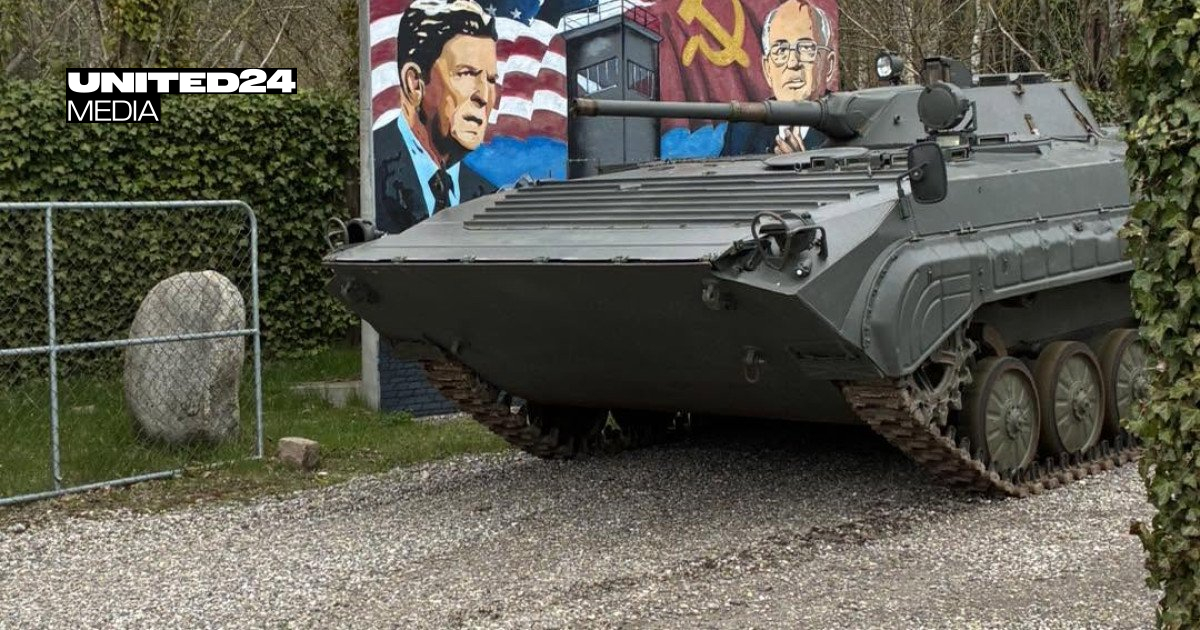
A Danish military museum, Panzermuseum East, transferred a batch of armored vehicles[…] The delivery included a BMP-1 infantry fighting vehicle and an MT-LB tracked armored platform equipped as a SNAR-10 ground artillery reconnaissance station.
A Danish museum sent a BMP-1 and a SNAR-10 radar to Ukraine on August 7, 2026. The system spots land targets up to 17 km away.

united24media.com