The first recorded use of a commercial UAS rigged to drop grenades/mortar shells was in the 2015/16 period in Iraq by IS. These however were dropped on troops rather than through the hatch of a vehicle. Also, if I'm not mistaken the first attempt to arm a UAS was by the Iranians in the 1980s. They rigged 4 RPG rounds to a Mohajir UAS but it's unknown if was actually used.
I suppose you can stretch it to mean the four illegally annexed regions, but I would imagine the intent is to prevent Russian citizens in formal Russian terrority (say someone in St Petersburg) eligible for the draft from fleeing.
This is definitely new for Russia. This is a permanent population relocation, or at least semi-permanent, with housing certificates to be offerred. I believe the situation is as follows; Putin has ordered Kherson to be held, and Surovikin is willing to do it even if all he holds at the end is piles of rubble. But to facilititate this kind of desperate "at-all-costs" defense, they're evacuating the population. The potential threat of flooding may be real or a pretext.
On the Ukraine side I was referring to the situation in Mariupol'.
This is definitely new for Russia. This is a permanent population relocation, or at least semi-permanent, with housing certificates to be offerred. I believe the situation is as follows; Putin has ordered Kherson to be held, and Surovikin is willing to do it even if all he holds at the end is piles of rubble. But to facilititate this kind of desperate "at-all-costs" defense, they're evacuating the population. The potential threat of flooding may be real or a pretext.
I don't think that's true. And unless the relocation becomes involuntary, kidnapping is a pretty bold claim. Let's wait and see how this is actually carried out. Considering it might become the scene of heavy fighting, it's an open question whether even a forced evacuation would be all that problematic. The real question is what happens to the people there after they evacuate. Will they be free to return to Ukraine by way of Belarus or Poland if they so choose? If yes, it certainly won't qualify as kidnapping. If the evacuation isn't forced, i.e. they're allowed to stay if they want, then there also isn't much to talk about.
I don't think that's true. And unless the relocation becomes involuntary, kidnapping is a pretty bold claim. Let's wait and see how this is actually carried out. Considering it might become the scene of heavy fighting, it's an open question whether even a forced evacuation would be all that problematic. The real question is what happens to the people there after they evacuate. Will they be free to return to Ukraine by way of Belarus or Poland if they so choose? If yes, it certainly won't qualify as kidnapping. If the evacuation isn't forced, i.e. they're allowed to stay if they want, then there also isn't much to talk about.
Битый небитого везет. Уничтожение российским вертолетом при помощи удара ракетой ЛМУР («Изделие-305») украинской БТС-4, буксирующей трофейный российский Т-62М с "козырьком" на переправе в Херсонской области. @milinfolive
На видео ракета ЛМУР (Изделие-305) уничтожает украинской БРЭМ-1, буксирующий через понтонную переправу подбитый русский Т-62 с домиком. Но забавен результат прилета. БРЭМ-1 - понятное дело на пусечки: Потонули оба... Но почему вся переправа накрылась медным…
afirsov.livejournal.com
The crossing across the Ingulets where we saw a Ukrainian BTS towing a captured T-62M getting hit by a Russian LMUR.
Уничтоженная в районе села Великое Артаково Николаевской области американская компактная РЛС обнаружения позиций артиллерии AN/TPQ-49 на шасси автомобиля HMMWV, стоявшая на вооружении ВСУ.
t.me
Allegedly Ukrainian 2S1 and 1V14 command vehicle destroyed, Kherson region.
Интересные кадры со стрельбой из гаубицы М777 На видео видно работу индукционной настройки заряда взрывателя высокоточного снаряда Excalibur. Грубо говоря, это как чип NFC в мобильном телефоне, через который программируют снаряд. То есть, если поставить помеху РЭБ, то есть вероятность того...
t.me
A weapons cache has been found by Russian security forces in Kherson.
⚡️В Херсоне обнаружен схрон сотрудника СБУ с множеством американского аружия "В схроне у сотрудника СБУ, сбежавшего на подконтрольную Киеву территорию, хранились три автомата, в том числе американский автоматический карабин М4А1, оптические прицелы, два ружья и обрез, патроны к ним. Также...
t.me
Fresh satellite photos of the Novo-Kahovskaya dam, where you can see the new crossings set up by Russia.
В Энергодаре расстреляли машину главы российской военно-гражданской администрации Александра Волги. По информации с мест, он остался жив, его увезли на скорой помощи с огнестрельными ранениями. С реальными ДРГ и агентурой бороться - это не опору немецкого моста времён войны под видом...
t.me
Russian reservists are training in Zaporozhye region. They're relatively well equipped and given they're training inside Ukraine they are likely meant to see action relatively soon. Note I think this is the first time we see what looks like squad level training, clearing buildings, and moving together.
Russia is still attempting to counter-attack at Terny, Torskoe, and Novosadovoe, but so far not success. After some initial gains it appears the counter-attack has stalled.
‼️ Контрнаступление продолжается: "️тважные" и силы ZVO прорываются в сторону Лимана, враг отступает и пытается контратаковать ▪️После подхода наших подкреплений в Кременную-Сватово и неудачной атаки врага 2 дня назад армия России пошла в контрнаступление в направлении...
t.me
Russian forces are building a massive defense line in Ukraine. It's being dubbed the "Wagner line".
Артиллеристы 1-й Славянской бригады уничтожили БМП ВСУ под Опытным Попытки противника подтянуть резервы в направлении н.п. Опытное закончилось уничтожением их БМП. Военнослужащие 1-й Славянской бригады жёстко пресекают попытки противника сосредоточить силы, огневое поражение которой наносится...
Обстрелы подразделениями ВСУ села Нижняя Дуванка (ЛНР) разрушили практически всю промышленную и социальную инфраструктуру в населенном пункте. На кадрах последствия недавних ударов американскими ракетами HIMARS по частном агрокомплексу и местному дому культуры. t.me/ukrainian_guide
t.me
An antiquated D-1 howitzer has been spotted in Lugansk region, likely being used by LNR forces. This is probably what Kenigtiger was talking about when he mentioned even older artillery being deployed to rebel units.
Mobilized personnel in Pecheneg, home of the 200th Motor-Rifles. Note how certain areas, namely the Pacific and the Northern fleets, have much better equipped mobilized personnel. There are definite regional differences emerging.
There are cargo flights from Uganda to Ukraine. Uganda is a known purchased of Soviet and Russian weapons. It's possible we will see some being supplied to Ukraine.
Ukraine's 15th Arty Bde using the MAMBA ARTHURcounter-battery fire system. I think this is our first sighting. These are reportedly supplied by Sweden.
Поставленная ВСУ из Великобритании машина артиллерийской MAMBA ARTHUR Установка оснащена радаром для контрабатарейной борьбы. Машины поставлены британцами в украинскую 15-ю бригаду артиллерийской разведки. @anna_news
Оригинал взят у коллеги andrej_kraft в Под чужим флагом: Поставка шведских контрбатарейных РЛС ARTHUR на Украину 24 сентября 2022 г. генерал Конашенков заявил, что Российские военные в ходе спецоперации на Украине уничтожили РЛС контрбатарейной борьбы Артур норвежского…
bmpd.livejournal.com
10 000 Ukrainian troops have completed training in the UK and are returning home to join the war effort.
There are cargo flights from Uganda to Ukraine. Uganda is a known purchased of Soviet and Russian weapons. It's possible we will see some being supplied to Ukraine.
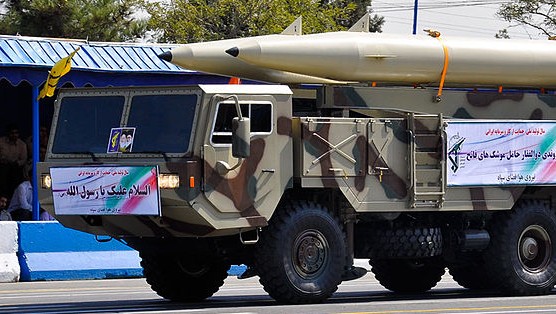
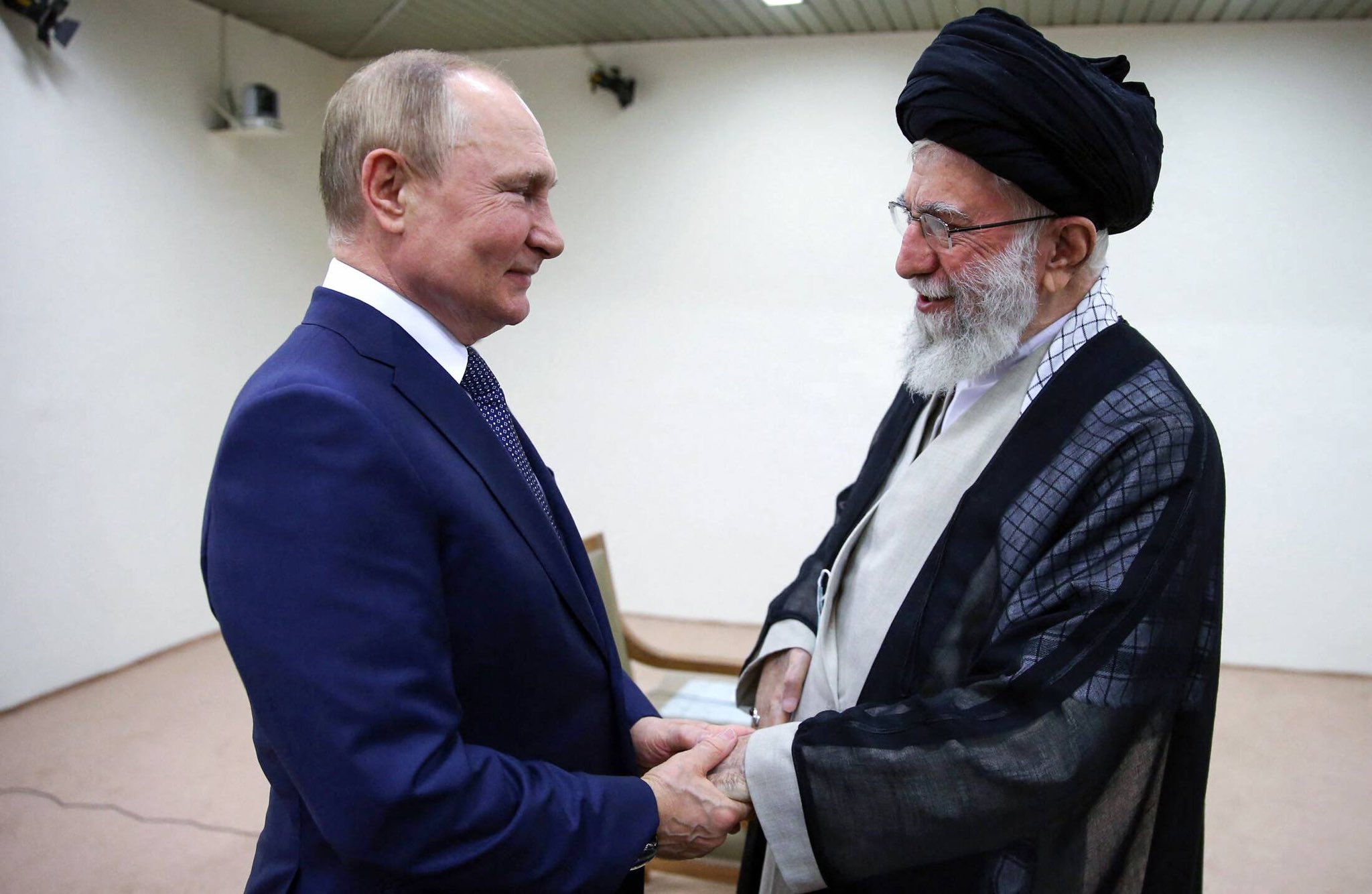
There has been unconfirmed reports that Iran will supply ballistic missiles to Russia. As the deal was reported to be concluded in September it may have been a factor in the decision to attack Ukraine with a flurry of their own missiles. I have been watching for confirmation without any luck, however recent reports are more widespread with some information reported as coming out of Iran.
Washington Post says Tehran preparing delivery of short-range Fateh-110 and Zolfaghar missiles; in response, Israeli minister says Jerusalem must send military aid to Kyiv
The following link is a study on possible air defense systems that could be realistically supplied to Ukraine. As with tanks and aircraft the relevant systems offer no easy answers. If Russian forces can continue to keep up the barrage indefinitely, that could be a turning point in the war.
Ukraine is pleading for air defense systems to protect against Russian missile and drone attacks, but the United States has little left to give and Europeans can provide only small numbers in the near term.
The North Atlantic Treaty Organization’s (NATO) sole capable combat aircraft that can match Russian fighter jets and present a worthy challenge to one of the most powerful air forces in the world, the Eurofighter Typhoon, has been busy. China Developing ‘Invisible Launchers’ For Its Dongfeng...
eurasiantimes.com
written by some fanboy quoting Mid-2010s wiki articles.
A report that Ukraine has developed an "app" for smartphones that integrates a spotting of incoming airborne threats with air defense.
Quote: "The app works effortlessly. Once a person sights an air target such as a suicide drone or a cruise missile, all they have to do is open the application, select the type of air target, point the smartphone in the direction of the target and press the big red button visible on the screen."
As Russia rains down missiles, drones on Ukraine, Kyiv has developed a smartphone-based solution - ePPO that involves Ukrainian citizens in drone sighting, tracking.
Russian authorities are likely setting information conditions to justify planned Russian retreats and the loss of significant territory in Kherson Oblast.
Russian forces are setting information conditions to conduct a false-flag attack on the Kakhovka Hydroelectric Power Plant (HPP); the Russian military may believe that breaching the dam could cover their retreat from the right bank of the Dnipro River and prevent or delay Ukrainian advances across the river.
Russia continues to use the guise of civilian “evacuations” as a cover for the mass forced removal of civilians from Russian-occupied areas of Ukraine.
Russian President Vladimir Putin’s October 19 declaration of martial law readiness is largely legal theater meant to legitimize activities the Russian military needs to undertake or is already undertaking while creating a framework for future mobilization and domestic restrictions.
Wagner financier Yevgeny Prigozhin is continuing efforts to set himself and Wagner Group forces apart from conventional Russian military elements.
Russian forces continued to conduct limited assaults to recapture lost territory in northeastern Kharkiv Oblast.
Russian and Ukrainian forces reportedly continued to conduct assaults in the Kreminna-Svatove area.
Russian sources widely claimed that Ukrainian troops conducted another offensive push in northwestern Kherson Oblast.
Russian President Vladimir Putin passed a decree on October 19 seeking to address Russian military personnels’ ongoing concerns about timely payments and setting the blame on Defense Minister Sergey Shoigu and Finance Minister Anton Siluanov for future payment issues.
The Russian parliament proposed legal measures that would allow Russian authorities to minimize the domestic impacts of partial mobilization in potential future mobilization waves.
Russian military officials continued to forcibly mobilize Ukrainian residents of Russian-occupied territories to labor or fight on behalf of the Russian military.
Click here to see ISW’s interactive map of the Russian invasion of Ukraine. This map is updated daily alongside the static maps present in this report.
Russian authorities are likely setting information conditions to justify planned Russian retreats and significant territorial losses in Kherson Oblast. Commander of Russian Armed Forces in Ukraine Army General Sergey Surovikin reported during an appearance on Russian television that the Russian military leadership has to make “difficult decisions” regarding Kherson Oblast and accused Ukraine of planning to strike civilian and residential infrastructure in Kherson Oblast.[1] Kherson Occupation Head Vladimir Saldo relatedly noted that his administration is evacuating the west bank of the Dnipro River in anticipation of a “large-scale” Ukrainian offensive.[2] Surovikin‘s and Saldo’s statements are likely attempts to set information conditions for a full Russian retreat across the Dnipro River, which would cede Kherson City and other significant territory in Kherson Oblast to advancing Ukrainian troops. Russian military leaders have evidently learned from previous informational and operational failures during the recent Ukrainian counteroffensive in Kharkiv Oblast and are therefore likely attempting to mitigate the informational and operational consequences of failing to defend against another successful Ukrainian advance.
Russian forces are also setting information conditions to conduct a false-flag attack on the Kakhovka Hydroelectric Power Plant (HPP). The Russian military may believe that breaching the dam could cover their retreat from the right bank of the Dnipro River and prevent or delay Ukrainian advances across the river. Surovikin claimed on October 18 that he has received information that Kyiv intends to strike the dam at the Kakhovka Hydroelectric Power Plant (HPP), which he alleged would cause destructive flooding in Kherson Oblast.[3] Saldo echoed this claim and warned that Ukrainian forces intend to strike dams upstream of Kherson City.[4] Russian authorities likely intend these warnings about a purported Ukrainian strike on the Kakhovka HPP to set information conditions for Russian forces to damage the dam and blame Ukraine for the subsequent damage and loss of life, all while using the resulting floods to cover their own retreat further south into Kherson Oblast. The Kremlin could attempt to leverage such a false-flag attack to overshadow the news of a third humiliating retreat for Russian forces, this time from western Kherson. Such an attack would also further the false Russian information operation portraying Ukraine as a terrorist state that deliberately targets civilians.
Russia continues to use the guise of civilian “evacuations” as a cover for the mass forced removal of civilians from Russian-occupied areas of Ukraine. Saldo’s announcement of a mass withdrawal from the west bank of the Dnipro River is likely intended in part to evacuate Russian occupation officials, collaborators, and other occupation organs in anticipation of imminent Ukrainian advances, but Russian officials are likely also using the façade of humanitarian necessity to deport large populations of Ukrainians to Russia, as ISW has previously reported. Russia does not appear to reap any economic benefits from resettling tens of thousands of unwilling Ukrainians in Russia, suggesting that the purpose of such removals is both to damage Ukraine’s long-term economic recovery as it retakes its territory and, more importantly, to support Russia’s ethnic cleansing campaign, which is attempting to eradicate the Ukrainian ethnicity and culture.[5] The Russians may also intend to press “evacuated” Ukrainians into their armed forces, offsetting the losses and failures of the partial mobilization.
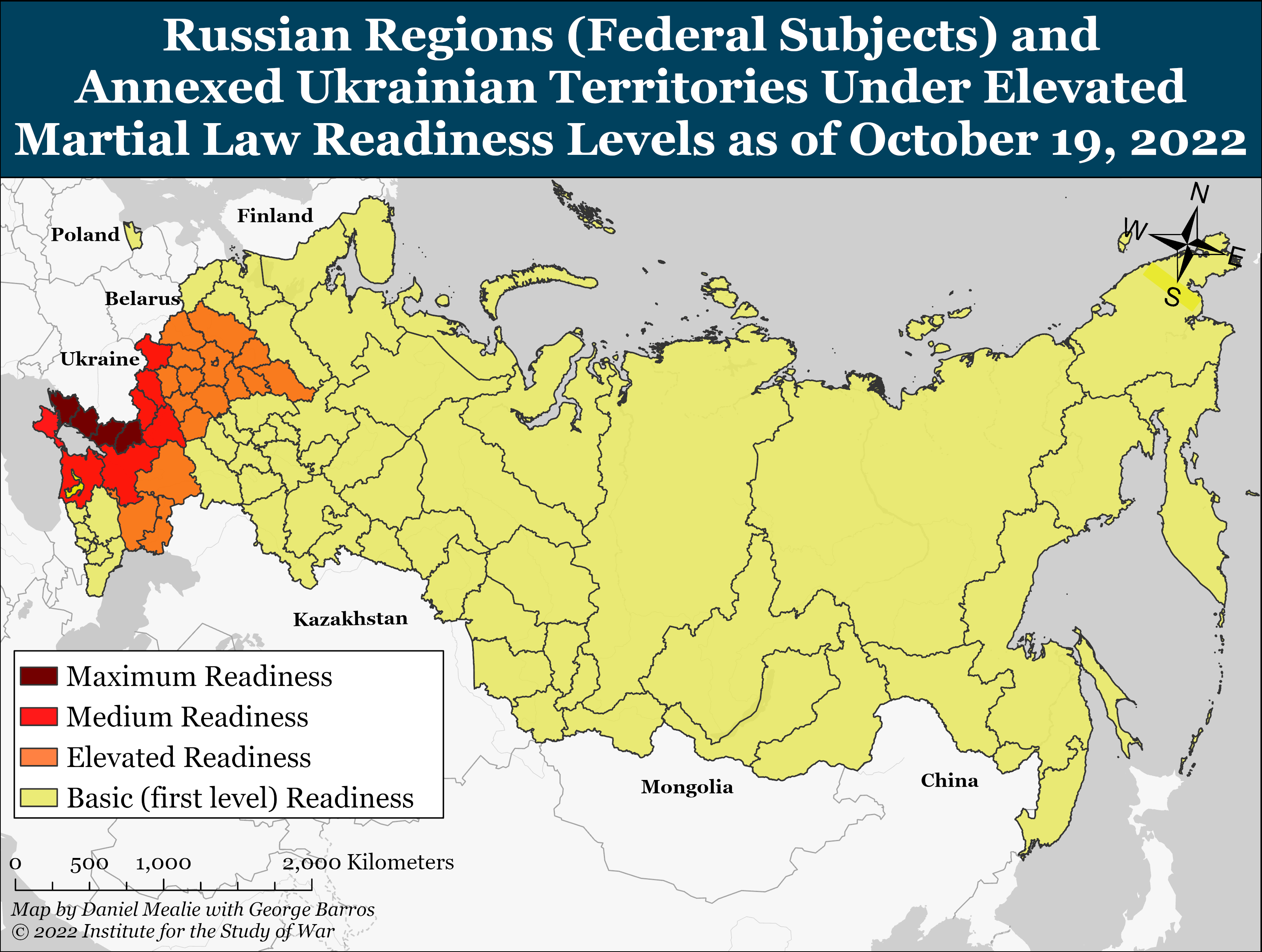
Russian President Vladimir Putin’s October 19 declaration of martial law readiness is largely legal theater meant to legitimize activities the Russian military needs to undertake or is already undertaking while creating a framework for future mobilization and domestic restrictions.[6] Putin declared varying levels of “martial law readiness” across Russia and in Russian-occupied Ukrainian territories. These declarations outline four levels of readiness, ranging from “maximum” (full-scale martial law in Russian-occupied Kherson, Zaporizhia, Donetsk and Luhansk oblasts) to “basic” (across all of Russia).[7]
Putin did not formally declare martial law outside of Kherson, Zaporizhia, Donetsk, and Luhansk oblasts, but instead directed areas outside Ukraine to build out the legal framework necessary to support Russian mobilization.[8] Putin’s speech framed the declaration of martial law in four Russian-occupied parts of Ukraine as a continuation of the wartime status quo, adjusted to Russian legal frameworks after Russia’s illegal annexation of those territories.[9] Putin’s decree did not spell out immediate next steps under martial law or elevated readiness levels but granted sweeping emergency powers to regional governors and gave local authorities until October 22 to develop and submit specific proposals for those next steps. Additional information will become apparent as regional governors and law enforcement submit and implement those proposals, which will likely be directed at least in part by the Kremlin but laundered through local authorities. Putin also left himself a path to expand his declarations of martial law, noting that “If necessary, in the Russian Federation during the period of martial law, other measures provided for by the [federal law covering martial law] may be applied.”[10] That language leaves open the door for future declarations and expansions of government authorities.
Putin’s decrees identified several sectors in which the Russian state will be exerting increasing control:
In areas of maximum and medium readiness, the decree calls for unspecified “mobilization measures in the economic sphere,” likely to provide economic and industrial support to Putin’s so-called “partial” mobilization of at least 300,000 Russian men.
In all areas, the decree makes provisions for government control of transportation and communications infrastructure as well as increased security around government buildings and other critical infrastructure.
In areas of maximum application of martial law (Russian-occupied Kherson, Zaporizhia, Donetsk, and Luhansk), the decree calls for the establishment of “territorial defense” headquarters with unspecified roles.
In areas of medium and elevated readiness, the decree enables regional leaders to take measures for territorial defense and civil defense.
In areas of medium readiness, the decree enables governments to forcibly “temporarily resettle” civilians.
The decree also includes vague language for each category, authorizing local authorities to “implement measures to meet the needs of the Armed Forces of the Russian Federation, other troops, military formations, bodies and needs of the population.” Such language could be used to legalize almost any government action.
In areas of elevated, medium, and maximum readiness, the decree allows for restricting movements of people and vehicles. Russian Deputy Foreign Minister Yevgeny Ivanov claimed on October 19 that the government does not currently intend to restrict movement out of the country.[11] However, Putin’s decree would likely provide legal cover for the implementation of such restrictions without passing additional decrees.
These moves closer to full-scale martial law are unsurprising but disordered—a competent modern military should implement economic mobilization, secure lines of transportation, and coordinate territorial defense before or as initial mobilization for war begins, not as follow-on reserve mobilization nears its completion (Putin announced on October 14 that his “partial” mobilization would end by early November).[12] These moves are likely necessary to fulfill basic military requirements, such as feeding, housing, equipping, and transporting mobilized and conscripted troops to the front lines; forcing defense contractors or other private businesses to align with government production requirements; and more easily controlling both the Russian population and the Ukrainian civilian populations in Russian-occupied parts of Ukraine.
Putin has slow-rolled his introduction of legal concepts and frameworks like military and economic mobilization, annexation, and martial law to the Russian population since September, attempting to normalize these concepts and limit domestic dissent. Putin likely understands that these measures are unpopular but may be counting on an upswell of fatalistic patriotism as more Russian families and businesses become tied to, and implicated in, the war in Ukraine. By gradually introducing additional measures, he likely also intends to work out likely unsolvable bureaucratic flaws in the Russian system, creating a more competent bureaucracy to implement the autumn conscription cycle (beginning November 1) as well as likely future waves of mobilization.
Putin also may be setting conditions for a less orthodox kind of under-the-radar mobilization: the creation of Ukrainian-style Territorial Defense Forces. Putin ordered local authorities to create a “territorial defense headquarters” in the four occupied Ukrainian oblasts and empowered local governors to undertake unspecified “territorial defense activities” in medium and elevated readiness areas (largely territories that border or are near Ukraine). This preparation likely serves at least two purposes: creating a legal framework for the forcible mobilization of Ukrainian civilians in Russian-occupied territories, as ISW has forecasted, and at least experimenting with a new kind of Russian military force.[13] Ukraine’s Territorial Defense Forces played a critical role in the defense of Kyiv and the recapture of other key Ukrainian cities. Ukraine’s Territorial Defense Forces are composed of a core of veterans and part-time reservists, largely officers, but can be built out by civilian volunteers in wartime who are then led by the officer corps.
Wagner financier Yevgeny Prigozhin may also be driving Putin toward unconventional methods of continuing the war. Prigozhin announced on October 19 that he sent senior Wagner commander Andrey Bogatov to Belgorod Oblast within the last two weeks to “create a people’s militia.” Prigozhin claimed that Wagner instructors will teach this “people’s militia” to “defend the borders of the oblast.”[14] The term he used for “people’s militia” (narodnoe opolcheniye) has a long history in the Russian Empire and the Soviet Union but is essentially an irregular and untrained force that fights behind the frontlines or beside a conventional army. Prigozhin may be attempting to draw upon the historical notion of a people’s militia fighting a great patriotic war to reinvigorate Russian enthusiasm for the invasion of Ukraine, a notion that may appeal to the historically-minded Putin. However, Prigozhin’s proposed Belgorod People’s Militia is not apparently similar to the more structured Territorial Defense Forces and uses different language, suggesting at least rhetorical tension between the Kremlin’s and Prigozhin’s visions.
Prigozhin is also continuing efforts to set himself and Wagner Group forces apart from conventional Russian military elements. The Russian outlet RIA claimed that Wagner engineering units are actively building a fortified “Wagner Line” that runs adjacent to territories in Luhansk and Donetsk Oblasts.[15] Prigozhin reportedly stated that the construction of the “Wagner Line” is meant to protect other elements of the Russian Armed Forces while Wagner units capture more territory in Donetsk Oblast.[16] Prigozhin’s statements indicate that he is likely continuing to promote Wagner units as superior to conventional Russian Armed Forces in a bid to increase his influence among Kremlin officials. Russian outlet RIA published a supposed map of the “Wagner line” that suggests that Prigozhin and Wagner forces may expect the Russian military to lose considerable territory in Luhansk Oblast, putting Prigozhin’s publicity of the line at odds with the specious Kremlin narrative that Russia will hold all of Luhansk Oblast.[17]
I was trying to think why the Russians would evacuate Kherson, when they never bothered evacuating any other city under threat. It seemed odd. I was thinking they were going to use Kherson for some sort of demo and was fearing the use of a WMD. Then I saw the below link and I think this is the reason. Destroying the dam will cover their west flank indefinitely.
I was trying to think why the Russians would evacuate Kherson, when they never bothered evacuating any other city under threat. It seemed odd. I was thinking they were going to use Kherson for some sort of demo and was fearing the use of a WMD. Then I saw the below link and I think this is the reason. Destroying the dam will cover their west flank indefinitely.
That is a very interesting possibility that I did not consider at all. Except for one small detail. Russia can't hold the Oskol river. If they can't correct the lack of troops on the front they won't be able to hold the Dnepr either. If they can hold that line, there's no reason they can't hold the current defense line. Russia doesn't appear to have a shortage of artillery or munitions. The shortage, as far as I can tell, is in front line infantry, and C4ISR. If this is Russia's plan, it's a fundamentally mistaken one.
I was trying to think why the Russians would evacuate Kherson, when they never bothered evacuating any other city under threat. It seemed odd. I was thinking they were going to use Kherson for some sort of demo and was fearing the use of a WMD. Then I saw the below link and I think this is the reason. Destroying the dam will cover their west flank indefinitely.
Yes there are a few reports on that and the ISW cover it in their report which I have posted above. This new General Surovikin appears to be nobodies fool and he might be a thinking general to boot which is going to make the Ukrainian General Staff's job somewhat harder. I think that it was either Napoleon or the Duke of Wellington who said "Give me a stupid enemy any day". Maybe the Ukrainians days of facing a stupid enemy are over. For their sake I hope not.
I would think that every Russian general would be able to see the vulnerability of the Russian position west of the Dneiper once the river crossing points had been destroyed or degraded. The difference appears to be that Surovkin has been able to convince Putin of the fact. Now all they have to do is get out as much equipment as possible, and try to portray the withdrawal in the most positive light.
This site uses cookies to help personalise content, tailor your experience and to keep you logged in if you register.
By continuing to use this site, you are consenting to our use of cookies.