Royal Australian Navy Discussions and Updates 2.0

StingrayOZ

Super Moderator
Staff member
I don't think F-35B are that desirable as a sea based fighter platform. Not for Australia. They are cool, but look past that..

Without blk IV they can't fire most munitions, like LRASM, Spear3etc. They are big, thirsty, expensive, heavy, platforms. Compromised a bit in all areas. The LHD are a bit small to operate them, they would only ever be a very light capability, and manned fighters have other costs associated with operations. Blast from the jet is also, just problematic for the ship. It just creates a highly expensive, highly resource intensive entity, with essentially only air defence capabilities, and essentially no strike capabilities. Even with blk IV, no JSM internal carry. Big old stealthy platform on sea spray, big and complex and expensive.. Really F-35B would really be about transporting them to expeditionary fields and them mostly operating from there, not every op being on the LHD flight deck.

MQ28, would be a much more realistic platform for LHD operations. Particularly with a few modifications to the LHD and MQ28, foldable wings, hook, under, carriage, wires on the LHD. So much range they are more like lilly pads, with many hours of flight time. No damaging jet blast. More like harrier operating needs. Much cheaper to acquire and operate, if an accident happens, you just go fish the platform out, no one is injured. If a land based MQ28 sees something an armed MQ28 could be sent out from the platform to intercept it.

MQ28 armed up with SDB, Spear3 or even JSM is very capable. We would be able to generate significant surveillance, CAP and strike capability at very long ranges. With operating costs mere fraction of even helo ops. You could afford to have one in the air for several hours, armed ready to go, or just recon.. No problems, and sustain ops 24/7 while doing it. Much more useful for the fleet, you would have organic air based radar, ISR, FLIR, tracking and identifying everything, absolutely everything within that grid reference. It wouldn't tie up man fighters, the RAAF could probably run ops from land based comfort if they wanted. But could easily be done from the LHD C&C centre with coffee and cake on standby.

Anything heavier comes in, scramble land based fighters and P8/E7.. You have your escorts armed with NSM, ESSM, TLAM.. etc.. Find anything interesting scramble MH60R to hit or dip or observe or rescue.

TBH while manned platforms are cool. A LHD with 6 MQ28 on deck probably has the same level of coolness.

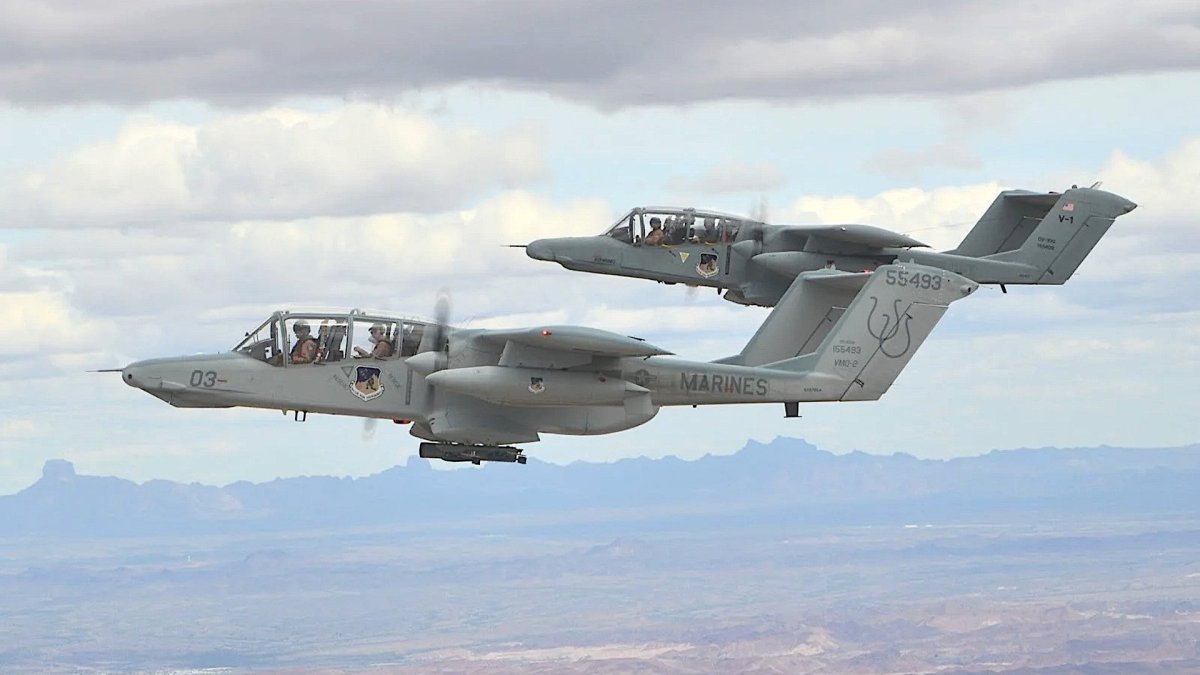
I wonder if an aircraft like a OV-10 Bronco could come back into fashion. As it would be the perfect platform for Forward air control, could do carrier delivery (up to 1500kg), deploy troops, medi evac, light attack, sonarbouy deployment, torpedos, .. But controlling MQ28, could be its special deal. It could also carry and launch fairly large drones at significant distances via its rear door.

You can still buy them, there are a couple for sale, full digital cockpits.

There was a company looking at modern versions.
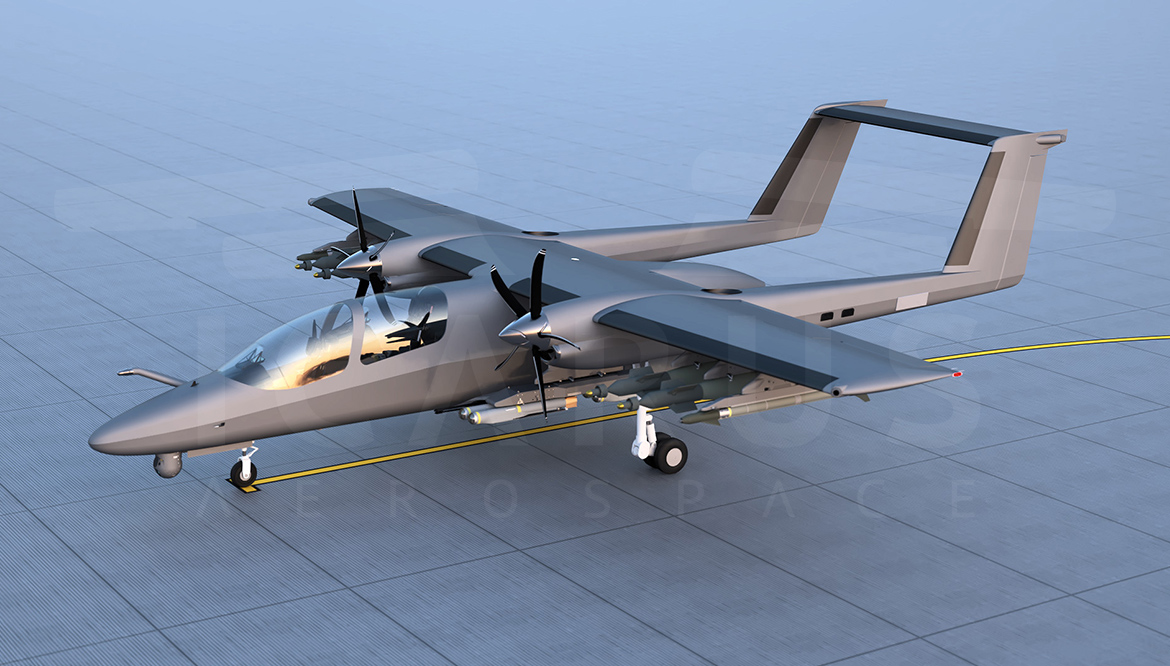
IMO this is more viable than operating MV22 for the ADF. Short field performance would be great, PNG, islands etc. Resupply by pallet drop or landing. Medi-evac is I think particularly useful. You would be able to fly much faster than a helo (at nearly 500kmph) at nearly 2000km..

It probably wouldn't be based on a LHD, but fly ops on to and off the platform. It doesn't need wires or traps to operate.
 

Stampede

Well-Known Member
The RAN is unlikely in the foreseeable future to have the budget to put a big enough fleet of fighters to sea to put a significant strike package together against a peer opponent.

The biggest force multiplier at this point is probably AEW&C, which Wedgetail should have enough endurance to cover in our local area.

If off board ranged strike is required there is always MH-60R and the Apache’s.
The MH-60R and Apaches are formidable assets.
Still early days for the later re the ADF but a solid capability well on the way.
Not everything has to be about fast air.

Trust the LHD’s are back to sea shortly so they can support many of the ADFs deployable assets.

Cheers S
 

StingrayOZ

Super Moderator
Staff member
Also at 1/8th the cost, (MQ-28 significantly cheaper than F-35A Lightning II US$80~$100M+ Vs MQ-28 US$10~$15 million ) and we can build them in Toowoomba
You could build a small squadron for the purchase price. And operate it for even less. It would all be local money too. Not only that, it could be worked up pretty much straight away rather than waiting forever for F-35.

BAE showed a carrier based MQ28 render on a QE carrier. If such a thing was developed, it would be very popular. Basically any flattop would gain organic capabilities. And less as a weapons platform (although it could do that) but as a sensor platform.. For QE carriers, having this be your AEW platform would be particularly nice, much higher altitude, long endurance, low operating costs, etc.

RAAF would hate it, because planes and water complexes.

But we only have 2 LHD and both are broken. So Maybe that is a discussion about addressing those issues. We are so far away from F-35B on carriers. F-35 is a problematic platform for navies operating them.
 

Stampede

Well-Known Member
Also at 1/8th the cost, (MQ-28 significantly cheaper than F-35A Lightning II US$80~$100M+ Vs MQ-28 US$10~$15 million ) and we can build them in Toowoomba
I’m sceptical as to whether this aircraft could operate off the Canberra class, but I’d be happy to be proved wrong.
I’m still keeping an eye on what the Turkish Navy is doing with their LHD.

Cheers S
 

seaspear

Well-Known Member
I don't think F-35B are that desirable as a sea based fighter platform. Not for Australia. They are cool, but look past that..

Without blk IV they can't fire most munitions, like LRASM, Spear3etc. They are big, thirsty, expensive, heavy, platforms. Compromised a bit in all areas. The LHD are a bit small to operate them, they would only ever be a very light capability, and manned fighters have other costs associated with operations. Blast from the jet is also, just problematic for the ship. It just creates a highly expensive, highly resource intensive entity, with essentially only air defence capabilities, and essentially no strike capabilities. Even with blk IV, no JSM internal carry. Big old stealthy platform on sea spray, big and complex and expensive.. Really F-35B would really be about transporting them to expeditionary fields and them mostly operating from there, not every op being on the LHD flight deck.

MQ28, would be a much more realistic platform for LHD operations. Particularly with a few modifications to the LHD and MQ28, foldable wings, hook, under, carriage, wires on the LHD. So much range they are more like lilly pads, with many hours of flight time. No damaging jet blast. More like harrier operating needs. Much cheaper to acquire and operate, if an accident happens, you just go fish the platform out, no one is injured. If a land based MQ28 sees something an armed MQ28 could be sent out from the platform to intercept it.

MQ28 armed up with SDB, Spear3 or even JSM is very capable. We would be able to generate significant surveillance, CAP and strike capability at very long ranges. With operating costs mere fraction of even helo ops. You could afford to have one in the air for several hours, armed ready to go, or just recon.. No problems, and sustain ops 24/7 while doing it. Much more useful for the fleet, you would have organic air based radar, ISR, FLIR, tracking and identifying everything, absolutely everything within that grid reference. It wouldn't tie up man fighters, the RAAF could probably run ops from land based comfort if they wanted. But could easily be done from the LHD C&C centre with coffee and cake on standby.

Anything heavier comes in, scramble land based fighters and P8/E7.. You have your escorts armed with NSM, ESSM, TLAM.. etc.. Find anything interesting scramble MH60R to hit or dip or observe or rescue.

TBH while manned platforms are cool. A LHD with 6 MQ28 on deck probably has the same level of coolness.

I wonder if an aircraft like a OV-10 Bronco could come back into fashion. As it would be the perfect platform for Forward air control, could do carrier delivery (up to 1500kg), deploy troops, medi evac, light attack, sonarbouy deployment, torpedos, .. But controlling MQ28, could be its special deal. It could also carry and launch fairly large drones at significant distances via its rear door.

You can still buy them, there are a couple for sale, full digital cockpits.

There was a company looking at modern versions.

IMO this is more viable than operating MV22 for the ADF. Short field performance would be great, PNG, islands etc. Resupply by pallet drop or landing. Medi-evac is I think particularly useful. You would be able to fly much faster than a helo (at nearly 500kmph) at nearly 2000km..

It probably wouldn't be based on a LHD, but fly ops on to and off the platform. It doesn't need wires or traps to operate.
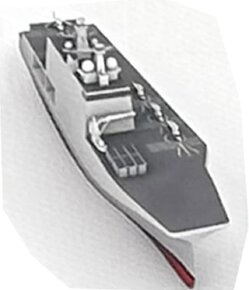
I would hope the mq-28 is being assessed for the Canberra class LH.Ds but I would also hope the MQ-25 air to air refueling drones are also assessed to join them these are drones that have been shown to be able to refuel the Super Hornets used by the U.S.N , being able to extend the range of air cover of escort aircraft or even the Wedgetail could be useful
 

Sandson41

Active Member
Someone here may be able to correct me if I'm wrong, but my understanding (from posts on this forum, IIRC) is that the LHDs are not viewed by navy or national command as any kind of combatant.

They're huge and extremely (critically) useful transports. Transports with decent radars and built to military standards, but still transports. They're supposed to show up a day or two after and use their aviation assets to land material, and then barge the heavier stuff ashore. Or just deploy forces before the fighting starts, of course.

Anything that may tempt a commander to move them closer to an active combat zone is likely to be a hard sell indeed. If I understand correctly.
 

Sandson41

Active Member
Its what they are carrying that makes them a combatant ,if they are required to be as previously posted a frigate escort then there must be some risk
Excuse me, I misspoke. I meant, they are not intended to engage in combat. Any fighters, drones or launchers that detract from their role as transports are unlikely to be welcome, unless someone decides they're light fleet carriers now.
 

seaspear

Well-Known Member
Excuse me, I misspoke. I meant, they are not intended to engage in combat. Any fighters, drones or launchers that detract from their role as transports are unlikely to be welcome, unless someone decides they're light fleet carriers now.
But if they are carrying armored vehicles, helicopters and troops they can be asumed to be used for combat even as part of logistical train
 

SammyC

Well-Known Member
Someone here may be able to correct me if I'm wrong, but my understanding (from posts on this forum, IIRC) is that the LHDs are not viewed by navy or national command as any kind of combatant.

They're huge and extremely (critically) useful transports. Transports with decent radars and built to military standards, but still transports. They're supposed to show up a day or two after and use their aviation assets to land material, and then barge the heavier stuff ashore. Or just deploy forces before the fighting starts, of course.

Anything that may tempt a commander to move them closer to an active combat zone is likely to be a hard sell indeed. If I understand correctly.
Three things an LHD will never:
* be classified as a destroyer (Japanese Navy excepted) or a frigate or ever be asked to do a combat job aligned to one of them;
* be able to enforce its own air cover; and
* ever enter an operational area that has not already been secured.

The fixed wing aircraft idea doesn't fit with how an LHD works. It can never hold enough aircraft to independently dominate an airspace. Note a carrier like USS Ford can comfortably put upwards of 30-40 planes simultaneously (awacs, fighters, fuelers, EWs) and keep them there for a fight, something like USS America or JS Izumo could put somewhere around 10-15 planes up at once if fully configured for fixed wing aircraft (no helos embarked), but they would have minimal amphibious capability in that mode.

The Juan Carlos (the original for HMAS Canberra/Adelaide) is less than either America or Izumo, so would struggle to launch 5-10 and would be exhausted within a few hours. Air dominance will not be achieved with those numbers, support from something else will be needed. If you have something else then the LHD based aircraft are somewhat redundant. A fixed wing would come at the expense of a helo fleet, which would compromise the ability to quickly disembark and support a ground force.

Our LHDs won't come into an area that does not already have the air domain dominated, which generally means that air cover is already provided by the RAAF from a nearby airfield. The LHD will want to maximise their air lift (rather than combat) capacity via helos to focus on their core task. It means offloading faster and exiting the operational area earlier. The LHD is at its most vulnerable at this point and will want to minimise time in the operational area at all cost.

If there is not a nearby airfield then the army will be working to secure an airfield to provide the air cover for the LHD, before the LHD mobilises.
 

StingrayOZ

Super Moderator
Staff member
Excuse me, I misspoke. I meant, they are not intended to engage in combat. Any fighters, drones or launchers that detract from their role as transports are unlikely to be welcome, unless someone decides they're light fleet carriers now.
They are completely knackered and overworked with their current taskings. Hence both broken.
There is no capacity for them to do anything additional. I doubt we will even have much time to embark Apaches.

Embarking other platforms is aways possible. But really we already need 3 ships to keep up with the current tempo. The fact that every time we want to engage with another nation, we tend to fire up our biggest ocean going ship with the most flexible capability for that purpose.

Same with HDAR, sending our biggest ship is a symbolic show of our commitment.

HMAS Choules is currently planned to leave service in 2034. Which means we should start planning for a replacement right now. We are at the end of 2026 so 8 years, to outline, fund, build, acquire, deliver and bring into service. At the rate of projects that is already getting tight. For what is key capability.

The LCH are replacements for the much smaller LCH. We need that capability, but if a cyclone wipes out Fiji we aren't sending a single LCH to help out. If we want to fill in for a US LHD at RIMPAC we aren't sending a LCH. We are the only ones in our hemisphere with this capability. Some with Indo-pacific engagement, we aren't doing that from a LCH from india, phillipines, vietnam, thailand, Indonesia etc.

I think we should look at another LHD. Türkiye upgraded the design fairly recently, this is not a stagnant design. Türkiye runs an all diesel design (5 instead of the Lm2500 + 2 in Canberra). It has more electrical generating capacity and more redundancy (and more graceful). It has a same range at a faster speed. They also made improvements to operate F-35 and other aircraft, even if we don't operate them, Singapore, Britain, Japan, US, etc do. Even if its just to assist in shifting and forward deploying. It has all the amphibious capability, but the turks removed the centre divider in the dock (could be fitted in a new build) as its removal means they can operate US LCAC.

Skip the LCAC, use it with the L-CAT. 80-100T capacity, it could carry a full laided M1a2sep3 and other light vehicles. Or two Redbacks, or two boxers. And its faster than our existing landing craft.

Türkiye is offering to build this ship, probably at a lower cost than Spain. Or Spanish build. We may wish or need to do a local fitout in that case. Or we could consider an all local build if we acted early.

I don't think we need an aircraft carrier. I think the LHD provide all the aviation capabilities we will ever need. More importantly they are excellent flexible platforms and amphibious platforms, proven on numerous operations. Buying another of the same type but more modern, means, crewing, training, spares, etc are common (95%+) across all three. Having this ship built much later, means the ships won't all block obsolete at the same time.

The aviation capability of the JC1 design was never to operate as a full fledge carrier, it was to allow the support and operating of fighters afar. Spain has remote Atlantic islands, and operates the ships and fighters near there. They aren't a blue water carrier force designed to operate against hostile air forces and perform deep strike missions. The planes can take off and land on the carrier, but they are essentially designed to operate Spanish sovereign territory. With its own airfield. The ships support and extend the range of operations and help provide aircover for fleet ops in that area.

I presume a heavier built JC1 design could do the same for allied navies like the Singapore, US, UK or Japan. The planes wouldn't embark on the LHD, but land, re-arm, refuel, and help extend the coverage of F-35B as part of a combined task group. Much like the MV22 do now. The MV22 is more relevant for the amphibious operations. All F-35 ops and costs are borne by the nation that operates them.

That is more relevant for Australia. We could use it in support of bases at Christmas is, Cocos, Momote if we needed. We could help redistribute air assets around the region. MQ28 has enough range to mostly be based on land bases, but being able to operate a variations that is already carrier based with the UK or other navies, would be neat. ASW operations are possible and we have explored that with india.

But essentially it would be a 3rd Amphibious ship doing what we need it to do. Amphib.
 
Last edited:

StingrayOZ

Super Moderator
Staff member
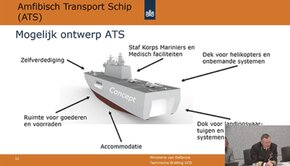
Reckon we might join the U.K/Dutch ATS class program? 4? or more? to replace Choules + Canberra class.
Well it depends if we want to move from a LPD to a full size LHD like Canberra. Or keep to a LPD type ship but more flexible.

The killer is crewing. Choules is ~175. Canberra is ~350 (300 sailors, its army and raaf as well). That is a huge difference in crewing and operating costs. I think of all the ships that this kind of discussion is valid on, its a LHD. But doubling a crew with a replacement is huge. At least with Canberra you would already be increasing an existing pool of trained people, and sailors I talk to enjoy being on Canberra rather than smaller ships. I suspect crewing and retention is better despite the op tempo. But thats probably more a surface combatant vs LHD not LHD vs LPD type argument.

I suspect the Dutch ATS gets a bit close to our LCH. But you could get multiple ships. Damen makes 18028.. Which is a much larger choules type replacement.

I guess we have to ask how committed to amphibious expeditionary capability are we? Is it time to move up to a 3rd LHD, or will that break us and do we order LPD choules size, or smaller. Given the 4,000t LCH, I suspect LHD might be the more useful capability. Again, its our LHD getting hammered with missions, none of these other ships can do.

I would argue we need a more capable LHD, one with a 10-15m plug. Able to handle larger vehicles, aircraft, longer deployments, 14mw pods, more stores, faster transits (2-4 kt faster).
 

K.I.

Member
Um, you do realise that QLD uses a 3 foot 6 inch gauge north of Brisbane while the rest of Australia now uses 4 foot 8 1/2 inches? There would be ar least two breaks of gauge with all the associated issues - and the cost of conversion, even if you could convince the banana benders to do it, would be horrendous. Not to mention the cost of building the line from Mt Isa to Tennant Creek or wherever. There is already a perfectly good rail link to Darwin via Port Augusta (probably shorter from Sydney than via FNQ) why duplicate it?
Someone gets it! A line from Tennant Creek to Mt Isa was scoped after the construction of Alice to Darwin but there was no appetite to finance more loss making infrastructure at the time. ADF really needs to build a rail haulage capability before discussing new lines.
 

seaspear

Well-Known Member
This is an earlier report detailing the issues regarding building a Tennat Creek to Mt Isa rail link its challenges costs and solutions ,although identified for heavy commercial there was not a report if the A.D.F could use such a link ,there is a rail link from Port Augusta South Australia going up the middle of the country ,but this is a long way from Sydney or even Brisbane ,if the A.D.F needs to transport from those citiesit may use its own aircraft or ships for which it pays to maintain using a commercial rail link that can accomodate heavy equipment faster than both fully laden L.H.D,s not forget there are factories building defence related equipment in N.S.W and Brisbane that aslo could use such a rail line .
The funding for such a rail line would not come out of the A.D.F budget , and if the A.D.F saves money not using aircraft ,ships and trucking for transporting along a new corridor on the Eastern side of this continent seems to provide new opportunities
 

SammyC

Well-Known Member
Well it depends if we want to move from a LPD to a full size LHD like Canberra. Or keep to a LPD type ship but more flexible.

The killer is crewing. Choules is ~175. Canberra is ~350 (300 sailors, its army and raaf as well). That is a huge difference in crewing and operating costs. I think of all the ships that this kind of discussion is valid on, its a LHD. But doubling a crew with a replacement is huge. At least with Canberra you would already be increasing an existing pool of trained people, and sailors I talk to enjoy being on Canberra rather than smaller ships. I suspect crewing and retention is better despite the op tempo. But thats probably more a surface combatant vs LHD not LHD vs LPD type argument.

I suspect the Dutch ATS gets a bit close to our LCH. But you could get multiple ships. Damen makes 18028.. Which is a much larger choules type replacement.

I guess we have to ask how committed to amphibious expeditionary capability are we? Is it time to move up to a 3rd LHD, or will that break us and do we order LPD choules size, or smaller. Given the 4,000t LCH, I suspect LHD might be the more useful capability. Again, its our LHD getting hammered with missions, none of these other ships can do.

I would argue we need a more capable LHD, one with a 10-15m plug. Able to handle larger vehicles, aircraft, longer deployments, 14mw pods, more stores, faster transits (2-4 kt faster).
My read of the 2026 IIP is glass half empty for the LHD and Choules replacement investment commitment. I note reference to these ships is not included in the amphibious capable combined arms land system section of the document, despite both the LCM and LCH being included. I think if the ADF saw the larger amphibious assets as central to litoral manoeuvre then they would have been included in this section, rather than a single paragraph in the Naval section, almost as an afterthought.

There is no reference to a Choules replacement in the IIP, just that the current ship and the LHDs will be sustained. Choules was constructed in 2003, so she is already 24 years old. We all know how long it takes to arrange a large ship replacement, and without a project to commence, then it is either she will be continued in service past 30 years, or retired without replacement. I'm thinking the latter.

Now I am a supporter for these ships, I'm just worried that rather than expanding the large amphibious fleet, the government is intending to transition to a smaller LCH/LCM force and away from the bigger ships.
 

Takao

The Bunker Group
As Ukraine has shown, the future of military technology IS NOT putting 160 souls on a $2 billion boat and sending it out into the ocean just to give the enemy a target.
It has? Which ocean?

Australia is a small country with a finite defense budget, finite construction capabilities and a finite number of potential service personnel. However for the size of our population we punch well above our weight in smarts/Tech.

I believe that every new purchase should be focused on supporting and enabling constantly evolving autonomous and semi autonomous vehicles and creating layered local counter-drone capabilities. We do not need giant armies, we’re not invading anyone! We just need to stop other people from wanting to ruin our day or cut our supply lines, the ghost bat (and others Ghost Shark, V-BAT and the US MQ-4C Triton etc) points the way forward.
There are some inherent problems in this statement though.

First is the size. Ukraine is smaller than NSW. The scope of our area of operations can only be understood by four nations: Russia, US, Canada and NZ. Most of the lessons in Ukraine are fine tactical lessons, but limited structural lessons, especially noting the size discrepancies.

Next, autonomous systems cannot yet take the load. I'd be surprised if they can take the load in 5 years. Remember, Tindal to Dili is about Ukraine from north to south - but the resupply from Tindal comes from more that 3x Ukrainian lengths away. The autonomous air platforms don't have the throw weight at that range to do what a F-35 can do (and that has less throw weight than a Super). Note also that all our autonomous aircraft might carry some AMRAAMs. No JASSM, no NSM, no ARGM - nothing to strike (which matters more).

At least the air domain is easy. The land and maritime domains in our AO, frankly suck. It's hard enough to right through on foot - what the hell a robot is meant to do with the Owen Stanley Ranges is beyond me. Likewise the name 'Pacific' Ocean, as any sailor will tell you, is often a lie. There are really valid reasons that destroyers and frigates got, and stayed, bigger than the 1918 V and W class - the mass gave safety. Halsey looses destroyers when he sails through a typhoon because they were just too small to cope. Now, we might plan to not sail through a typhoon every again, but (a) we don't actually get that choice sometimes, and (b) most of the LOSV, USV, etc etc won't even get that far. And, again, range.

Which leads to the next bit. You don't save workforce with uncrewed systems. You transfer the load. In theory you can replace infantry and armour with robots, but those workers now need to be the technicians required to maintain the robots. And here is the kicker - the educational requirements for most trades is less than that for a technician. So you've actually curtailed your own recruiting pool. Remind me how healthy the RAN's marine engineer trades are? I can train a 15 year old to drive a truck - but not to maintain it.

Which leads to the final point about we don't need a giant Army. I agree, to a point. But we need one large enough to do the jobs that government requires. And I would remind you that just over 27 years ago we had to put most of the Army oversea or on alert - for not a war. Almost all the jobs the ADF does are human-related - and you aren't going to have robots do most of the deployments we have done in the past 70 years. An assault? Sure, well, maybe. But talking to a South Vietnamese village chief? Negotiating with an Indonesian border guard? Reassuring a little Timorese girl who is lost in the middle of Dili? All required a human touch.

The way people conducted war 20 years ago is now just a fast way to die.
On a surface level, sure. Just like I wouldn't recommend that our Super Hornets form up in a box formation and cruise in a straight line at 20 000 ft over a enemy city. But fundamentally, no. The key to victory on the battlefield remains on three pillars: morale, mission command, and combined arms. The pundits who see drones as the silver bullet for everything ignore the last part. Drones are increasingly capable, but they for part of the existing team. I would draw your attention to the recent Operation VIVALDI where heavy armoured attacks are being conducted by Ukrainian Armed Forces - but with drones weaved into the teams. Just like the Generals of 1918 would carefully integrate their artillery plans in a way that was foreign to the Generals of 1915, now our Tp, Sqn and Regt Comd integrate drones.

I can assure you, just like the combined arms teams that achieved victory in 1918 resemble those that did in 1944/45, the ADF in 20 years will still have crewed platforms and exquisite weapons. It's just that there will be more drones in those ORBATs.
 

StingrayOZ

Super Moderator
Staff member
Now I am a supporter for these ships, I'm just worried that rather than expanding the large amphibious fleet, the government is intending to transition to a smaller LCH/LCM force and away from the bigger ships.
Im worried about that. Although these ships have 40 year life so won't see replacement until 2055 or so.

The Spanish just reengined and redid propulsion for JC1. Also found some effiencies.

So ours will also be up for such efforts. A major mid life refit 15 years.

I would look at IMO:
  • Uprate two new diesels (Spain only rebuilt existing). MAN 32/44CR would give a 25% increase in power for same size/weight. Or upsize to 16 or 18v or 20V So more like a 50% increase in electrical capacity. The new engines are more efficient with common rail, better part load. The machinery space is quite large in this ship Even a 20V may fit. 2Supply uses the 18V MAN. Electrical growth is a huge issue on ships and canberra is expected to have electrical growth. It may be possible to fit in a smaller hunter sized engine gen set for use at port/stationary.
  • 14MW ABB pods from 11MW pods Siemens. We run the four blade props. It isn't really about increasing speed but durability efficiency. Spanish went to ABB 11MW. Even adding 1 or 2 kts impacts long missions and transits, more importantly the engines are flat out the entire time. Even if you just rate them at 11MW (spain I think does use the more powerful pods and has rated them to 11MW).
  • New transformers + converters (Spain they went all ABB again)
  • Electric steering instead of hydraulic for the pods. (Spain) This has been a historical issue.
  • New cooling system (spain)

More realistic is they don't replace Choules and magically our amphibious capability is broken waiting for a class of tiny smaller ships that are effectively only replacing a class we didn't replace previously (the LCH). These small ships are even slower than a LHD or LPD.. its more like a 10kt ship. So deploying regionally they will be a week behind a LHD turning up.

Part of the argument is the LCM-1e is a bit small, but that is why we should look into the LCAT II.. 100T load, 80T at 25kt, 35kt return, its LCAC levels of fast but LCM levels of cost. Range for intra island transfer at speeds that make sense. You can base the LHD further off from shore as your connector speed is twice as fast. Think about the LHD based between islands and landing equipment in multiple islands from the same position, Not only that you can operate 2 LCM and 1 LCAT and get a hybrid approach.
 

Reptilia

Well-Known Member
Should Australia order a 3rd Supply class AOR now for early 2030s delivery? or buy a new AOR fleet from another country(Korea/Japan etc) in the future?.
Spain is currently building another replenishment ship to replace the Patino, same/similar AOR as the Cantabria/Supply class, due 2029/2030. $800 million usd.

Do we need another AOR in the early 2030s or do we buy something with a bit more legs, more speed or automation at a later date? Back to Aegir18A?, Japans new AOE?, HMNZS Aotearoa copy?
 
Top