Middle East Defence & Security

SolarisKenzo

Well-Known Member
So Israel has seen the light like the rest of ME neighbourhood. A shame Europe and Canada can’t figure this out.

Many that live deserve death. And some that die deserve life. Can you give it to them? Then do not be too eager to deal out death in judgement. For even the very wise cannot see all ends. - Tolkien

No one has the right to decide on someone else's life.
No matter what you think or what they did.
 
Last edited:

swerve

Super Moderator

Feanor

Super Moderator
Staff member
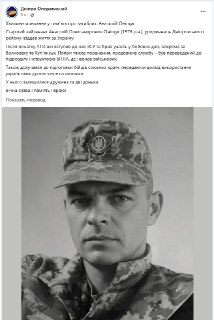
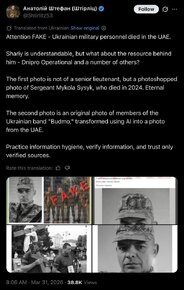
It appears there are now Ukrainian service members killed in an Iranian strike. The exact circumstances are unclear, but this US-Iran war is getting messier and messier.


KipPotapych

Well-Known Member
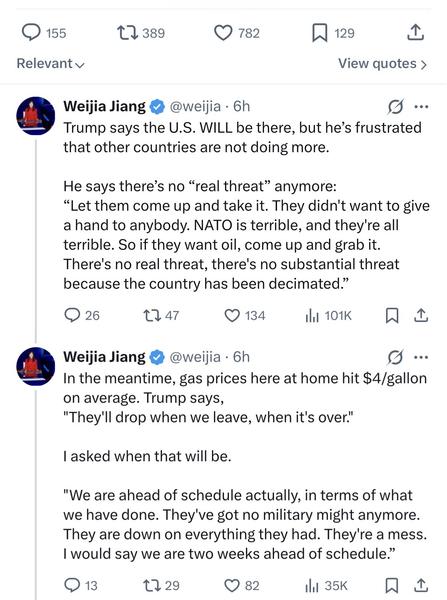
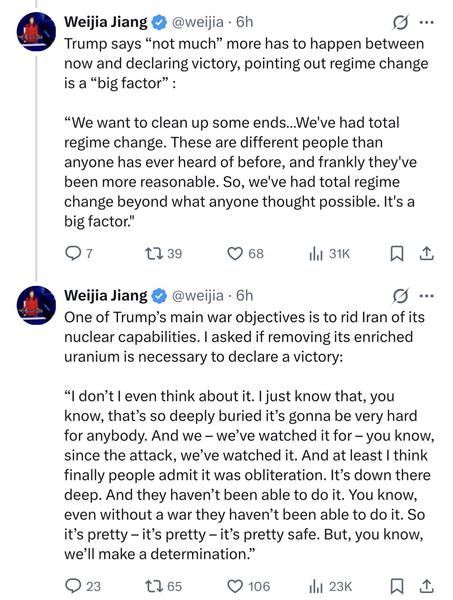
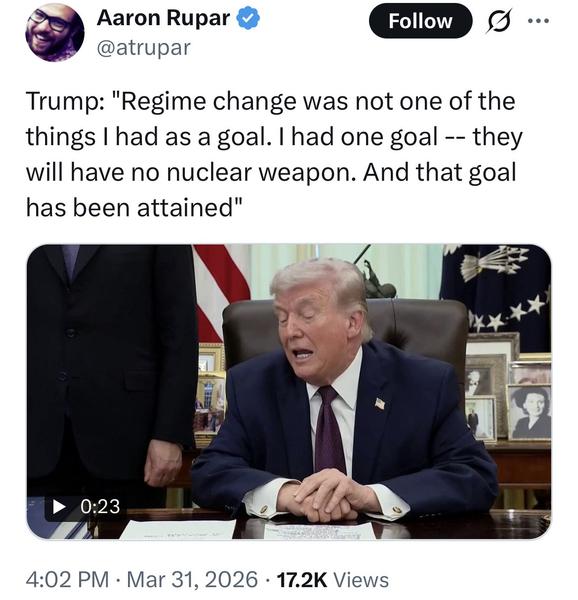
Some interesting developments today. One thing that kind of pops out is the alignment of Trump and Netanyahu statements. A longer version for Trump here (the most relevant part at the end):


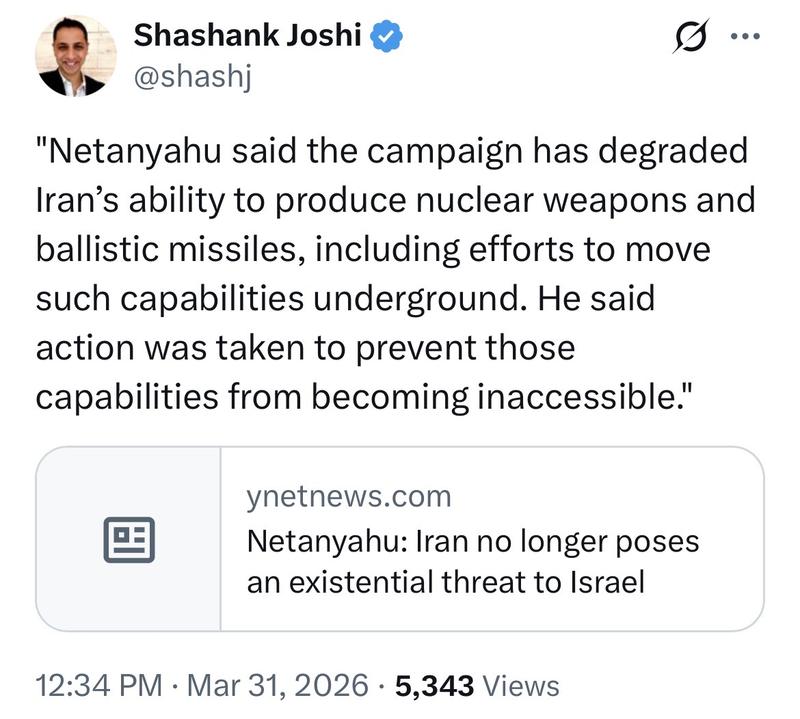
Netanyahu:


A lot of uncertainty still, but the alignment, I think, is significant. As of now, it appears that the ground operation is off the table as far as the recovery of the HEU is concerned (which has significant implications!). Only yesterday the following was reported (to note, I cannot vouch for the validity of the claim):
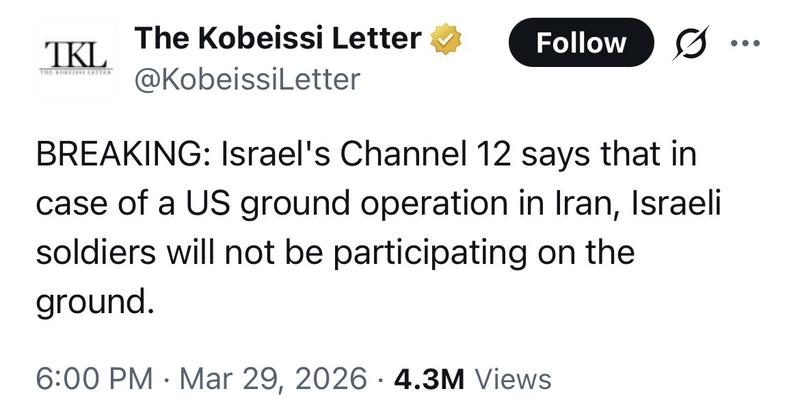


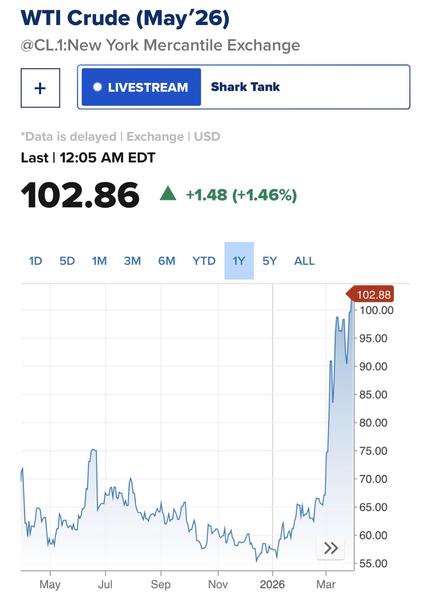
It seems to be an interesting development, in my opinion. What does it mean though? It certainly implies the window for future operations down the line is fully open (loooong timetable including and Netanyahu singing the song about next week nukes all over again), but the current op is maybe wrapping up. It appears that the biggest implication here is that one cannot bomb the problem away and it has to be dealt with on diplomatic level via some kind of agreement (who would have thought?!). To reach such an agreement in today’s realities is virtually impossible: if Iran rejected the proposed terms before the war, they have even less incentive right now, with the leverage clearly established. Which is another problem, we now have Iran that knows it controls Hormuz. I saw some very reasonable people suggesting today that it should simply be accepted and the toll system would be preferable to continuation of the war in order to “open the strait” (likely impossible). While I couldn’t care less about their tolls and whatnot, this is a very negative development. This is, without a doubt, leaves us all in the worst position than previously. A strategic failure, and bigly so. For the Arabs in the Gulf, this should be completely unacceptable, which they have expressed yesterday (or the day before?). Ain’t nothing they can do about it though. The realities in some markets seem to be hitting home now. I think this is the first time that the stocks (still on cloud nine) and oil moved in the same direction after Trump’s announcement. Dow was up 2.5% on the day, while Nasdaq nearly 4 (probably a good time to short, but the VIX is a bit on the high side and the risk is significant on the longer trade; Friday puts looked pretty good though):



The oil traders, on the other hand, are finally getting accustomed to the realities of the situation:


This week, some will start losing big money for the first time on the futures that were sold just prior and just after the war began. This is a big deal. The Euros are advising their populace to work from home, take cold showers, travel less, and so on, in order to conserve energy because it is going to get expensive and for a while (even if the war ends today):


Imagine cutting one leg off all on your own initiative (RU), while having the other cut shortly after, when you think you have it all figured out, by the actions of your biggest ally, basically. What are you gonna do though.

Optimism of some individuals almost clouds over their stupidity:


Imagine posting that as a proof of open strait (TheY LoSt AlL tHe conTroL ThoUGh!), while the video is clearly showing 5 or 6 or whatever it is vessels passing through, all through the Iranian “checkpoint”, instead of dozens that usually sail on the other side of the island in the same timeframe, in normal circumstances.

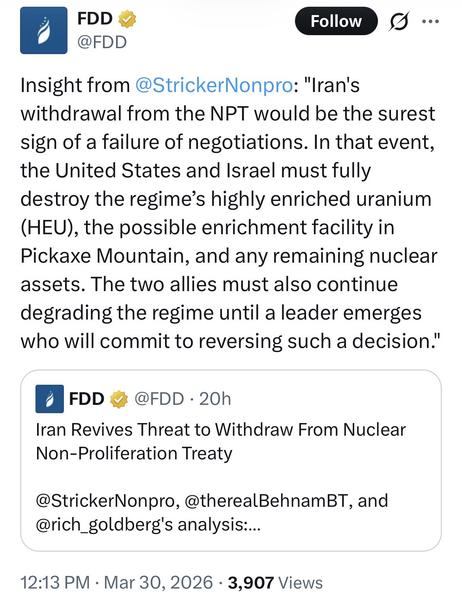
More stupidity (they call it “insights”, apparently), but from more respectable organizations:


One would think that the failure they talk of would be bombing the country, while deceiving (or at least trying to) them into thinking they are still negotiating. Twice! Laughing. Killing their negotiators doesn’t help either (as was the case in the first strike the first time, almost or quite literally). Their entire thesis is dumb too. And they may be disappointed:


It was attained the first time, last year, according to the same genius, who also thinks he had already changed the regime because people in charge now are those he never heard of before and they are reasonable, in spite of being lunatics. Things would really be hilarious if they weren’t real.

Side note: I bought two pairs of shoes for my daughter last week. She tried them on and chose one pair, so I drove to the store to return the other pair and stopped at the gas station on the way back. I haven’t put a drop of gas into this vehicle since the war began and gave away the refund I got for the returned sneakers (plus $2 and change more) as the difference between the fill ups then and now. One would think this is not exactly optimal for lower-income individuals (it ain’t optimal for me either though) and more affected (and less well-off) countries especially. Seeding season in the northern hemisphere awaits and is just behind the corner (we still have about a month to go here).

 

SolarisKenzo

Well-Known Member
There is no "EU energy lockdown" or any of the false informations that are being spread also by usually more or less serious websites.

This week, some will start losing big money for the first time on the futures that were sold just prior and just after the war began. This is a big deal. The Euros are advising their populace to work from home, take cold showers, travel less, and so on, in order to conserve energy because it is going to get expensive and for a while (even if the war ends today):
This is simply false.

The EU Commission Directorate-General for Energy is monitoring the situation and preparing plans in case of emergency.
Any claim of "no energy in Europe" and similar bullshit is simply fake.
Asian countries are in a much more difficult situation from a supply point of view but I guess why in North America everyone thinks Europe is basically in black-out.
I live in one of the most gas-dependant regions of Europe (around 50% of my region electrical mix) and nothing of what you say is true. No emergency announcements, no lack of fuel, no blackouts.

That's just mass-distraction bullshit.
 

KipPotapych

Well-Known Member
nothing of what you say is true.
I’d check either reading or comprehension skills then of that is your conclusion. I wrote what your commissioner said, as per cited and other reports - that is, the advice is to start conserving energy - because it is going to get more expensive even if things end today. The rest - no energy, blackout, etc - is the stuff you made up.
 

KipPotapych

Well-Known Member
There was some brief discussion a couple of weeks ago regarding the op to extract the HEU from Iran. Some suggested, if I recall correctly, that it is a doable op that would not require more than a few thousand troops. I didn’t comment then, but thought that is overly optimistic at the least and quite absurd realistically speaking.

The Washington Post published an article today outlining the complexity of such an endeavour, which looks a lot more like what it would take. I am going to cut and paste some paragraphs here instead of summarizing.

Limiting Iran’s capacity to build a nuclear weapon remains a top goal of the administration. But this plan, experts say, would represent an enormously difficult endeavor of a type never before attempted during wartime. The mission would require the airlift of potentially hundreds or thousands of troops and heavy equipment to support the excavation and recovery of radioactive material. That could take weeks, former defense officials have estimated, and take place under fire deep inside Iran.[…]

“This would be one of, if not the largest, most complicated special operations in history,” said Mick Mulroy, a former deputy assistant secretary of defense and retired CIA and Marine officer. “It’s a major risk to the force.”[…]

To get to the buried Isfahan stockpile, “you have to get excavation equipment, break through the concrete and the lead shield” and any other protective covering, “and then you somehow have to get to the bottom of this silo and remove the containers full of nuclear material and fly them out,” said one of the two people familiar with the matter, both of whom spoke on the condition of anonymity because of the sensitivity of the matter. Estimates on how long that would take vary, ranging from weeks to several months.[…]

Former commandos and officials described the extraordinary complexities surrounding such an operation.

The logistics would probably start with striking Iranian defenses and equipment to create safer passage for the ground troops, who would then fly hundreds of miles into the country to establish a defense perimeter at the facilities. One option, experts have speculated, is the Army’s 82nd Airborne and Rangers parachuting to seize the ground, which could be within range of enemy artillery, missiles and drones.

From there, engineers would probably build an airstrip to bring in supplies and equipment, some of which may be airdropped from cargo aircraft or slung from utility helicopters. Both options would leave the slower-moving transport aircraft vulnerable to enemy fire.

Keeping the heavy excavation work going would require a deep bench of support troops, officials said. Mechanics, drivers, refuelers and others would work round-the-clock. Food and water would need constant resupply. Civilian nuclear specialists from the Energy Department and other agencies also would probably be on-site, former officials said, to assess risks and supervise the uranium removal.

The operations to house, feed and protect personnel would probably look more like a small base than a low-profile, clandestine mission.
The effort to blast through the rock and enter the storage area would be the start of a grueling, yard-by-yard process for commandos to enter the abyss of a facility thick with unknowns.

Breaching teams, possibly from the Army’s Delta Force or Navy SEALs, would wield saws and blow torches to get past obstacles inside the underground facility while shooters covered them, according to a former special operator with experience training for such missions. The commandos would wear protective uniforms and rebreathers, carrying sensors to detect radioactive threats.

The teams would have to be mindful that anything they shoot, explode or cut through could disturb dangerous material. Concerns about radioactive exposure would require arduous and repeated decontamination of personnel and equipment. There might be booby traps.

“It is slow, meticulous and can be an extremely deadly process,” the former operator said.
The exfiltration process would also expose troops, equipment and nuclear material to potential Iranian attacks as scores of personnel are airlifted back out through enemy airspace.[…]

There are probably only a few dozen troops trained to retrieve nuclear material from behind enemy lines, and the proficiency has declined since the Cold War, the former official said, adding that nuclear retrieval scenarios were focused on terrorists and North Korea in recent years.

“There was a lot more attention on planning for these sorts of seizures or denying the North Koreans access” to nuclear materials, the former official said.


Then, consider that the uranium may be stored in several locations. Obviously, we are not privy to the intel available to the chosen ones of this world, but this is a real possibility that is discussed by more experts in the field than I can name and some strongly suggest that this is most certainly the case.


A useful video from an NYT article, but a way to watch avoiding the paywall:


KipPotapych

Well-Known Member
To add, it appears that targeting is shifting again. Yesterday/today, steel production, pharmaceutical plant, financial sector (a bank was hit), universities, space research centre, among other infrastructure were targeted, some reportedly destroyed.
 

hauritz

Well-Known Member
There was some brief discussion a couple of weeks ago regarding the op to extract the HEU from Iran. Some suggested, if I recall correctly, that it is a doable op that would not require more than a few thousand troops. I didn’t comment then, but thought that is overly optimistic at the least and quite absurd realistically speaking.

The Washington Post published an article today outlining the complexity of such an endeavour, which looks a lot more like what it would take. I am going to cut and paste some paragraphs here instead of summarizing.

Limiting Iran’s capacity to build a nuclear weapon remains a top goal of the administration. But this plan, experts say, would represent an enormously difficult endeavor of a type never before attempted during wartime. The mission would require the airlift of potentially hundreds or thousands of troops and heavy equipment to support the excavation and recovery of radioactive material. That could take weeks, former defense officials have estimated, and take place under fire deep inside Iran.[…]

“This would be one of, if not the largest, most complicated special operations in history,” said Mick Mulroy, a former deputy assistant secretary of defense and retired CIA and Marine officer. “It’s a major risk to the force.”[…]

To get to the buried Isfahan stockpile, “you have to get excavation equipment, break through the concrete and the lead shield” and any other protective covering, “and then you somehow have to get to the bottom of this silo and remove the containers full of nuclear material and fly them out,” said one of the two people familiar with the matter, both of whom spoke on the condition of anonymity because of the sensitivity of the matter. Estimates on how long that would take vary, ranging from weeks to several months.[…]

Former commandos and officials described the extraordinary complexities surrounding such an operation.

The logistics would probably start with striking Iranian defenses and equipment to create safer passage for the ground troops, who would then fly hundreds of miles into the country to establish a defense perimeter at the facilities. One option, experts have speculated, is the Army’s 82nd Airborne and Rangers parachuting to seize the ground, which could be within range of enemy artillery, missiles and drones.

From there, engineers would probably build an airstrip to bring in supplies and equipment, some of which may be airdropped from cargo aircraft or slung from utility helicopters. Both options would leave the slower-moving transport aircraft vulnerable to enemy fire.

Keeping the heavy excavation work going would require a deep bench of support troops, officials said. Mechanics, drivers, refuelers and others would work round-the-clock. Food and water would need constant resupply. Civilian nuclear specialists from the Energy Department and other agencies also would probably be on-site, former officials said, to assess risks and supervise the uranium removal.

The operations to house, feed and protect personnel would probably look more like a small base than a low-profile, clandestine mission.
The effort to blast through the rock and enter the storage area would be the start of a grueling, yard-by-yard process for commandos to enter the abyss of a facility thick with unknowns.

Breaching teams, possibly from the Army’s Delta Force or Navy SEALs, would wield saws and blow torches to get past obstacles inside the underground facility while shooters covered them, according to a former special operator with experience training for such missions. The commandos would wear protective uniforms and rebreathers, carrying sensors to detect radioactive threats.

The teams would have to be mindful that anything they shoot, explode or cut through could disturb dangerous material. Concerns about radioactive exposure would require arduous and repeated decontamination of personnel and equipment. There might be booby traps.

“It is slow, meticulous and can be an extremely deadly process,” the former operator said.
The exfiltration process would also expose troops, equipment and nuclear material to potential Iranian attacks as scores of personnel are airlifted back out through enemy airspace.[…]

There are probably only a few dozen troops trained to retrieve nuclear material from behind enemy lines, and the proficiency has declined since the Cold War, the former official said, adding that nuclear retrieval scenarios were focused on terrorists and North Korea in recent years.

“There was a lot more attention on planning for these sorts of seizures or denying the North Koreans access” to nuclear materials, the former official said.


Then, consider that the uranium may be stored in several locations. Obviously, we are not privy to the intel available to the chosen ones of this world, but this is a real possibility that is discussed by more experts in the field than I can name and some strongly suggest that this is most certainly the case.


A useful video from an NYT article, but a way to watch avoiding the paywall:

Pretty sure the Hegseth or one of the other lickspittles Trump has surrounded himself with, has assured him that his army of supermen are capable of doing anything. Anybody with half a brain realises that sending in special forces to retrieve enriched nuclear materials from deep inside heavily defended bunkers scattered all over Iran is actually the plot to a bad action movie and not any sort of feasible military operation.
 

rsemmes

Active Member
Pretty sure the Hegseth or one of the other lickspittles Trump has surrounded himself with, has assured him that his army of supermen are capable of doing anything. Anybody with half a brain realises that sending in special forces to retrieve enriched nuclear materials from deep inside heavily defended bunkers scattered all over Iran is actually the plot to a bad action movie and not any sort of feasible military operation.
I am afraid that, in this one, Feanor was, a bit, on Hegseth side.

Also:
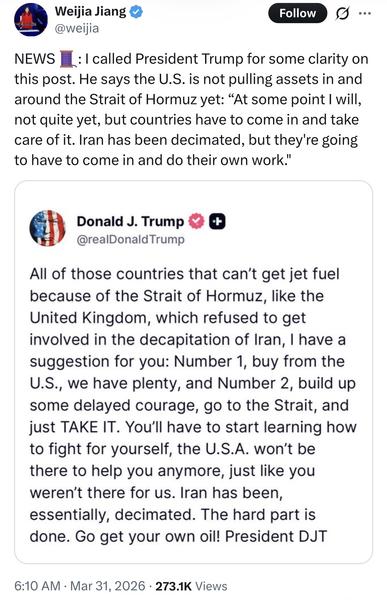
"Trump’s message was that the United States can sustain its own economic and energy ecosystem, while countries dependent on regional exports will either have to buy from the United States or manage the strait themselves."
It is great to have an ally, not a threat, who is trying to destroy your economy.
 
Top