To be fair he could objectively be putting all aid sent of military value in the same category of us aid to Israel as a term not in reference to the actual program. Objectively the mechanism used to deliver military gear or funding for said gear is less important to his overall point then the fact it was sent at reduced or no cost. So long as the information isn't fals I don't see how it's not reasonable? Regardless of emotion for or against a fact is still a fact. There is also substantial other aid such as training ,technical assistance, intelligence, diplomatic support. that has been provided ultimately at the expense of the u.s taxpayer not the Israeli.American aid to Israel is objectively the aid mechanism most favorable to the US and least favorable to the nominal recipient, and one of the most volumetrically insignificant ones. And yet it is talked about x100 more than all other aid mechanisms combined.
It is therefore clear that at least 99% of debate on the topic is emotional and not reasonable. The best case for that is that most critics of the mechanism do not understand the basic facts of this and general aid programs.
I said that Israel never really got much money out of it. That is an objective statement. It never was nor meant to be some financial driver. Israel got military surplus items. The word surplus means all those missiles cited earlier are of variants and age that the US preferred not to use anymore. They ended up in warehouses. The US gave Israel a quota and said go pick whatever you find that's useful. And most of that stuff before the 2000's just found its way into Israeli warehouses and never really used.
In the 2000's the Israeli MoD started making effective use of the program, buying more advanced items. But the Israeli economy which had just opened to the global market - boomed. And the nominal sum of the aid was no longer relevant.
After the 1973 war the US sent emergency aid to Israel in the form of more tanks and aircraft but that's a separate program, not the FMF.
And without knowing it you just made the entire case for the US aid to Israel. Make Israeli domestic hardware redundant, or at least force them to source parts from the US instead of from someone else.
Examples: German engines and transmissions manufactured in the US for Israeli AFVs.
American AA missiles (AIM-120, AIM-9) instead of Israeli (Derby, Stunner, Python).
JDAM and SDB instead of SPICE.
M109 instead of Sholef.
F-16 instead of Lavi.
Did you know the entire Merkava program was very close to being shut down, with Abrams and Stryker taking over the Merkava and Namer programs?
The aid mechanism has been widely criticized for its effect on Israel's own DIB and the increased reliance on the US instead.
Consequently the US now has a massive stake in Israel's arms industry.
Israel traded away a significant portion of its national defense and resilience for an aid mechanism which Israel's economy rapidly outpaced.

Middle East Defence & Security
- Thread starter MaenZ
- Start date

Big_Zucchini
Well-Known Member
You seem to miss the entire point of these aid mechanisms - which is to buy influence. And the concept of polymorphism - which is that things can take on many forms.To be fair he could objectively be putting all aid sent of military value in the same category of us aid to Israel as a term not in reference to the actual program. Objectively the mechanism used to deliver military gear or funding for said gear is less important to his overall point then the fact it was sent at reduced or no cost. So long as the information isn't fals I don't see how it's not reasonable? Regardless of emotion for or against a fact is still a fact.
By doing this aid mechanism, the US ensured an ally is dependent on it and easily pressured to accepting US demands for a very low cost. Some might argue the cost itself is non existent.
The US does this with basically every ally. Massive deployments worth tens of billions of dollars annually in Japan, Korea, Qatar, Baltics etc.
Some of these are for the US's own global presence capability, and some for outright defense of these allies.
These deployments consequently allow the US to put leverage on these nations to accept American policies on China, Russia, etc.
Deployments which not only not provide similar monetary value in exchange, but also risk American troops.
All the things you listed are bilateral, meaning Israel also pays for these as much as the US does.Regardless of emotion for or against a fact is still a fact. There is also substantial other aid such as training ,technical assistance, intelligence, diplomatic support. that has been provided ultimately at the expense of the u.s taxpayer not the Israeli.
I'm guessing by now we've had half a dozen pages dedicated to US aid to Israel. I've yet to see even accusatory discussion on aid to Qatar, Baltics, Korea, Japan, Saudi Arabia, Egypt, Jordan, etc.
This is utter nonsense....Israel got military surplus items. The word surplus means all those missiles cited earlier are of variants and age that the US preferred not to use anymore. They ended up in warehouses. The US gave Israel a quota and said go pick whatever you find that's useful. And most of that stuff before the 2000's just found its way into Israeli warehouses and never really used.
Israel fought wars with US tanks, AFVs, aircraft, missiles, etc., free from the USA. In 1973 Israel received weapons straight from US war stocks, e.g. aircraft flown direct from USAF bases by USAF pilots, in some cases being flown in action by Israeli pilots within hours of delivery, & much the same with AAMs. Maybe you're too young to have been aware of it at the time, but the scale of US aid to Israel at the time was impossible to hide. The USSR was replacing weapons lost by the Arab forces, & the USA was matching that by replacing Israeli losses - & more.
Israel was one of the first recipients of F-15 & F-16 - heavily subsidised. It received E-2s in the 1970s, & used them heavily. The USA covered a lot of the costs of withdrawing from Sinai. Until 1999, Israel received $3 billion per year in US grants, $1.2 bn economic & $1.8 bn military - & of course, the economic aid could replace Israeli government spending & free money for buying US weapons, because from 1979, US economic aid to Israel was cash grants not tied to buying US products.
Cumulative US aid to Israel up to 2022 is estimated at $318 billion, adjusted for inflation, of which $93 billion was economic (much of it effectively military, e.g. being used to pay off debts incurred by buying weapons) & $225 billion military. There were years in the 1970s when US military aid was more than the Israeli defence budget.
Big_Zucchini
Well-Known Member
So in reply to my comment about the FMF, you decided to bundle together both Nickel Grass and the FMF, and also reached almost 80 years in the past. That's amazing.This is utter nonsense.
Israel fought wars with US tanks, AFVs, aircraft, missiles, etc., free from the USA. In 1973 Israel received weapons straight from US war stocks, e.g. aircraft flown direct from USAF bases by USAF pilots, in some cases being flown in action by Israeli pilots within hours of delivery, & much the same with AAMs. Maybe you're too young to have been aware of it at the time, but the scale of US aid to Israel at the time was impossible to hide. The USSR was replacing weapons lost by the Arab forces, & the USA was matching that by replacing Israeli losses - & more.
Israel was one of the first recipients of F-15 & F-16 - heavily subsidised. It received E-2s in the 1970s, & used them heavily. The USA covered a lot of the costs of withdrawing from Sinai. Until 1999, Israel received $3 billion per year in US grants, $1.2 bn economic & $1.8 bn military - & of course, the economic aid could replace Israeli government spending & free money for buying US weapons, because from 1979, US economic aid to Israel was cash grants not tied to buying US products.
Cumulative US aid to Israel up to 2022 is estimated at $318 billion, adjusted for inflation, of which $93 billion was economic (much of it effectively military, e.g. being used to pay off debts incurred by buying weapons) & $225 billion military. There were years in the 1970s when US military aid was more than the Israeli defence budget.
Since it clearly has nothing to do with the current state of the aid program and its balance of costs and benefits to both sides, I'm guessing this is some d*ck measuring contest between the two nations. To which I reply: You're welcome.

To be sure that I don't misinterpret anything, when you say "volumetrically insignificant" are you trying to say that the quantities delivered are small? If so, you're just plain wrong. Historically Israel has received massive quantities of US aid.American aid to Israel is objectively the aid mechanism most favorable to the US and least favorable to the nominal recipient, and one of the most volumetrically insignificant ones. And yet it is talked about x100 more than all other aid mechanisms combined.
It is therefore clear that at least 99% of debate on the topic is emotional and not reasonable. The best case for that is that most critics of the mechanism do not understand the basic facts of this and general aid programs.
This is blatantly untrue. Swerve responded to this, so I'll leave it at that. Israel did in fact use aid they received in combat. They did it in the past, they did it very recently. Now you're claiming "most". Do you have data to quantify how much of it was used and how much wasn't?I said that Israel never really got much money out of it. That is an objective statement. It never was nor meant to be some financial driver. Israel got military surplus items. The word surplus means all those missiles cited earlier are of variants and age that the US preferred not to use anymore. They ended up in warehouses. The US gave Israel a quota and said go pick whatever you find that's useful. And most of that stuff before the 2000's just found its way into Israeli warehouses and never really used.
I intentionally re-read the entire conversation and I want to remind you of the context. You are advocating reduction of aid as a reduction of dependence. If you want that, you have to consider all forms of aid. It does you no good if the US can cut crucial war-time deliveries and cause problems for Israel's war effort, even without regular peace-time aid programs.In the 2000's the Israeli MoD started making effective use of the program, buying more advanced items. But the Israeli economy which had just opened to the global market - boomed. And the nominal sum of the aid was no longer relevant.
After the 1973 war the US sent emergency aid to Israel in the form of more tanks and aircraft but that's a separate program, not the FMF.
No, not the entire case. There's much more there, but I don't want to get into it. The question being discussed isn't whether the US should help Israel. The question being discussed is whether Israel can stop being dependent on the US through elimination of US military aid, and by extension how significant or insignificant this aid is, and has been. There's an argument to be made that if the US weren't selling weapons to Israel, support for aid and arms to Israel would decline, and ultimately Israel would be worse off.And without knowing it you just made the entire case for the US aid to Israel. Make Israeli domestic hardware redundant, or at least force them to source parts from the US instead of from someone else.
On a side note you're also ignoring that this is a two-way street. By being a major market for US defense contractors Israel gains advocates within the US government.
Even with it's current economy, it's not conceivable that Israel can go it alone. Countries with much larger economies can't develop everything they need domestically and have to cooperate internationally, or import things. And when countries do try to go it mostly alone it often leads to problems. Look at the French fighter jet programs. Look at Russia's armored vehicle development. Modern weapons are so expensive that even the US resorts to wide-spread international cooperation to offset costs, as well as capture markets. Integration into the US technological eco-system is a benefit to Israel, and if aid were cut it's highly unlikely Israel would divest from it. This would produce a situation where the "negative" effects you're talking about would still exist while the positive benefit of aid would disappear.Examples: German engines and transmissions manufactured in the US for Israeli AFVs.
American AA missiles (AIM-120, AIM-9) instead of Israeli (Derby, Stunner, Python).
JDAM and SDB instead of SPICE.
M109 instead of Sholef.
F-16 instead of Lavi.
Did you know the entire Merkava program was very close to being shut down, with Abrams and Stryker taking over the Merkava and Namer programs?
Undoubtedly criticized by Israeli defense industry commentators and supporters who would love to see the contracts go to them instead of US firms even if they would cost more, take longer, and ultimately under-deliver. It reminds me of Russian defense industry firms hiring retired military officer in ~2010-2011 to write articles about how the Iveco Lynx is a bad idea for Russia, and instead Russia should buy domestically. Since no domestic MRAPs existed, they engaged in nonsensical comparisons like trying to compare a 4X4 MRAP to a BMP-3.The aid mechanism has been widely criticized for its effect on Israel's own DIB and the increased reliance on the US instead.
Consequently the US now has a massive stake in Israel's arms industry.
It's a basic truth of economics that for the same amount of money Israel can get far more AIM-120s from the US then it could develop and produce equivalent munitions domestically and that's generously assuming that Israel would be able to produce something with the same capabilities. Economies of scale matter.
Israel is a regional power. It needs larger security partners. This is a basic reality.Israel traded away a significant portion of its national defense and resilience for an aid mechanism which Israel's economy rapidly outpaced.
Stop playing games. The post that swerve originally responded to was you and me discussing aid to Israel in general, not a specific individual program. And you made claims about how the aid was not significant in the broadest of terms. You did not state "this specific program". Now you're trying to move the goal posts to "win" the argument, while ignoring the entire history that's being referred to.So in reply to my comment about the FMF, you decided to bundle together both Nickel Grass and the FMF, and also reached almost 80 years in the past. That's amazing.
Since it clearly has nothing to do with the current state of the aid program and its balance of costs and benefits to both sides, I'm guessing this is some d*ck measuring contest between the two nations. To which I reply: You're welcome.
Big_Zucchini
Well-Known Member
If I'm plain wrong, why do you have to shift a current thing into historical?To be sure that I don't misinterpret anything, when you say "volumetrically insignificant" are you trying to say that the quantities delivered are small? If so, you're just plain wrong. Historically Israel has received massive quantities of US aid.
If your argument is true, it should also stand when applied to the current state.
There is no publicly accessible database for this. The visible surplus aid items we see are older munitions. These are scarcely used if at all, because their replacements are very expensive. So their use cases are intentionally limited.This is blatantly untrue. Swerve responded to this, so I'll leave it at that. Israel did in fact use aid they received in combat. They did it in the past, they did it very recently. Now you're claiming "most". Do you have data to quantify how much of it was used and how much wasn't?
The F-15 below are rocking AIM-7 missiles. Their sole use case is very large aircraft, like the B-52 they're escorting.
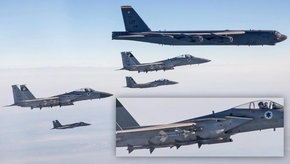
Another famous case is the Patriot. Used a couple of times in Syria to down Su-24 planes, and withdrawn after a very uneventful career. When asked why the systems are not utilized, air force officials said it was simply too expensive to restock.
Proper utilization of aid items only started around the early 2000's, for items acquired since.
I believe in merits of canceling the FMF program. But I cannot deny that it is a mutually beneficial program that no side is currently very interested in canceling.I intentionally re-read the entire conversation and I want to remind you of the context. You are advocating reduction of aid as a reduction of dependence. If you want that, you have to consider all forms of aid. It does you no good if the US can cut crucial war-time deliveries and cause problems for Israel's war effort, even without regular peace-time aid programs.
Realistically, Israel will want to give the US some leverage mechanism on it which can be anticipated and prepared for. Better have something you know than be surprised during a war.
When you say "all forms of aid", I assume you mean something aside from FMF. But FMF is really the only existing mechanism right now.
Everything else you mentioned isn't aid. That's just trade.
You're again conflating multiple unrelated things. There is no relation between FMF and sale of hardware to Israel. With or without the FMF, Israel can buy F-35s, KC-46s, CH-53Ks, and all sorts of munitions.No, not the entire case. There's much more there, but I don't want to get into it. The question being discussed isn't whether the US should help Israel. The question being discussed is whether Israel can stop being dependent on the US through elimination of US military aid, and by extension how significant or insignificant this aid is, and has been. There's an argument to be made that if the US weren't selling weapons to Israel, support for aid and arms to Israel would decline, and ultimately Israel would be worse off.
The answer to your first question is yes. Israel can eliminate dependence on the US through ending of the FMF program.
But if the FMF ended today, the goal of achieving independence would still take several decades to achieve. Assuming you mean manufacturing independence, which is the type of independence Israel is seemingly striving for.
To the contrary. I have consistently argued that the aid mechanism is mutually beneficial with a positive ROI.On a side note you're also ignoring that this is a two-way street. By being a major market for US defense contractors Israel gains advocates within the US government.
When we look at other countries with a 10 million population, people hardly think of the level of military industry Israel has. Yet it still does. And because it is a significant economical driver, with a backlog of $70 billion among the 3 major companies, this and existing infrastructure can be leveraged to further increase independence.Even with it's current economy, it's not conceivable that Israel can go it alone. Countries with much larger economies can't develop everything they need domestically and have to cooperate internationally, or import things. And when countries do try to go it mostly alone it often leads to problems. Look at the French fighter jet programs. Look at Russia's armored vehicle development. Modern weapons are so expensive that even the US resorts to wide-spread international cooperation to offset costs, as well as capture markets. Integration into the US technological eco-system is a benefit to Israel, and if aid were cut it's highly unlikely Israel would divest from it. This would produce a situation where the "negative" effects you're talking about would still exist while the positive benefit of aid would disappear.
Israel imports aviation engines, but it can maintain, repair, and refurbish them. It can do the same for engines and transmissions for heavy AFVs. It manufactures rocket and small jet motors for munitions. It manufactures bizjets locally. There's a lot of infrastructure from which to scale up. Hardly anything requires new investment.
The Sholef is a great example. Israel didn't handle the project financially back then and bought the M109. Today the Ro'em is in service, including local manufacture of critical components like the barrel and ammo.
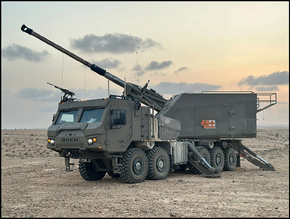
When considering manufacturing independence, there is no true need to manufacture absolutely everything. It is up to the armed forces to determine which items are critical, and which items can be easily substituted. If we again look at the Ro'em, we can see that it uses local barrels and ammunition, locally manufactured turret, and an American armored truck.
For the barrels and ammunition, one must only maintain a supply of steel of sufficient quality. The armored truck can be substituted rather easily.
That makes cannon artillery something in which Israel has sufficient independence.
Combat aircraft are the most complicated item. They cannot be fully manufactured in Israel. At least not in the same quality as the US. BSEL used to manufacture J79 engines under license. IAI can manufacture everything else in the aircraft. But competing with American engine quality is impossible. However, these capabilities do allow Israel to maximally utilize existing platforms, and restore damaged or "destroyed" planes to combat capability.
This also allows Israel to create intermediate capabilities like the once secretive RA-01 stealth drone.

That is actually the opposite. American munitions are comparatively much more expensive than Israeli ones.It's a basic truth of economics that for the same amount of money Israel can get far more AIM-120s from the US then it could develop and produce equivalent munitions domestically and that's generously assuming that Israel would be able to produce something with the same capabilities. Economies of scale matter.
I have no data on Derby and Python missiles, but David's Sling is said to cost $700k domestically and $1 million for the export market, while competing with the Patriot. Does the Patriot achieve such low costs?
Iron Dome is said to cost $50k per missile. The US's equivalent IFPC inc 2 is still at about $400k per missile last time I checked.
This isn't just a matter of economies of scale. The US actually doesn't manufacture at large enough scale the AIM-120 to leverage this, as well as many other types of munitions. And the preference is for very high performance, exquisite munitions, that cost x10 as much as they should be. Israel takes an opposite approach, going for cost savings at the component and subcomponent level, to reach a goal at minimal price and to maximize not performance but the cost effectiveness.
It also needs those partners to support it and not pressure it out of self defense. That is the essence of Israel's increasing self-reliance.Israel is a regional power. It needs larger security partners. This is a basic reality.
Unless specified otherwise, it is always reasonable to assume that "aid to Israel" refers to the FMF which is an ongoing program and not one time programs from the 70's.Stop playing games. The post that swerve originally responded to was you and me discussing aid to Israel in general, not a specific individual program. And you made claims about how the aid was not significant in the broadest of terms. You did not state "this specific program". Now you're trying to move the goal posts to "win" the argument, while ignoring the entire history that's being referred to.
You said "never". That was not true. You could have just accepted the (fairly minor) correction & moved on, instead of making it a big deal.If I'm plain wrong, why do you have to shift a current thing into historical?
If your argument is true, it should also stand when applied to the current state.
One of those "one time programs" had run for 40 years, last time I checked.refers to the FMF which is an ongoing program and not one time programs from the 70's.
Big_Zucchini
Well-Known Member
Being pedantic isn't an argument. It's just a pathway to being argumentative. If you have a question - ask. And be clear about it. I choose not to get stuck on minor wording choices you guys make.You said "never". That was not true. You could have just accepted the (fairly minor) correction & moved on, instead of making it a big deal.
One of those "one time programs" had run for 40 years, last time I checked.
Also I am careful with wording. You never bothered asking how I define "significant" by the way.
Which program ran for 40 years?
Snapshots are inherently inaccurate. Today the turbines are off, the factory is empty save the security and skeleton maintenance staff, everyone is at home. Therefore there is no need for the thousands of workers. It should stand when applied to the current state. You have to take a bigger picture view to understand. And what exists today didn't one day appear based on just an evaluation of what's needed here and now. It evolved out of what was there previously.If I'm plain wrong, why do you have to shift a current thing into historical?
If your argument is true, it should also stand when applied to the current state.
If they are useless, why are they carrying them? Given what we saw with the R-37M in Ukraine recently, I suspect many of these "only useful against bombers" missiles are actually useful in other situations too, they're just not as well optimized for them.There is no publicly accessible database for this. The visible surplus aid items we see are older munitions. These are scarcely used if at all, because their replacements are very expensive. So their use cases are intentionally limited.
The F-15 below are rocking AIM-7 missiles. Their sole use case is very large aircraft, like the B-52 they're escorting.
View attachment 54012
Are you saying Patriots weren't utilized against any inbounds from Hezbollah during the various conflicts with them? I was under the impression they were.Another famous case is the Patriot. Used a couple of times in Syria to down Su-24 planes, and withdrawn after a very uneventful career. When asked why the systems are not utilized, air force officials said it was simply too expensive to restock.
I'm not sure what your fascination with this seemingly arbitrary date is but that's clearly not true. Israel fought many wars in the second half of the 20th century and utilized aid during those wars. Perhaps this use was "improper", whatever that means.Proper utilization of aid items only started around the early 2000's, for items acquired since.
Will the US be willing to give Israel access to the latest technology if Israel isn't a partner with some degree of dependence? I'm skeptical of the underlying logic of cancelling one military aid program eliminating Israeli dependence on the US.I believe in merits of canceling the FMF program. But I cannot deny that it is a mutually beneficial program that no side is currently very interested in canceling.
Realistically, Israel will want to give the US some leverage mechanism on it which can be anticipated and prepared for. Better have something you know than be surprised during a war.
When you say "all forms of aid", I assume you mean something aside from FMF. But FMF is really the only existing mechanism right now.
Everything else you mentioned isn't aid. That's just trade.
If America lets them, sure. Israel would however have to pay for it themselves. Will Israel be able to get the kind of technological cooperation they get now? What does a future without US military aid to Israel even look like? What other things would have to occur?You're again conflating multiple unrelated things. There is no relation between FMF and sale of hardware to Israel. With or without the FMF, Israel can buy F-35s, KC-46s, CH-53Ks, and all sorts of munitions.
Then why cancel the program? Why not work towards said theoretical independence first while continuing to take the free stuff?The answer to your first question is yes. Israel can eliminate dependence on the US through ending of the FMF program.
But if the FMF ended today, the goal of achieving independence would still take several decades to achieve. Assuming you mean manufacturing independence, which is the type of independence Israel is seemingly striving for.
But you want to cancel it...To the contrary. I have consistently argued that the aid mechanism is mutually beneficial with a positive ROI.
Another logical conclusion is that Israel is already punching above their weight class and is stretched thin to do a lot for it's size.When we look at other countries with a 10 million population, people hardly think of the level of military industry Israel has. Yet it still does. And because it is a significant economical driver, with a backlog of $70 billion among the 3 major companies, this and existing infrastructure can be leveraged to further increase independence.
Scaling up without new investment is questionable. Developing independent platforms for tiny production runs is expensive.Israel imports aviation engines, but it can maintain, repair, and refurbish them. It can do the same for engines and transmissions for heavy AFVs. It manufactures rocket and small jet motors for munitions. It manufactures bizjets locally. There's a lot of infrastructure from which to scale up. Hardly anything requires new investment.
One of the pieces of equipment that's relatively simple to manufacture compared to things like AFVs and combat jets. What's the production cost look like per unit compared to something like the RoK K9? What's the production run envisioned for the type?The Sholef is a great example. Israel didn't handle the project financially back then and bought the M109. Today the Ro'em is in service, including local manufacture of critical components like the barrel and ammo.
View attachment 54013
When considering manufacturing independence, there is no true need to manufacture absolutely everything. It is up to the armed forces to determine which items are critical, and which items can be easily substituted. If we again look at the Ro'em, we can see that it uses local barrels and ammunition, locally manufactured turret, and an American armored truck.
For the barrels and ammunition, one must only maintain a supply of steel of sufficient quality. The armored truck can be substituted rather easily.
That makes cannon artillery something in which Israel has sufficient independence.
Is there any reason to think platforms will get cheaper and more mass-produced in the future? Because right now the direction for military technology is for successive generations to be more complex, more expensive, and fewer in number. This means that fewer independent MICs can exist and more international cooperation is needed. I would point to Sweden as a good example, but they're not alone. Full MBT manufacturing across Europe (east and west) is another good example to look at.Combat aircraft are the most complicated item. They cannot be fully manufactured in Israel. At least not in the same quality as the US. BSEL used to manufacture J79 engines under license. IAI can manufacture everything else in the aircraft. But competing with American engine quality is impossible. However, these capabilities do allow Israel to maximally utilize existing platforms, and restore damaged or "destroyed" planes to combat capability.
This also allows Israel to create intermediate capabilities like the once secretive RA-01 stealth drone.
View attachment 54014
Are those production costs or sales prices?That is actually the opposite. American munitions are comparatively much more expensive than Israeli ones.
I have no data on Derby and Python missiles, but David's Sling is said to cost $700k domestically and $1 million for the export market, while competing with the Patriot. Does the Patriot achieve such low costs?
Iron Dome is said to cost $50k per missile. The US's equivalent IFPC inc 2 is still at about $400k per missile last time I checked.
I want you to think about what you just wrote. The US supplies Israel's entire need for this missile type. The US also supplies their own needs and those of a host of allied nations. Yet this production volume is not at a large enough scale to leverage economies of scale. What will that mean for Israel attempting to manufacture it's own missiles, predominantly for domestic needs, from scratch?This isn't just a matter of economies of scale. The US actually doesn't manufacture at large enough scale the AIM-120 to leverage this, as well as many other types of munitions.
Perhaps Israel needs cheaper and less high-performing munitions and the US is misaligned in terms of delivering to Israeli needs. None of this changes the economies of scale argument. There are also risks with going down the path of cost-effectiveness vs overall effectiveness. See Russia for the various pitfalls of this approach. I think they've mapped them all by successively falling into each one.And the preference is for very high performance, exquisite munitions, that cost x10 as much as they should be. Israel takes an opposite approach, going for cost savings at the component and subcomponent level, to reach a goal at minimal price and to maximize not performance but the cost effectiveness.
Absent the existential Soviet threat on a global scale, US interests have become slowly but steadily less aligned with many of it's partners and satellite states. This goes beyond the scope of this discussion.It also needs those partners to support it and not pressure it out of self defense. That is the essence of Israel's increasing self-reliance.
I disagree. Aid to Israel means aid to Israel.Unless specified otherwise, it is always reasonable to assume that "aid to Israel" refers to the FMF which is an ongoing program and not one time programs from the 70's.
Big_Zucchini
Well-Known Member
The debate around American aid to Israel, including whether to keep it, reform it, cancel it, or anything in between - revolves around the current FMF program.Snapshots are inherently inaccurate. Today the turbines are off, the factory is empty save the security and skeleton maintenance staff, everyone is at home. Therefore there is no need for the thousands of workers. It should stand when applied to the current state. You have to take a bigger picture view to understand. And what exists today didn't one day appear based on just an evaluation of what's needed here and now. It evolved out of what was there previously.
Debating a modern Nickel Grass is kinda pointless given the long evolution of the threat scene and Israel's military structure and capabilities. It is very unlikely to happen again because Israel is long past any inability to fund its own weapons or shortage of them.
In 1973 Israel fought a proxy war against the USSR and Nickel Grass was the US stepping in as a counterweight. It fought it from a position of parity with the Arabs, and materially outnumbered. Two realities that have been relegated to history.
If any such situation was to occur, it would be a special case worthy of special consideration and debate, and not something to set in stone as opposed to a permanent item which is very much debatable now in 2025.
Because, as I explained, they have set use cases. Relevant part in red.If they are useless, why are they carrying them? Given what we saw with the R-37M in Ukraine recently, I suspect many of these "only useful against bombers" missiles are actually useful in other situations too, they're just not as well optimized for them.

After the minimization process of the Patriot, they remained stationed in the Israeli Negev, pointing south and west.Are you saying Patriots weren't utilized against any inbounds from Hezbollah during the various conflicts with them? I was under the impression they were.
One Patriot launch occurred during the war, against a Houthi drone. It happened in November 9th 2023. Subsequent surface-based intercepts were done with Iron Dome and Barak systems, mostly naval. Aerial intercepts were also recorded.
No further use of the Patriot was recorded during the war.
Two things happened around that time, hence its significance:I'm not sure what your fascination with this seemingly arbitrary date is but that's clearly not true. Israel fought many wars in the second half of the 20th century and utilized aid during those wars. Perhaps this use was "improper", whatever that means.
- In 1985 Israel enacted an economic stabilization plan, shifting from socialist to capitalist market. By 2000 Israel had a decade of strong economic growth, allowing it to behave like a strong and stable economy.
- Israel's tech access to the US grew sufficiently to participate in key programs and receive truly modern weaponry. F-16I marked its beginning.
I do not see any connection between tech access and sharing, and the FMF. The US shares tech and such with its allies, regardless of the aid mechanism in place or its existence.Will the US be willing to give Israel access to the latest technology if Israel isn't a partner with some degree of dependence? I'm skeptical of the underlying logic of cancelling one military aid program eliminating Israeli dependence on the US.
One formal aspect to this is the QME - Qualitative Military Edge.
The US is legally bound to preserve Israel's QME in the middle east. And that is entirely separate from the FMF.
LINK
If for any reason the FMF is altered or canceled, the QME remains in place. Similarly the QME can be canceled without affecting the FMF.
In the F-35 program, Israel did not enter as a tiered partner. It entered as a Security Cooperative Participant, same as Singapore. It independently negotiated several privileges which no tiered partner has been given, like its very own test aircraft, and permission to integrate its own systems and weapons independently.
The underlying reason for this is higher American trust in Israel. And not the FMF.
Israel has been engaged in wars for over a century. Europe succumbed to the peace dividend. This level of military activity, all while in direct cooperation with the US, is what feeds mutual trust. That is also why Israel and the US have this unique air defense development cooperation program, which the US has with none else.
Take away the FMF and none of these goes away. The deep level of trust and decades of partnership remain.
Unlikely. In such event, given the non-relation, the level of technological cooperation is likely to increase at least at the same rate it does now.If America lets them, sure. Israel would however have to pay for it themselves. Will Israel be able to get the kind of technological cooperation they get now? What does a future without US military aid to Israel even look like? What other things would have to occur?
A future without US military aid will look like Israel cutting about 3-5% of the defense budget. It's painful, but I can give at least a couple of ways of doing it without actually harming security in any way.
For context, Israel's 2026 annual defense budget is $34 billion. The FMF is $3.3 billion annually. Due to price parity differences, that money is worth about a 1/3rd to half of what it'd get if spent locally. There were a few times where the IDF had to take even bigger cuts, even if we talk about a nominal 10% cut.
It's not really free stuff. There's a lot of strings attached. Sometimes these strings can mean Israel losing out on arms exports worth several years of that aid.Then why cancel the program? Why not work towards said theoretical independence first while continuing to take the free stuff?
Israeli defense companies made $17.7 billion in revenues in 2024. Their success drives the defense budget. The defense budget drives their success. It's a proven ecosystem.Another logical conclusion is that Israel is already punching above their weight class and is stretched thin to do a lot for it's size.
LINK
My opinion is not set. I presented arguments, but that does not mean I am convinced by them.But you want to cancel it...
In Israel's defense ecosystem, there is significant government investment in R&D. Capabilities are gradually built on the foundation of those built before, in an endless cycle. The MoD funds what it wants to see in the military. And it also consistently becomes an export success, further driving investment. The private sector also seems to have high confidence in Israel's DIB. So there is always new investment.Scaling up without new investment is questionable. Developing independent platforms for tiny production runs is expensive.
I do not know. I gave that example because it's very easy to disseminate into critical and non critical components. The IDF does not release prices because it usually doesn't know the price. The DIB and military are intertwined. A lot of the costs are just for labor you'd otherwise have working on something else.One of the pieces of equipment that's relatively simple to manufacture compared to things like AFVs and combat jets. What's the production cost look like per unit compared to something like the RoK K9? What's the production run envisioned for the type?
The Ro'em production run for Israel is 150. It's also exported in unspecified numbers to an unnamed Asian country for $106 million, and is competing in the US.
Big_Zucchini
Well-Known Member
Usually when an item starts becoming prohibitively expensive or complex, an intermediate niche appears. The F-47 is claimed to cost $300 million per unit if made and configured for the capabilities the USAF wants. Enter the CCA - Collaborative Combat Aircraft. An intermediate capability that is alone less sophisticated, more manufacturable, and more attritable than today's F-15 and F-35, but more complex than a MALE drone.Is there any reason to think platforms will get cheaper and more mass-produced in the future? Because right now the direction for military technology is for successive generations to be more complex, more expensive, and fewer in number. This means that fewer independent MICs can exist and more international cooperation is needed. I would point to Sweden as a good example, but they're not alone. Full MBT manufacturing across Europe (east and west) is another good example to look at.
The underlying reason for this is that technology usually moves simultaneously in 2 directions:
- Make new tech.
- Make existing tech - cheaper, faster, more accessible.
Look at Ukraine-Russia. There are few missile makers in the world. Even fewer who can make missiles in quantity at low cost. And these usually fill limited niches.
But simultaneously the once ultra expensive optical fiber, or the SDR comms, and various other such tech made their way into the dirt cheap drones both sides are using.
Iron Dome is quoted as $50k mostly in the context of local use. The US paid $150k per missile but they wanted a unique variant so it likely affected the cost. I know the Iron Dome's interceptor comes in 2 variants - EO and RF. I'm not sure which one the $50k figure is referring to.Are those production costs or sales prices?
But one thing to know is that in wartime, Israel pays the manufacturing price. David's Sling price was once said to be $700k for Israel, and $1 million for export.
Part of the price equation is that Israel's MoD guarantees R&D and manufacturing contracts, so defense companies don't have to charge huge premiums to ensure profitability.
If AIM-120 production was ever too tight to meet Israel's needs, it would simply turn to local solutions:I want you to think about what you just wrote. The US supplies Israel's entire need for this missile type. The US also supplies their own needs and those of a host of allied nations. Yet this production volume is not at a large enough scale to leverage economies of scale. What will that mean for Israel attempting to manufacture it's own missiles, predominantly for domestic needs, from scratch?
Top to bottom:
Python 5 - EO WVRAAM
I-Derby-ER - RF BVRAAM
Sky Sting - RF BVRAAM (next gen)
View attachment 54016
The I-Derby-ER isn't used by the IAF on aircraft but it's integrated on the F-16 and F-15, and has been used operationally during the war with a temporary Spyder system which I posted about here a while ago.
The cost effectiveness focus doesn't give up all that much effectiveness. These are still very effective systems, as seen in the war with Iran. Just more focus is given to cost reduction. I don't know how much the US does that. But in Israel it's almost cultural at this point.Perhaps Israel needs cheaper and less high-performing munitions and the US is misaligned in terms of delivering to Israeli needs. None of this changes the economies of scale argument. There are also risks with going down the path of cost-effectiveness vs overall effectiveness. See Russia for the various pitfalls of this approach. I think they've mapped them all by successively falling into each one.
I don't think anyone has ever created an air defense system that leverages economies of scale so hard as Israel did with the Iron Dome. Every couple years there's another war and somehow the Iron Dome manages to spit out thousands of interceptors.
And a lot of the manufacturing for this is done in the US. Just recently a new Iron Dome interceptor factory was opened in the US. Of course, Israel maintains a copy of the full manufacturing process in Israel, it just does it slower than you can do in the US.
Yes the American craze for isolationism has been noted. It's actually a factor I used when talking about reasons to cancel the FMF program.Absent the existential Soviet threat on a global scale, US interests have become slowly but steadily less aligned with many of it's partners and satellite states. This goes beyond the scope of this discussion.
The u.s hardly needs to make Israel dependent on them they already are . It's it highly unlikely that without the u.s.a Israel would prevail if invaded by hostile neighbors or to put it's simply have survived the initial invasion attempts. There domestic military production certainly wouldn't be sufficient then or honestly now. Everything else your suggesting is going down a political rabbit hole I'm not engaging in.You seem to miss the entire point of these aid mechanisms - which is to buy influence. And the concept of polymorphism - which is that things can take on many forms.
By doing this aid mechanism, the US ensured an ally is dependent on it and easily pressured to accepting US demands for a very low cost. Some might argue the cost itself is non existent.
The US does this with basically every ally. Massive deployments worth tens of billions of dollars annually in Japan, Korea, Qatar, Baltics etc.
Some of these are for the US's own global presence capability, and some for outright defense of these allies.
These deployments consequently allow the US to put leverage on these nations to accept American policies on China, Russia, etc.
Deployments which not only not provide similar monetary value in exchange, but also risk American troops.
All the things you listed are bilateral, meaning Israel also pays for these as much as the US does.
I'm guessing by now we've had half a dozen pages dedicated to US aid to Israel. I've yet to see even accusatory discussion on aid to Qatar, Baltics, Korea, Japan, Saudi Arabia, Egypt, Jordan, etc.
The point I was making is when he said u.s aid he ment u.s aid in general not the specific program, and the follow on point that in no way does suggesting he didn't take away from the actual facts about "other aid". Or it's critical value to Israel. I don't think I was missing anything relevent to his post tho if I was I welcome him to correct me
Also no bilateral does not in any way mean the costs are equal, it simply means there is a deal with both parties receiving something.
On the other hand it's factually incorrect by a large degree to suggest that Israel gives America the same value of Intel, diplomatic leverage, protection, technical assistance, rnd, training, matince or financial aid as it receives. In terms of relative value or even in terms of actual dollars invested. Simply because such things are done as a bilateral deal does not imply that they are nore do the facts support such a claim
As for this topics relationship to other Mideast deal the u.s makes. Not just off topic but strait up not getting into a a pro Israel or anti Israel debate here. And polity ask you to not try and turn this into one.
Last edited:
I'm sorry I read this post after my first one I can't help but to ask if your serious here, are you stating that the country withYes the American craze for isolationism has been noted. It's actually a factor I used when talking about reasons to cancel the FMF program.
The most foreign air bases
The most foreign army bases
The most foreign navle bases
The country with the most military interventions into other nations over the last 50 years or more
The world's largest arms exporter by far
Has the largest and most frequent international military exercises (and the largest participants in said exercises)
The largest list of allies it regularly calls upon to go to wars of its own choice
A country that regularly declares it's right to police the world's waters and occasionally declare entire country's airspaces "no fly zones"
The country that just recently declared in no uncertain terms its dominion over THE ENTIRE WESTERN HEMISPHERE
And a foreign policy of America first, complete with a list of demands for other nations to accept or face reprisal
Is isolationist?
I'm sorry I couldn't help it.

Last edited:
Big_Zucchini
Well-Known Member
Are you talking about now or 1948 or anything in between?The u.s hardly needs to make Israel dependent on them they already are . It's it highly unlikely that without the u.s.a Israel would prevail if invaded by hostile neighbors or to put it's simply have survived the initial invasion attempts. There domestic military production certainly wouldn't be sufficient then or honestly now.
Now - Israel would prevail. It no longer has any enemies that can seriously threaten it to such extent.
In its early days Israel was more reliant on the UK and France than the US. Israeli assistance existed at the time but it was not the make it or break it of Israel's survival as these others were.
1982 was the first Israeli-Arab war fought with America being Israel's main sponsor and ally (American assistance came in 1973 but when the war practically ended).
However, 1982 was already past the point of Arab nations conventionally threatening Israel with extinction. Maybe you could make a case of it being the last one.
If anything other than the conventional sense of a word is used - it needs to be clarified. I understood your intent. But this clarification needs to be made by the person making the argument.The point I was making is when he said u.s aid he ment u.s aid in general not the specific program, and the follow on point that in no way does suggesting he didn't take away from the actual facts about "other aid". Or it's critical value to Israel. I don't think I was missing anything relevent to his post tho if I was I welcome him to correct me
You mentioned aspects like sharing of technology, experience, intelligence. It is mutual in the sense that both sides are doing that sharing. It is too convoluted to try to quantify the financial burden of sharing these. Creating these is one thing but sharing is easy. The real cost of sharing is risks. And both are sharing the same types of risks.Also no bilateral does not in any way mean the costs are equal, it simply means there is a deal with both parties receiving something
That highly depends on how you quantify things. Both sides extract different things from this arrangement. That is partly why I think it is pointless to quantify. The one inescapable truth is that both sides receive more than they put in. That is why I said there is a positive return on investment, with the costs and returns being both financial and non-financial.On the other hand it's factually incorrect by a large degree to suggest that Israel gives America the same value of Intel, diplomatic leverage, protection, technical assistance, rnd, training, matince or financial aid as it receives. In terms of relative value or even in terms of actual dollars invested. Simply because such things are done as a bilateral deal does not imply that they are nore do the facts support such a claim
I think a good way to summarize the FMF program as first and foremost America buying influence. Everything else is secondary at best. And for a variety of factors like Israel outgrowing the FMF, winds of change in American politics, and the evolution of American-Israeli relations, it is time to rethink the current state of FMF.
It is also my opinion that similar arrangements in Europe, MENA, and Asia, also need to be reconsidered and renegotiated/remade.
I did not make this thread into a pro this or anti that one. I comment here mainly giving updates on the middle east - Gaza, Syria, Lebanon, Yemen, Iraq, Iran.As for this topics relationship to other Mideast deal the u.s makes. Not just off topic but strait up not getting into a a pro Israel or anti Israel debate here. And polity ask you to not try and turn this into one.
If I am asked further on a topic, I aim to provide a maximally accurate answer.
I do not have positions. If an answer comes from a position it is likely to be less factual. And then it makes no sense to give it.
The US is not isolationist. And I did not say it was. Please re-read the comment before putting in the effort of finding buried meme templates.I'm sorry I read this post after my first one I can't help but to ask if your serious here, are you stating that the country with
The most foreign air bases
The most foreign army bases
The most foreign navle bases
The country with the most military interventions into other nations over the last 50 years or more
The world's largest arms exporter by far
Has the largest and most frequent international military exercises (and the largest participants in said exercises)
The largest list of allies it regularly calls upon to go to wars of its own choice
A country that regularly declares it's right to police the world's waters and occasionally declare entire country's airspaces "no fly zones"
The country that just recently declared in no uncertain terms its dominion over THE ENTIRE WESTERN HEMISPHERE
And a foreign policy of America first, complete with a list of demands for other nations to accept or face reprisal
Is isolationist?
I'm sorry I couldn't help it.
View attachment 54018
The "isolationist craze" refers to the fringe political movements on the political far right and far left (the so called horseshoe fact) like socialists and "America First" that advocate for a focus on internal policies (makes sense) but oddly at the expense of foreign policy and with the view that foreign policy somehow comes at the expense of internal policy.
I'm open to elaborate if you just ask.
Last edited:
To be clear I'm talking about both the past and present. War is more then just one battle it's a sustained event and there in lies Israels fundamental problom. Israel lacks the "legs" for a long term war both in domestic production and in the ability to absorb war time damage and losses in a war with out outside resupply and other forms of aid. Such as the threat of u.s military or other actions that effectively defend and protect Israel.Are you talking about now or 1948 or anything in between?
Now - Israel would prevail. It no longer has any enemies that can seriously threaten it to such extent.
In its early days Israel was more reliant on the UK and France than the US. Israeli assistance existed at the time but it was not the make it or break it of Israel's survival as these others were.
1982 was the first Israeli-Arab war fought with America being Israel's main sponsor and ally (American assistance came in 1973 but when the war practically ended).
However, 1982 was already past the point of Arab nations conventionally threatening Israel with extinction. Maybe you could make a case of it being the last one.
If anything other than the conventional sense of a word is used - it needs to be clarified. I understood your intent. But this clarification needs to be made by the person making the argument.
You mentioned aspects like sharing of technology, experience, intelligence. It is mutual in the sense that both sides are doing that sharing. It is too convoluted to try to quantify the financial burden of sharing these. Creating these is one thing but sharing is easy. The real cost of sharing is risks. And both are sharing the same types of risks.
That highly depends on how you quantify things. Both sides extract different things from this arrangement. That is partly why I think it is pointless to quantify. The one inescapable truth is that both sides receive more than they put in. That is why I said there is a positive return on investment, with the costs and returns being both financial and non-financial.
I think a good way to summarize the FMF program as first and foremost America buying influence. Everything else is secondary at best. And for a variety of factors like Israel outgrowing the FMF, winds of change in American politics, and the evolution of American-Israeli relations, it is time to rethink the current state of FMF.
It is also my opinion that similar arrangements in Europe, MENA, and Asia, also need to be reconsidered and renegotiated/remade.
I did not make this thread into a pro this or anti that one. I comment here mainly giving updates on the middle east - Gaza, Syria, Lebanon, Yemen, Iraq, Iran.
If I am asked further on a topic, I aim to provide a maximally accurate answer.
I do not have positions. If an answer comes from a position it is likely to be less factual. And then it makes no sense to give it.
The US is not isolationist. And I did not say it was. Please re-read the comment before putting in the effort of finding buried meme templates.
The "isolationist craze" refers to the fringe political movements on the political far right and far left (the so called horseshoe fact) like socialists and "America First" that advocate for a focus on internal policies (makes sense) but oddly at the expense of foreign policy and with the view that foreign policy somehow comes at the expense of internal policy.
I'm open to elaborate if you just ask.
I also said enemy's as more then one I actually don't want to get into that argument I'll just say my opinion is that Israel would face multiple enemies without u.s support. Or would likely face that prospect with out heavy diplomatic actions on there part is perhaps more accurate
Actually i believe the conventional understanding of aid to a country unless explicitly defined means aid to a country.
Well in qualitative terms Israel would still win that deal imop as the benefits they receive are existential to there survival. Or at least there national agenda, well for the u.s it's both a financial loss and well without Israel the u.s would not face anything like that kind of consequences it's self. I'm not saying the things like Intel Israel supplys back are not of value just that the deal is rather one-sided and not nearly equal.
So what you mean is you think Israel should change it's deal with the u.s because of a "small fringe group". If that is what you ment it must be neither small or fringe at least going by the impact implied there.
So yes I'm asking how exactly does a small fringe group warrant Israel canceling what from there perspective is a advantageous deal?
Or truthfully why even reference the fact of u.s isolationism in the context of it being that detrimental to any u.s military deal or any other deal the government may enter if the u.s is not in fact isolationist?
Edit also wasn't trying to insult you there it was just the thing that came to my head when I read your post. My sence of humor got the best of me.
Last edited:
Big_Zucchini
Well-Known Member
When you're quoting my full post but refer to a specific point, please divide the quotes so I can keep up with the context.To be clear I'm talking about both the past and present. War is more then just one battle it's a sustained event and there in lies Israels fundamental problom. Israel lacks the "legs" for a long term war both in domestic production and in the ability to absorb war time damage and losses in a war with out outside resupply and other forms of aid. Such as the threat of u.s military or other actions that effectively defend and protect Israel.
You can do that easily by highlighting a section of text, wait a sec and then a "reply" button will appear and allow you to select quote.

I agree that Israel's wars can be grouped into fewer more general wars. I'd rather treat this 7 front war since Oct 7 as one war but for the sake of argument I can definitely bunch all post-2005 Israeli-Palestinian wars.
I think that if you asked me before Oct 7th what Israel can and cannot handle, I'd say Israel could handle longer wars but was built for short wars. Actually this isn't the longest war in Israel's history. That would be the war of attrition of 1967-1970 (37 months). The IDF's structure and Israel's circumstances in this equation haven't changed much to optimize its capability to wage longer wars.
But the flip side of that coin is that Iran and its proxies (Hezbollah, Hamas, etc) all built their strategy on the notion that Israel cannot handle long wars. We know how that turned out for them.
This wasn't just a miscalculation of Israel. This was a miscalculation of human nature. Give a nation enough reason for determination, and they will persevere through things beyond our first intuition.
One of the factors for Israel's preference for shorter wars is its severe lack of strategic depth. But that also makes it more determined.
If we also analyze each front independently, we can see that in every single front except Gaza - Israel achieved decisive results very quickly. The time of Israeli focus on Hezbollah started in September of 2024, and ceasefire was already achieved in November 2024. The war with Iran lasted 12 days. The Houthis are harder to subdue but it ties into the reason why they're less of a headache.
Only in Gaza it took over 2 years and the situation will take a while to stabilize. And the main reason for that is that the unique circumstances in Gaza force Israel to fight with its hands tied in a way that doesn't exist in any other front.
Hezbollah also shield themselves among civilians but not to that extent. And they're not nearly as urbanized as Gaza.
That decision to take things slow was a voluntary one. If ever push comes to shove, it could also be done much more quickly, just with overall much, much higher civilian casualties.
Fortunately, some trends can be seen now that may prevent that scenario. It seems that Israel, US, and other partners are looking to disseminate the Gazan threat into less coherent and easier to handle fragments.
Over time we see that the potential for long wars is gradually reducing.
It is possible. I believe in the topic of diplomatic support, Israel is more the symptom and outlet for emotions, than its cause.I also said enemy's as more then one I actually don't want to get into that argument I'll just say my opinion is that Israel would face multiple enemies without u.s support. Or would likely face that prospect with out heavy diplomatic actions on there part is perhaps more accurate
That also means there's nothing Israelis, Europeans, and other allies, can do to avoid this. They can only handle the consequences. And my philosophy is that there's always a way to handle a situation.
Another school of thought on the topic asserts that western political support for Israel is inversely related to its balance of power. i.e. the more economic, military, and political strength it has, the more it faces western resistance. And vice versa.
Unsurprisingly although amusingly, since the middle east and Europe are opposite in many ways: This trend is also opposite for them. During the war, some elements in the west grew increasingly averse to Israel, but Israeli-Arab relations improved proportionately.
Something that none would dare say 10 years ago is that now Arab nations are significant importers of Israeli weapons.
Israel's 2026 defense budget is $34 billion. The FMF is $3.3 billion. Less than 10% of the defense budget. Now that might sound a lot, but today the Bank of Israel informed the government it could save $4.3 billion annually by just adjusting its enlistment program and the gov't just shrugged it off.Well in qualitative terms Israel would still win that deal imop as the benefits they receive are existential to there survival.
Does that sound existential? Actually it conceals one topic I deem existential but it's not a budgetary one.
Do you expect equality between a superpower and a nation of 10 million?Or at least there national agenda, well for the u.s it's both a financial loss and well without Israel the u.s would not face anything like that kind of consequences it's self. I'm not saying the things like Intel Israel supplys back are not of value just that the deal is rather one-sided and not nearly equal
Perhaps equity. Both sides benefit more than they put in. That's good investment. But it's first and foremost a stake in Israel's political environment to pressure it when needed.
Fringe as in far right and far left. Does fringe also mean few? If so then just accept far right/left.So what you mean is you think Israel should change it's deal with the u.s because of a "small fringe group". If that is what you ment it must be neither small or fringe at least going by the impact implied there.
Either way, no. I do not have a solid opinion on this. I do not believe just yet that canceling the FMF is worthwhile. But I do see the merits of it, and I would not have a strong reaction wherever it will go.
Because there are many reasons to things and I wanted to be thorough.So yes I'm asking how exactly does a small fringe group warrant Israel canceling what from there perspective is a advantageous deal?
Or truthfully why even reference the fact of u.s isolationism in the context of it being that detrimental to any u.s military deal or any other deal the government may enter if the u.s is not in fact isolationist?
Isolationism isn't a huge factor or threat yet. And there are mitigating factors like moderation with age. But I felt it's better to mention it than not. It affects public opinion and as you have proven, public opinion is an often brought up topic.
I didn't read that as an insult. I thought you misinterpreted me, which is easy when talking through text and not face to face.Edit also wasn't trying to insult you there it was just the thing that came to my head when I read your post. My sence of humor got the best of me.
Im on a tablet and can't easily do that I know it sucks.When you're quoting my full post but refer to a specific point, please divide the quotes so I can keep up with the context.
You can do that easily by highlighting a section of text, wait a sec and then a "reply" button will appear and allow you to select quote.
View attachment 54023
I agree that Israel's wars can be grouped into fewer more general wars. I'd rather treat this 7 front war since Oct 7 as one war but for the sake of argument I can definitely bunch all post-2005 Israeli-Palestinian wars.
I think that if you asked me before Oct 7th what Israel can and cannot handle, I'd say Israel could handle longer wars but was built for short wars. Actually this isn't the longest war in Israel's history. That would be the war of attrition of 1967-1970 (37 months). The IDF's structure and Israel's circumstances in this equation haven't changed much to optimize its capability to wage longer wars.
But the flip side of that coin is that Iran and its proxies (Hezbollah, Hamas, etc) all built their strategy on the notion that Israel cannot handle long wars. We know how that turned out for them.
This wasn't just a miscalculation of Israel. This was a miscalculation of human nature. Give a nation enough reason for determination, and they will persevere through things beyond our first intuition.
One of the factors for Israel's preference for shorter wars is its severe lack of strategic depth. But that also makes it more determined.
If we also analyze each front independently, we can see that in every single front except Gaza - Israel achieved decisive results very quickly. The time of Israeli focus on Hezbollah started in September of 2024, and ceasefire was already achieved in November 2024. The war with Iran lasted 12 days. The Houthis are harder to subdue but it ties into the reason why they're less of a headache.
Only in Gaza it took over 2 years and the situation will take a while to stabilize. And the main reason for that is that the unique circumstances in Gaza force Israel to fight with its hands tied in a way that doesn't exist in any other front.
Hezbollah also shield themselves among civilians but not to that extent. And they're not nearly as urbanized as Gaza.
That decision to take things slow was a voluntary one. If ever push comes to shove, it could also be done much more quickly, just with overall much, much higher civilian casualties.
Fortunately, some trends can be seen now that may prevent that scenario. It seems that Israel, US, and other partners are looking to disseminate the Gazan threat into less coherent and easier to handle fragments.
Over time we see that the potential for long wars is gradually reducing.
It is possible. I believe in the topic of diplomatic support, Israel is more the symptom and outlet for emotions, than its cause.
That also means there's nothing Israelis, Europeans, and other allies, can do to avoid this. They can only handle the consequences. And my philosophy is that there's always a way to handle a situation.
Another school of thought on the topic asserts that western political support for Israel is inversely related to its balance of power. i.e. the more economic, military, and political strength it has, the more it faces western resistance. And vice versa.
Unsurprisingly although amusingly, since the middle east and Europe are opposite in many ways: This trend is also opposite for them. During the war, some elements in the west grew increasingly averse to Israel, but Israeli-Arab relations improved proportionately.
Something that none would dare say 10 years ago is that now Arab nations are significant importers of Israeli weapons.
Israel's 2026 defense budget is $34 billion. The FMF is $3.3 billion. Less than 10% of the defense budget. Now that might sound a lot, but today the Bank of Israel informed the government it could save $4.3 billion annually by just adjusting its enlistment program and the gov't just shrugged it off.
Does that sound existential? Actually it conceals one topic I deem existential but it's not a budgetary one.
Do you expect equality between a superpower and a nation of 10 million?
Perhaps equity. Both sides benefit more than they put in. That's good investment. But it's first and foremost a stake in Israel's political environment to pressure it when needed.
Fringe as in far right and far left. Does fringe also mean few? If so then just accept far right/left.
Either way, no. I do not have a solid opinion on this. I do not believe just yet that canceling the FMF is worthwhile. But I do see the merits of it, and I would not have a strong reaction wherever it will go.
Because there are many reasons to things and I wanted to be thorough.
Isolationism isn't a huge factor or threat yet. And there are mitigating factors like moderation with age. But I felt it's better to mention it than not. It affects public opinion and as you have proven, public opinion is an often brought up topic.
I didn't read that as an insult. I thought you misinterpreted me, which is easy when talking through text and not face to face.
To be clear I'm speaking n the context of a direct sustained conflict without u.s support as something Israel is not well equipped to fight. Not a decades long series of engagements with the support of the u.s. those are completely different senerios then what was being discussed. Also We're talking military support and its value and verging on going off topic if we expand that idea beyond production capacity and the value/volume of aid.
As for the why of u.s support I've really already covered that the why is less important then the what in this case. The why is also unimportant unless there is valid reason to believe that the support would stop. Fringe or not u.s isolationism in my opinion is not a valid reason to believe it would
Again refering to u.s support as a whole and the value of it to Israel. Not the specific program. That is merely one aspect of such aid
And not it's not equal. I'm glad to hear you agree to that fact and clear up your previous position stating it was. That's the entirety of the point I wished to make on that subject.
Big_Zucchini
Well-Known Member
If you are talking about the FMF, then Israel will be fine. It outgrew the FMF.To be clear I'm speaking n the context of a direct sustained conflict without u.s support as something Israel is not well equipped to fight. Not a decades long series of engagements with the support of the u.s. those are completely different senerios then what was being discussed. Also We're talking military support and its value and verging on going off topic
If you're talking about the US no longer supplying weapons, then that will be a major problem but not an existential one.
It will create a huge vacuum. One of the world's biggest consumers of military hardware and a military technological leader is in need of a supplier? Yes please!
That is every aspiring power's wet dream. Not only is it a significant and exclusive market to get into, but it is also a gateway to rapid modernization through technological cooperation.
Germany, India, Taiwan, South Korea, Japan, and these are the ones I don't need to think about.
India I imagine would very much appreciate the opportunity to get its lagging aviation programs back on track and close the gap with its competition.
Even if some would rather keep it on the down low, it will likely be more potential sponsors courting Israel, than Israel scraping the barrel for resources.
I remind that Israel's previous sponsors - UK and France, also imposed an arms embargo on Israel once. The US wasn't Israel's first sponsor.
As another layer to this, the Israeli MIC/DIB is built in a way that duplicates capabilities. For bulk manufacturing, there's the US. And for peace time there's local manufacturing. This allows Israel to respond to trade disruptions by ramping up local production without wasting time on the set-up phase.
So if there's a shortage of motors or munitions or jet fuel - local industry got it covered. Together with a habit for maintenance of massive reserves, this gives Israel tremendous depth for conducting war while looking for alternatives.
Trade disruptions did occur throughout the war, but it doesn't seem like the operational tempo was seriously affected.
It's a costly way of maintaining security but more often than not it pays off for Israel.
And it also means that Israel can care more about import of raw materials than complete systems. The former can be much more easily substituted.
Big_Zucchini
Well-Known Member
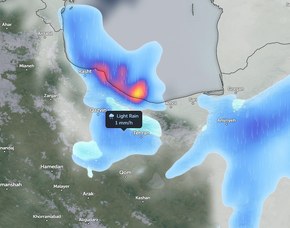
Tehran finally getting some water. Not sure if it'll be enough but we'll see.
Big_Zucchini
Well-Known Member
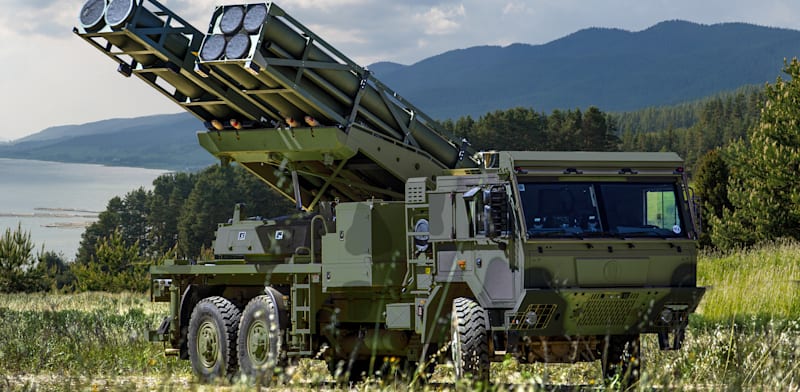
A journalistic investigation into a $2.3 billion deal announced by Elbit on November 17th, revealed that the customer is UAE. It also assesses that the deal involves joint development of DIRCM systems.
 en.globes.co.il
(Linked article is paywalled)
Elbit Systems announces huge mystery deal
en.globes.co.il
(Linked article is paywalled)