Looks as if the heaviest rain is on the wrong side of the mountains.

Middle East Defence & Security
- Thread starter MaenZ
- Start date

Big_Zucchini
Well-Known Member
American-led ISF base in Israel by the Gaza border. Seems like they're buying locally (those are Plasan Sandcats and Ibex).
Also, yes in Israel you can definitely walk up to military equipment and say hi to the lads.
Also, yes in Israel you can definitely walk up to military equipment and say hi to the lads.
Big_Zucchini
Well-Known Member
Israel, Greece, Cyprus reportedly working to set up a local alliance, starting with a joint brigade sized force of 2,500 personnel, as well as ships and aircraft.
I assume the intent is the protection of energy infrastructure in the east-med.
I assume the intent is the protection of energy infrastructure in the east-med.
Big_Zucchini
Well-Known Member
The force will reportedly include:
- 2,500 troops - Israel 1,000, Greece 1,000, Cyprus 500.
- 2 air squadrons - Israel 1, Greece 1.
- 2 surface vessels - Israel 1, Greece 1.
- 2 submarines - Israel 1, Greece 1.
Big_Zucchini
Well-Known Member
Israel and Egypt sign a $35 billion deal to supply Egypt with natural gas from the Leviathan gas field. About half of that will be profit to the state.
Big_Zucchini
Well-Known Member
So now that we're steadily moving toward the next phase that will see gradual deployment of foreign troops, ironically at their own request. We're heading toward a situation where said foreign troops may have to do these demolitions as well but beyond the yellow line.
The political ramifications are amusing to me, but also the practical ones. A lot of armies neglected such conventional capabilities like combat engineering, and did not develop more advanced ones like tunnel surveying (in a safe manner). I think this will be a good practice for many, and probably one more reason for the collection of why Israel might oppose the presence of countries it deems excessively hostile like Turkey.
The political ramifications are amusing to me, but also the practical ones. A lot of armies neglected such conventional capabilities like combat engineering, and did not develop more advanced ones like tunnel surveying (in a safe manner). I think this will be a good practice for many, and probably one more reason for the collection of why Israel might oppose the presence of countries it deems excessively hostile like Turkey.
Big_Zucchini
Well-Known Member
I think it's safe to say now that claims of Israeli isolation have been massively overblown.
Let's see what was widely claimed but turned out false:
Let's see what was widely claimed but turned out false:
- American support for Israel will fall - Nothing tangible in that regard.
- Europe will impose sanctions - The exact opposite happened.
- Israel will collapse economically - Israel's local indices outperformed American ones (incl S&P).
- Famine - UN retracted the claim.
- Genocide - UN retracted the claim.
Big_Zucchini
Well-Known Member
In a pilot course graduation ceremony, Netanyahu announced a plan to spend $110 billion over a decade to vastly improve Israel's security independence, including from close allies like the US.
I do not know if any part of it exists in the 2026 budget. It is a very ambitious program, and personally I hope it will include a silicon fab or two.
I think we can possibly connect it to the F-35 sale effort to Turkey and Saudi Arabia. Oddly, Israeli officials said Israel will maintain a qualitative military edge despite that. Based on just official info, even in 5-10 years an F-35A should reduce the capability gap below what one might consider the appropriate level. But if through this new program, if it materializes, Israel builds some combat aircraft manufacturing capability, then that qualitative military edge could be restored.
An indigenous manned fighter might be a leap. But further divergence from the base F-35A could be a major boost in itself.
I do not know if any part of it exists in the 2026 budget. It is a very ambitious program, and personally I hope it will include a silicon fab or two.
I think we can possibly connect it to the F-35 sale effort to Turkey and Saudi Arabia. Oddly, Israeli officials said Israel will maintain a qualitative military edge despite that. Based on just official info, even in 5-10 years an F-35A should reduce the capability gap below what one might consider the appropriate level. But if through this new program, if it materializes, Israel builds some combat aircraft manufacturing capability, then that qualitative military edge could be restored.
An indigenous manned fighter might be a leap. But further divergence from the base F-35A could be a major boost in itself.
Big_Zucchini
Well-Known Member
Israel becomes first nation to formally recognize Somaliland, and will form full relations.
Big_Zucchini
Well-Known Member
Relevant comment on the topic of US-Israel military relations and the US aid mechanism.
I do want to say that this should extend to a broader regional or global coalition of the willing. Israel can supply the military innovation through cooperative programs. Nations that come to mind that can greatly benefit are Greece, Taiwan, eastern Europe, and in other forms to emerging allies like Somaliland (if it comes to fruition). Possibly also Arab nations if they choose to upgrade the relations and the Arab-Israeli peace.
I do want to say that this should extend to a broader regional or global coalition of the willing. Israel can supply the military innovation through cooperative programs. Nations that come to mind that can greatly benefit are Greece, Taiwan, eastern Europe, and in other forms to emerging allies like Somaliland (if it comes to fruition). Possibly also Arab nations if they choose to upgrade the relations and the Arab-Israeli peace.
Big_Zucchini
Well-Known Member
It is interesting to read Egyptian opinion on the Somaliland recognition. Basically they view it as a threat and propose to inject money and effort into the "disintegrating" Somali government.
Egypt itself however is incapable of such undertaking due to its own financial crisis, a part of which can be attributed to the Houthis but which began long before that.
Basically a confrontational approach. But Egypt itself is militarily very passive. Having significant security challenges across all borders and in the region, but actively engaging only against local insurgency.
EDIT:
One more thought I had.
Israel-Ethiopia relations from Somaliland angle:
Egypt has been untenably antagonistic to Israel. Untenable because Egypt does not have the resources and stability to be confrontational toward anyone.
It is however in a collision path with Ethiopia, and we also know Ethiopia wants, above all, sea access.
Israel and Ethiopia maintained low volume albeit good relations for decades, uninterrupted by geopolitical events. In a high profile event, Israel even supplied Ethiopia Spyder air defenses currently used for its GERD dam.
Ethiopia's economy is rapidly growing. Its TFR is also rapidly dropping as well, which is healthy because it was dangerously high (>5 in 2011, now 3.6).
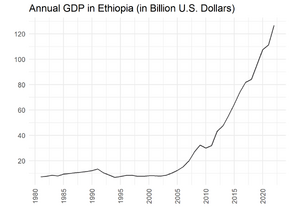
It is also land locked. And to maintain growth, Ethiopia will need sea access. It can go through Eritrea, Djibouti, Somaliland, or Somalia.
The closest to Addis Ababa is Djibouti, but of similar distance is Somaliland's Berbera.
Somaliland and Somalia provide a higher degree of safety from Houthi piracy, but of the two only Somaliland is stable and dependable.
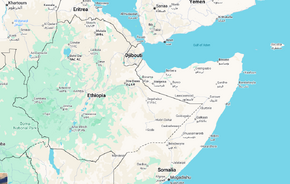
A coalition of Ethiopia and Somaliland, supported from outside by Israel and the US, could create another regional center of power. One capable of increasing Red Sea security, and offering Israel a regional alternative to Egypt for some security challenges.
EDIT 2:
I forgot to mention of course the massive support Somaliland receives from the UAE, which also invests in other physical permanent military infrastructure around Yemen.
There is an airstrip under construction in Somaliland's Berbera, presumably by the UAE. Somaliland has no air force.
The UAE is a prime candidate for such a regional coalition encompassing a wide zone from the Persian Gulf through the Red Sea and into the Mediterrannean via Greece and Cyprus.
Egypt itself however is incapable of such undertaking due to its own financial crisis, a part of which can be attributed to the Houthis but which began long before that.
Basically a confrontational approach. But Egypt itself is militarily very passive. Having significant security challenges across all borders and in the region, but actively engaging only against local insurgency.
EDIT:
One more thought I had.
Israel-Ethiopia relations from Somaliland angle:
Egypt has been untenably antagonistic to Israel. Untenable because Egypt does not have the resources and stability to be confrontational toward anyone.
It is however in a collision path with Ethiopia, and we also know Ethiopia wants, above all, sea access.
Israel and Ethiopia maintained low volume albeit good relations for decades, uninterrupted by geopolitical events. In a high profile event, Israel even supplied Ethiopia Spyder air defenses currently used for its GERD dam.
Ethiopia's economy is rapidly growing. Its TFR is also rapidly dropping as well, which is healthy because it was dangerously high (>5 in 2011, now 3.6).
It is also land locked. And to maintain growth, Ethiopia will need sea access. It can go through Eritrea, Djibouti, Somaliland, or Somalia.
The closest to Addis Ababa is Djibouti, but of similar distance is Somaliland's Berbera.
Somaliland and Somalia provide a higher degree of safety from Houthi piracy, but of the two only Somaliland is stable and dependable.
A coalition of Ethiopia and Somaliland, supported from outside by Israel and the US, could create another regional center of power. One capable of increasing Red Sea security, and offering Israel a regional alternative to Egypt for some security challenges.
EDIT 2:
I forgot to mention of course the massive support Somaliland receives from the UAE, which also invests in other physical permanent military infrastructure around Yemen.
There is an airstrip under construction in Somaliland's Berbera, presumably by the UAE. Somaliland has no air force.
The UAE is a prime candidate for such a regional coalition encompassing a wide zone from the Persian Gulf through the Red Sea and into the Mediterrannean via Greece and Cyprus.
Last edited:
Big_Zucchini
Well-Known Member
Another OSINTer and analyst, Ben Tzion Macales, says that there is a growing trend of middle eastern separatism already or potentially aligning with the west.
Particularly Syrian Druze, Gazan clans, South Yemen, Somaliland, all of which had notable developments in the last few months.
Particularly Syrian Druze, Gazan clans, South Yemen, Somaliland, all of which had notable developments in the last few months.

I think the trend isn't the separatism, but rather western support for it. Somaliland has been de-facto independent for decades now along with Puntland iirc. This is nothing new. The Druze situation has to do with the deteriorating situation in Syria. But separatism in Syria has been going on for quite some time, just look at the Kurds. And not only in Syria. Ultimately many of the borders in the Middle East are highly artificial legacies of a geopolitical arrangement that doesn't exist anymore. They're due some re-drawing.Another OSINTer and analyst, Ben Tzion Macales, says that there is a growing trend of middle eastern separatism already or potentially aligning with the west.
Particularly Syrian Druze, Gazan clans, South Yemen, Somaliland, all of which had notable developments in the last few months.
Personally I'm of the opinion that Somaliland and Puntland should be recognized in general. The Somalian government is clearly pretending to govern a failed state.
Big_Zucchini
Well-Known Member
Yes, of course. I'm talking about separatism aligning with the west and Israel in particular, not general separatism. This is a great risk in the middle east, particularly because of the centrality of public opinion.I think the trend isn't the separatism, but rather western support for it. Somaliland has been de-facto independent for decades now along with Puntland iirc. This is nothing new. The Druze situation has to do with the deteriorating situation in Syria. But separatism in Syria has been going on for quite some time, just look at the Kurds. And not only in Syria. Ultimately many of the borders in the Middle East are highly artificial legacies of a geopolitical arrangement that doesn't exist anymore. They're due some re-drawing.
Personally I'm of the opinion that Somaliland and Puntland should be recognized in general. The Somalian government is clearly pretending to govern a failed state.
Big_Zucchini
Well-Known Member
Economic analyst says:
The UAE angle is clear. They are a financial investor in physical and military infrastructure.
The Israel angle:
- Somaliland is very poor - $900 - $1500 GDP per capita.
- Agrarian economy - impacted by droughts.
- Contributing diaspora.
- Main financial asset is Berbera port - UAE invests.
- Oil and metal deposits untapped - pending investment.
- Non-recognition has serious impact - Aid organizations refuse to work there, and private sector sees it as a risk.
Formal grouping with Somalia negatively impacts risk assessment as Somalia is very unstable. - Very low private investment - 15% of GDP, very low.
- Low literacy - sweeping negative effect.
The UAE angle is clear. They are a financial investor in physical and military infrastructure.
The Israel angle:
- No meaningful trade relations for a while.
- Somaliland was previously raised as one of many potential destination for Gazan refugees.
- Possibility of using Berbera as an entry into Ethiopia for a land route bypassing the Bab al Mandab strait.
- Anything Israel can give, whether as aid or investment, will significantly boost Somaliland's economy.
- Agriculture and water tech to free up manpower.
- Digitization to raise government efficiency.
- Any possibility of helping Somaliland will create a new narrative of nation-building, which was previously outside Israel's material capability, improving relations across the region and helping to expand the Abraham Accords.
Big_Zucchini
Well-Known Member
Iron Beam 100kW has been declared FOC (Full Operational Capability) today.
It joins the Lite Beam 10kW system deployed in 2024, and is set to drastically shift the war economy balance.
For the first time, defense is cheaper than offense in the air domain.
It joins the Lite Beam 10kW system deployed in 2024, and is set to drastically shift the war economy balance.
For the first time, defense is cheaper than offense in the air domain.
"airstrip under construction" - do you mean the restoration of the runway of the international airport by the UAE in 2021? It's made it usable again by military aircraft as well as civilian, but AFAIK it's only used for passengers & freight, not combat aircraft.I forgot to mention of course the massive support Somaliland receives from the UAE, which also invests in other physical permanent military infrastructure around Yemen.
There is an airstrip under construction in Somaliland's Berbera, presumably by the UAE. Somaliland has no air force.
Big_Zucchini
Well-Known Member
UAE is restoring or building a whole bunch of airstrips in the region but AFAIK there has been no documented use as of yet."airstrip under construction" - do you mean the restoration of the runway of the international airport by the UAE in 2021? It's made it usable again by military aircraft as well as civilian, but AFAIK it's only used for passengers & freight, not combat aircraft.
Israel getting 25 new F15s and possibly another 25. Israel signs $5.2 billion deal for 25 new F-15 fighter jets - Breaking Defense
Big_Zucchini
Well-Known Member
The article you posted is from 2024. The contract is currently worth $8.6 billion for 25 new F-15IA and an option for 25 additional F-15IA. Not sure if the additional 25 are rebuilt F-15I because that option was raised constantly.Israel getting 25 new F15s and possibly another 25. Israel signs $5.2 billion deal for 25 new F-15 fighter jets - Breaking Defense
Also not sure what the $8.6 billion actually include. At $340 mil per aircraft that is a lot of stuff. It may include the full option of 50 aircraft which is unsure if will be realized, which then brings the price down to the usual assessments.