Was the strike then purely for propaganda, or was it part of a broader effort to overwhelm Russian air defenses and hit other targets along the Sea of Azov coast?
I would not put the question this way. I would ask instead if the resource allocation to strike any particular target or launch an offensive, etc is reasonable provided the actual return on investment and what the opportunity cost is.
I had a “discussion” with an AI yesterday where I wanted it to provide me with a correlation estimate between these types of events and happenings, like NATO summits, EU budget meetings and UA loan allocations, other publicized diplomatic gatherings, etc. It spit back at me 0.59 to 0.75 with an extensive explanation (not sure why 0.59 and not 0.6, lol). I asked it to disregard day-to-day routine at the frontline (increased artillery barrages, for example). It then gave me a correlation of 0.75-0.8. It also said that the correlation could probably be stronger if they could make the weather align with the aforementioned gatherings and such (“headline events” it called it, where “Kyiv has maximum discretion over the exact launch date”).
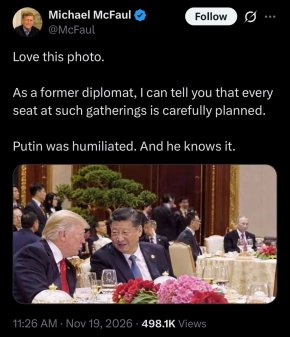
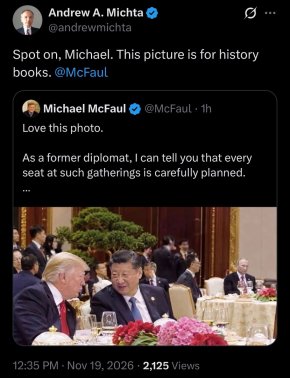
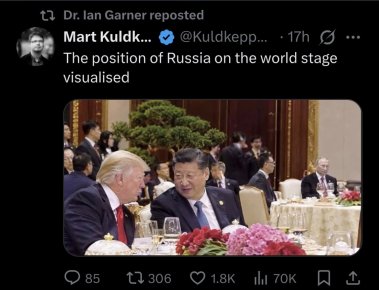
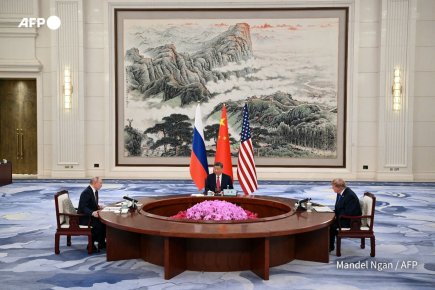
Reading the methodology and explanations as well as deeper discussion, I realized that it does not take into account the “humiliating” strikes aspect into account (I guess I did not ask it to because I assumed it was understood) - that is, this Trump-Xi-Putin meeting, other Putin’s meetings with Xi/Trump and other world leaders, Victory Day parades, elections, Russia Day (what they call Independence Day in the West), etc). It called it “Tier-1 Russian prestige showcases”. Once that was included in the dataset, the correlation increased to 0.85-0.9. Here are some partial quotes:
Incorporating Tier-1 Russian prestige showcases alongside Western diplomatic and funding milestones fills in the earlier gaps and creates a much more complete, unified timeline.[…]
Almost Zero Unexplained Outliers: Once both categories are included, nearly every major, non-routine Ukrainian spectacle operation over a four-year span maps cleanly onto a top-tier political or diplomatic trigger.[…]
Of note:
Shift from Western Lobbying to Summit Disruption: Notice how early-war operations (2022–2023) leaned heavily toward securing Western weapons and funds, whereas later operations (2024–2026) increasingly targeted Putin's domestic legitimacy and his high-level meetings with Xi Jinping and Donald Trump.
They got the Euros on the hook and they will provide, while the US’ as long as it takes had ended regardless.
Also:
Operations almost always precede the milestone by 0 to 6 days so that headlines, satellite imagery, and debate dominate the opening session of the summit or vote.[…]
^ Average, it said, is 3.2 days. However, if Kursk offensive is included, the average rises to 7.2 days. Not sure why, maybe the longevity of the operation somehow plays into it; yet, Krynky has no such effect (much smaller op and only the launch of it is taken into account? I should have asked, perhaps).
The July 2023 Kerch Bridge strike is the sole case occurring after a summit, functioning as a delayed response to NATO's refusal to offer a membership timeline in Vilnius.[…]
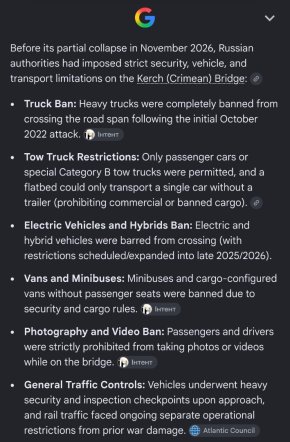
^ This makes a lot of sense actually because, if one recalls, the bridge was then seen as a strategic asset and Ukraine was strongly discouraged from attacking it to avoid the escalation. In particular, it was presented by the West as some sort of Russian red line. Notice how things have changed since and when it came down 3.25 years later it barely made the headlines.
Long-range drone and missile strikes require only a 0-to-4-day lead window because their political impact is instantaneous, whereas ground incursions require 2 to 4 weeks to establish a narrative before diplomatic meetings begin.
Probably that ^ is somehow incorporated into that rising average. There is only one other event that has a prior of more than 6 days (14, if I recall correctly) - no idea how big of an effect it has on that 3.2 days average either. Other ground incursions (Belgorod runs?) had no such lead times and didn’t last as long. But:
Unlike missile strikes that sometimes wait on weather or satellite windows, high-risk boat raids to Snake Island, Crimea, and Krynky showed a 0-day offset—proving they were launched on fixed symbolic dates regardless of tactical readiness or casualty risks.
Here it is referring to the infamous flag planting op to Snake Island and suicidal raids to Crimea and Krynky (I am assuming before the establishing the infamous “bridgehead”).
Also:
The "Overstay" Pattern Repeats: Both Krynky (October 2023–July 2024) and Kursk (August 2024–early 2025) followed the exact same lifecycle: a launch timed to a major Western aid or diplomatic milestone, followed by months of costly defence because withdrawing would puncture the political narrative.
Lastly:
Statistically, an r value between 0.85 and 0.9 indicates that the global political calendar has functioned as the single strongest predictor of when Ukraine's most unusual, high-risk operations take place.
It said that the only reason the correlation is 0.85-0.9 “rather than 0.95+“ is that that there some exceptions to the pattern which include 2024 BRICS summit saw no strikes (obvious reason was involvement of “Global South” leaders), some event in spring 2024 (simply due to lack of munitions), and something in the early summer of 2023 (start of the counteroffensive). On this note, I actually think there were some strikes prior to the summit in Kazan as I clearly remember the discussion, they were going to humiliate Putin and show that he cannot provide safety snd security and so on. Maybe I am wrong, but don’t think so. The analysis is surely imperfect.
So basically all but 3 “top-tier political moments saw a corresponding high-profile Ukrainian spectacle within days”.
Make of it what you will. To me the pattern is clear as day and I had discussed it several times over the years, at the time of the events.
I will also note that I asked it to do the same analysis of the Russian behaviour. Quite an expected response. Correlation is not nearly as strong even to start with (0.5-0.6) because:
Russia's massive industrial missile production allows it to launch major barrages every few weeks on a steady attrition schedule, regardless of the diplomatic calendar.
However, there are a few “unusual” and “spectacle” events that occur on day 0: Guterres’ visit to Kyiv in April 2024, G20 summit in Bali in November 2022, and Kyriakos in Odessa in March 2024. It also identified 2 events that had a “plus” lead time: Oreshnik on November 2, 2024 2 days after the US authorized the use of ATACMS in Russian proper, and one day after Kushner and Witkoff visit to Moscow and Kyiv in September 2026. Pretty sure the latter is not that extraordinary as even the AI itself pointed out that Russians postponed the planned strike by 72 hours to allow for the visits (if I recall correctly, Ukraine had a pre- strike of some scale; Russia also (demonstratively) hit the airport in Kyiv a day or two prior). The only pre-event for Russia identified was the second Oreshnik strike, accompanied by 600-drone barrage on Kyiv on May 24, 2026 preceding some “major European air-defense pledging conferences and late-spring peace framework discussions”. It didn’t say how many day pre, but May 24 and “late-spring” doesn’t leave that many.
Does Russia follow a “political calendar”? I think it is pretty clear it does. However, its messaging is rather a continuation of their regular strike pattern, but intensified. “Extraordinary” events are rare (truly extraordinary?) and general pattern follows their general strategy. It dominates and has no need for these spectacles. It does not need to shape media and political momentum or break through media fatigue and create media hype because it could not care less. In fact, it would probably prefer that everyone forgets about the war. Ukraine’s efforts, on the other hand, are dictated by those fsctors and it is forced to conduct “media-driven warfare” with often useless, even counterproductive, or very expensive but with little strategic value actions.
To come back to your question, whether that was pure propaganda or broader effort to weaken air defences to strike some targets in Azov… Kursk offensive was a broader effort to divert resources and -insert what you want-. The suicidal Krynky landings were to grind the Russians down -insert what you want-. Insane barrages on Moscow with zero hits are to -insert what you want- And so on. So is it pure propaganda? Not pure, but most certainly largely, in my opinion. Even the train bridge is to a large (but smaller) extent. They say no though:
.
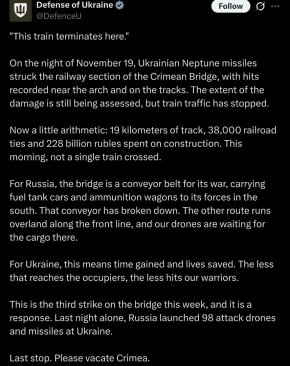
“Fuel tank cars and ammunition wagons” is for the lemmings, of course. It’s not hard to see that it is all propaganda and “fairy tales”. Who is it even targeted at? Some “experts” go to greater lengths:
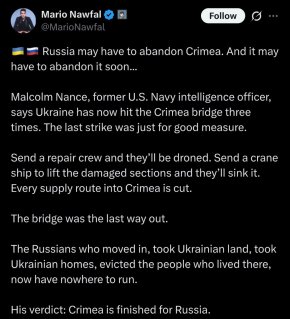
Note that he is also expecting Ukrainians to kill civilians (repair crews) and he is fine with it.
Now we are back with epic ingenuity again, Ukes invented “flying modems” within “only days” (zomg!):
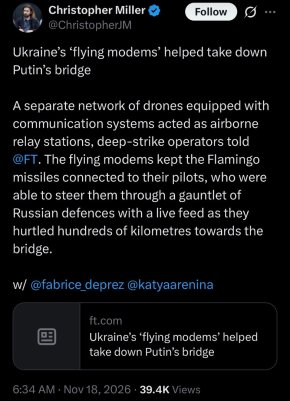
“Flying modems kept the Flamingo missiles connected to their pilots”. Laughing.
Not that it is likely Russians were going to agree to any type of ceasefire in the near future, but:
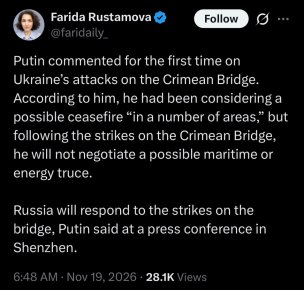
They now have a legit pretext not to and it is a reasonable “no”. Of course, this is now being peddled as “Russia does not want peace” and whatever usual bullshit programming.