Royal New Zealand Navy Discussions and Updates

John Fedup

The Bunker Group
Realistically, things should have been planned out ahead so that replacement frigates started commissioning so the current frigates could be either decommissioned or transferred to a non-frontline role like that of a training ship.

Given that it can take several years for a new, modern warship to be constructed and then commissioned into service, a deadline by which NZ has to place an order is likely fast approaching, if new frigates are come to online by 2035.
Given the geopolitical deterioration and demand for new frigates (and other naval vessels) 2035 could be overly optimistic.
 

Todjaeger

Potstirrer
Given the geopolitical deterioration and demand for new frigates (and other naval vessels) 2035 could be overly optimistic.
True, hence the commentary about the time being 'tight'. However, to have a chance at a 2035 delivery, or even a later delivery but as soon as feasible afterwards, planning and work needs to be done now. Pushing things off even further will only lead to delays likely beyond when the current frigates could be kept servicable.
 
Also the younger generation are more savvy about pay and conditions and a work/life balance and are more attracted to higher technology careers in the private sector.

There is nothing wrong with pushing pause on possible frigate replacements and reconsidering the future of the navy and its purpose.
The problem is the pause button was pressed when the FSU upgrades were made and the delays used to extend the planned life of type for the ANZACs. Any further delays will leave NZ without an escort capability. And, considering the age of the OPV fleet, Canterbury and the loss of Manawanui, NZ could easily be left with very little mass on the water at all.
 

Warhawk

Member
The problem is the pause button was pressed when the FSU upgrades were made and the delays used to extend the planned life of type for the ANZACs. Any further delays will leave NZ without an escort capability. And, considering the age of the OPV fleet, Canterbury and the loss of Manawanui, NZ could easily be left with very little mass on the water at all.
Probably already there with running small fleet hard .
 

swerve

Super Moderator
True, hence the commentary about the time being 'tight'. However, to have a chance at a 2035 delivery, or even a later delivery but as soon as feasible afterwards, planning and work needs to be done now. Pushing things off even further will only lead to delays likely beyond when the current frigates could be kept servicable.
See the UK's mistake in extending the planned lives of Type 23s past when they can be kept serviceable.
 

koxinga

Well-Known Member
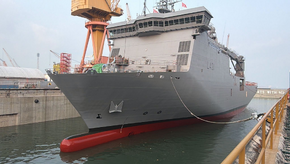
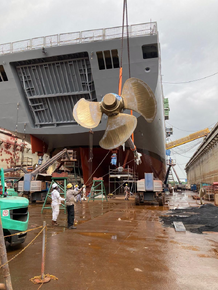
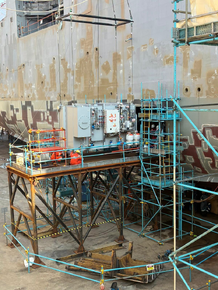
HMNZS Canterbury finishes refit in Singapore, Tuas.

Comments range from why this can't be done in Davenport (drydock, and was obviously not just a lick of paint, see the last photo) to can we trust Singapore not to install a off switch cuz (Sadly ignorant, given Singapore is a FPDA partner, key US / 7th Fleet partner and the Chinese don't really need an off switch to deal with a transport ship)


1790415720885.png
1790415739046.png
1790415835629.png
 

Nighthawk.NZ

Well-Known Member
HMNZS Canterbury finishes refit in Singapore, Tuas.

Comments range from why this can't be done in Davenport (drydock, and was obviously not just a lick of paint, see the last photo) to can we trust Singapore not to install a off switch cuz (Sadly ignorant, given Singapore is a FPDA partner, key US / 7th Fleet partner and the Chinese don't really need an off switch to deal with a transport ship)


View attachment 55688
The other reason which is pretty darn important HMNZS Canterbury does not fit in Davenport dry dock...
 

recce.k1

Well-Known Member
Devonport! Named after the seaside suburb the naval base resides in (the naval base was established in 1841). The dry dock's breadth isn't wide enough to feasibly accommodate HMNZS Canterbury ... but a solution, the Northland Shipyard and Dry Dock project which includes a 250m long floating dry dock, is now at the "fast-track" application stage. And if the project goes ahead the Navy has stated it will look at the feasibility of basing patrol assets such as USV's there.
 

recce.k1

Well-Known Member
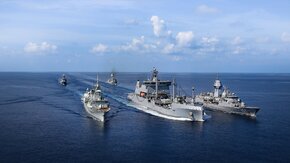
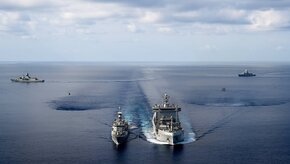
Surely these Defence official pics are too good not to post! CANZ allies working together in the West Philippines Sea this week.

828564554_1561037668667203_3976962739221435909_n.jpg
HMCS Regina and HMAS Perth (FFH 157) undertaking a double dual RAS with HMNZS Aotearoa, with HMNZS Te Mana and HMAS Stuart following astern.

825329472_1410264213859312_742983587878604883_n.jpg

Te Mana alongside Aotearoa, whilst Stuart and Perth alter course. Helos appear to be a Seasprite and Regina's CH-148.
 

recce.k1

Well-Known Member
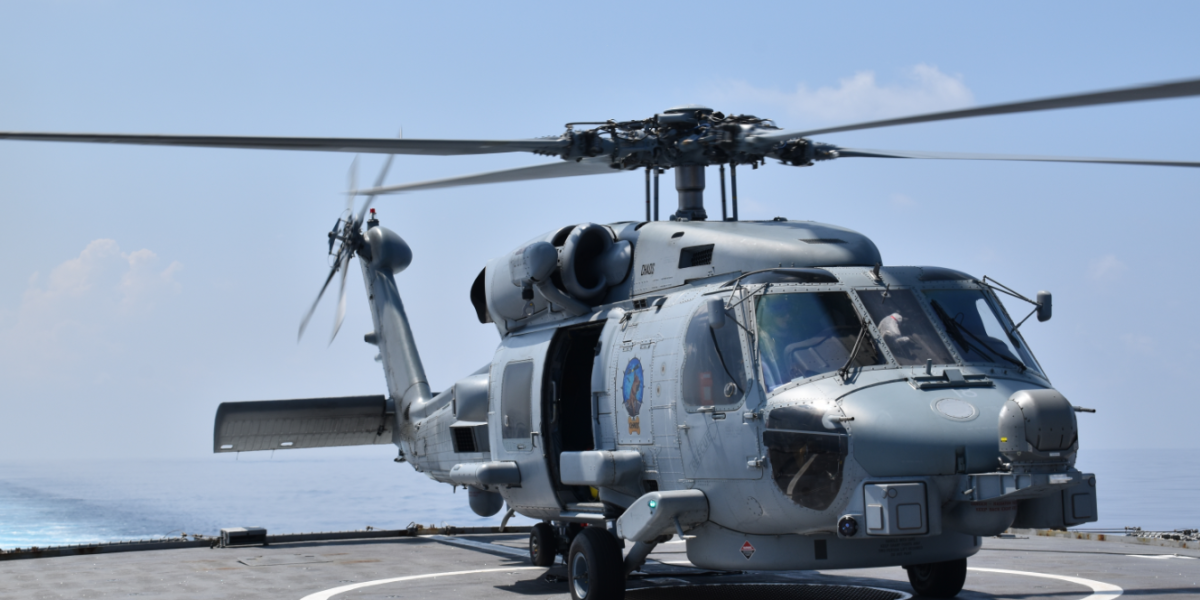
Defence has confirmed the Seahawk acquisition agreement has finally been signed off with the US - deliveries from 2030.
The agreement covers the purchase of helicopters which will be delivered from 2030, as well as spares, weapons and equipment. Funding has also been set aside for future infrastructure design costs and temporary infrastructure to house the aircraft at RNZAF Base Auckland in Whenuapai.

Total investment for the project is $1,648 million capital and $110 million average annual operating funding over the next 10 years.

Future investment decisions relating to this programme of work are expected to include infrastructure, training systems and complementary uncrewed aerial systems.
 

recce.k1

Well-Known Member
Still Believe with only 5 helicopters we are only going have 2 New Frigates would love 3 but I don't believe Government are Brave enough.
RNZN started off with two Westland Wasps when the first Leander Frigate arrived in 1966, then acquired a third when the second Leander joined the fleet in 1971. So three Wasps for three vessels in the 1970's (HMNZS Waikato, HMNZS Canterbury and HMNZS Monowai). As the Four Yorkshiremen would say ... Luxury!

Anyway a total of 9 were acquired over time (factoring in replacing 4 losses) and to equip the next additional two ex-RN Leanders that were acquired in the 1980's, so five operational. Plus a further nine ex-RN Wasps as non-flying attrition spares, a total of 18 airframes over their lifetime.

Similarly 18 Seasprites were acquired over time in three batches (although one from the first batch didn't fly and was cannibalised for spares).

Point is whilst the RNZN starts off with low helo numbers in their fleets initially the numbers increase over time and at least with Seahawk the production line is still active, meaning if the Maritime Fleet Renewal programme recommends additional helo capable vessels then it's possible that the Navy will acquire additional Seahawks (and as new builds this time). Well, if history is anything to go by. :)
 
Top