Royal New Zealand Navy Discussions and Updates

recce.k1

Well-Known Member
The notification was announced on June 5, this year.

Was referencing this DoD notification dated 07/22/2026 ... which however appears to also contain the same information as the June 5 release you highlight, albeit this time with additional details now provided on the "sensitivity of technology", so you're right. Mind you good thing I provided a caveat. :)

So what is next, if a "request to buy" has been sent from NZ Govt to the US Govt to approve? Would approval still be forthcoming after all this time?
 

At lakes

Well-Known Member

Nighthawk.NZ

Well-Known Member

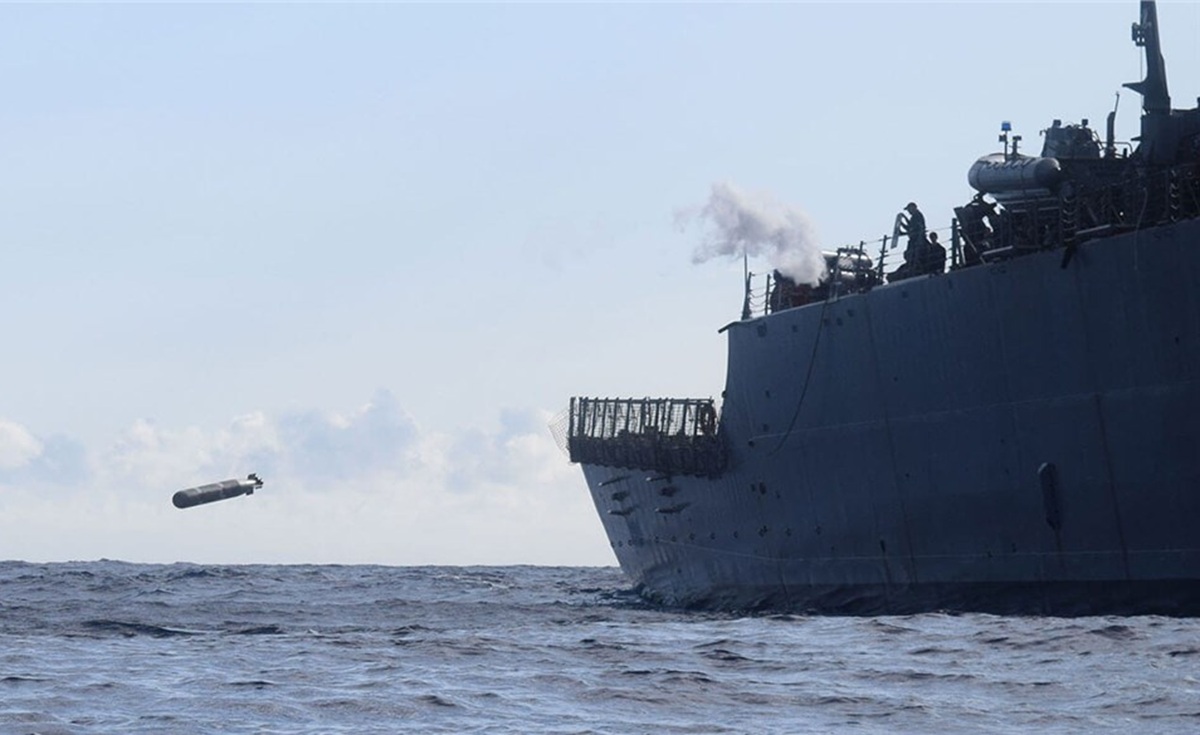
This article on the mk54 makes reference to the mk54 being the primary ASW weapon for the RNZN fleet of 8 Seahawks I thought it was only 5 they were getting is this just bad reporting or has the total changed
it only five... I suspect little confused as technically we have 8 SeaSprites and the writer thinking exchange one for one...
 
Last edited:

recce.k1

Well-Known Member
In terms of Mk54 LWT numbers, Naval News reported in 2023 that an unspecified number of Mark 54 Mod 0 Lightweight torpedoes were ordered, which appear to be for the P-8A (only). The SIPRI arms transfer database estimates that 40 were ordered in 2020 and were delivered in 2023. (For comparison SIPRI estimate Australia bought 200 in 2012 which were delivered in 2016, and then an additional 100 were ordered in 2015 which were delivered in 2019).

So this recent announcement for 20 Mk54 for MH-60R, appears to provide a total NZDF inventory of 60 (by 2029/2030, assuming a 3-4 year delivery timeframe going by previous ANZ order/delivery timeframes)? These recent announcements by DoS & DoD note that "air launch accessories" are included.

From this I think we can deduce that the ANZAC Frigates and the SH-2G are continuing to use the existing Mk46 stocks for the time being (and SIPRI report another 13 Mk46 Mod-5 were ordered in 2020).


Gibbo

Well-Known Member
it only five... I suspect little confused as technically we have 8 SeaSprites and the writer thinking exchange one for one...
Yes definitely only 5 ....it'll be an AI generated story with no-one fact checking the details.... it also makes it sound like the Romeos are in service: "It also serves as a primary standard payload for the Royal New Zealand Navy’s fleet of eight multi-role MH-60R Seahawk “Romeo” helicopters" ...should read "It will also serve as a primary standard payload for the Royal New Zealand Navy’s fleet of eight multi-role MH-60R Seahawk “Romeo” helicopters"

It's amazing the number of comments you see online stating that we already have them when all that was ever actually stated is the Govt intends to order them which I'm not sure has even actually been done yet.
 

Warhawk

Member
Maybe NZ should look at MPV -OPV as replacement for current OPV ships. Naval Group offering interesting ship for Lithuania navy which has basic Ice rating is geared up for support role for Frigates and cheaper vessel to patrol with 3 would be good fit as back up work alongside with replacement Frigates.
 

smithy-nz

New Member
The question to replace the RNZNs Frigates and the OPVs is a difficult. Firstly compatible equipment with allies is essential for inter- operability. NZ as has other peacetime needs, such as supporting Pacific nations. Equally, from a strictly military perspective, large expensive ships, with large crews, which are ideal targets for drone swarms, such have been evident in the Black Sea, makes such vessels a political and naval liability. The Swedish submarine, that evaded a USN Carrier defensive destroyer screen, and line up for a kill-shot during exercises, should be seen as a naval metaphor. Now add to the mix both aerial and submerged sea drones. How can sufficient defensive equipment be placed on a Frigate or OPV to survive that threat environment?
So far no naval platform can achieve this at a justifiable cost. The evidence for this comes from both the ongoing war in the Ukraine and the Straits of Hormuz. Big hull equates to big target. Saturation attacks, required layered low-cost defenses, both against drones and missiles. Destroying a $50k drone with a million dollar missile is unsustainable. Worse in a small navy such as the RNZN.
I suspect a layer of jamming, intelligence, and active defenses (guns and lasers) are needed to defeat low cost threats. Some low cost anti torpedo anti sea drone weapon still needs to be produced, Germany is working on a anti-torpedo torpedo. Fascinating.

 

ADMk2

Just a bloke
Staff member
Verified Defense Pro
The question to replace the RNZNs Frigates and the OPVs is a difficult. Firstly compatible equipment with allies is essential for inter- operability. NZ as has other peacetime needs, such as supporting Pacific nations. Equally, from a strictly military perspective, large expensive ships, with large crews, which are ideal targets for drone swarms, such have been evident in the Black Sea, makes such vessels a political and naval liability. The Swedish submarine, that evaded a USN Carrier defensive destroyer screen, and line up for a kill-shot during exercises, should be seen as a naval metaphor. Now add to the mix both aerial and submerged sea drones. How can sufficient defensive equipment be placed on a Frigate or OPV to survive that threat environment?
So far no naval platform can achieve this at a justifiable cost. The evidence for this comes from both the ongoing war in the Ukraine and the Straits of Hormuz. Big hull equates to big target. Saturation attacks, required layered low-cost defenses, both against drones and missiles. Destroying a $50k drone with a million dollar missile is unsustainable. Worse in a small navy such as the RNZN.
I suspect a layer of jamming, intelligence, and active defenses (guns and lasers) are needed to defeat low cost threats. Some low cost anti torpedo anti sea drone weapon still needs to be produced, Germany is working on a anti-torpedo torpedo. Fascinating.
Geography matters.

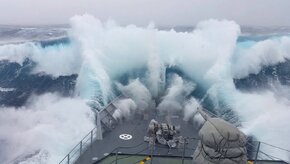
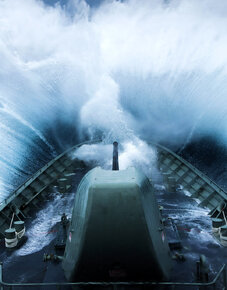
The RNZN primarily operates in the Pacific and Southern oceans. Is there any difference between those oceans and the Black sea do you think?

I’ve attached a photo below of some of the oceanic conditions in which the RNZN and the RAN for that matter have to operate in. Do you notice anything different between what is depicted below and the relatively calm, flat sea states Ukraine‘s USV’s operate in?

Don’t get too hung up on drone fantasies. They are a tool in a kitbag. But not every tool is useful for every job.

IMG_0273.jpegIMG_0274.jpeg
 

Stampede

Well-Known Member
The question to replace the RNZNs Frigates and the OPVs is a difficult. Firstly compatible equipment with allies is essential for inter- operability. NZ as has other peacetime needs, such as supporting Pacific nations. Equally, from a strictly military perspective, large expensive ships, with large crews, which are ideal targets for drone swarms, such have been evident in the Black Sea, makes such vessels a political and naval liability. The Swedish submarine, that evaded a USN Carrier defensive destroyer screen, and line up for a kill-shot during exercises, should be seen as a naval metaphor. Now add to the mix both aerial and submerged sea drones. How can sufficient defensive equipment be placed on a Frigate or OPV to survive that threat environment?
So far no naval platform can achieve this at a justifiable cost. The evidence for this comes from both the ongoing war in the Ukraine and the Straits of Hormuz. Big hull equates to big target. Saturation attacks, required layered low-cost defenses, both against drones and missiles. Destroying a $50k drone with a million dollar missile is unsustainable. Worse in a small navy such as the RNZN.
I suspect a layer of jamming, intelligence, and active defenses (guns and lasers) are needed to defeat low cost threats. Some low cost anti torpedo anti sea drone weapon still needs to be produced, Germany is working on a anti-torpedo torpedo. Fascinating.
Probably two parts to your question
Naval technology and fleet mix.
The former is one all naval forces are navigating.
The later is the fact NZ is essentially replacing just about all its surface fleet
I won’t endeavour to know the future re naval technology suffice to say manned ships will still have a future.
Which then begs the question what should NZ aquire.
Now we can all put our two bobs worth on that question but the starting point I’d suggest is need and realistic funding.
Need will always be a challenge for a cash shy NZ.
So maybe the starting point is actually dollars.

How much more is NZ willing to invest in defence in the decades ahead.
Divide that across the services and go shopping.

But remember that first part of the equation,emerging technology has a price as well as the traditional kit.

replacing a navy is a very expensive exercise made more difficult trying to grow it from what you have today.

A very big challenge

Over to you finance department.

Cheers S
 

ADMk2

Just a bloke
Staff member
Verified Defense Pro
Post article paywalled. Anyone have access?
"Dismantling our navy could turn it into a formidible defence force""

Sounds relevant to our recent discussion.
To summarise:

Delete your entire navy. Replace with drones and make Humanitarian and Disaster Response a civilian reponsibility.

Not sure why he stops there though. Just think how much you could save if the Army and RNZAF were deleted at the same time?

:rolleyes:
 

John Fedup

The Bunker Group
To summarise:

Delete your entire navy. Replace with drones and make Humanitarian and Disaster Response a civilian reponsibility.

Not sure why he stops there though. Just think how much you could save if the Army and RNZAF were deleted at the same time?

:rolleyes:
Was junior hired as a consultant?o_O Really wondering what it will take for NZ pollies to get there $hit together...at least partially wrt defence.
 
Top