Royal Canadian Air Force (RCAF) News and Discussions

John Fedup

The Bunker Group
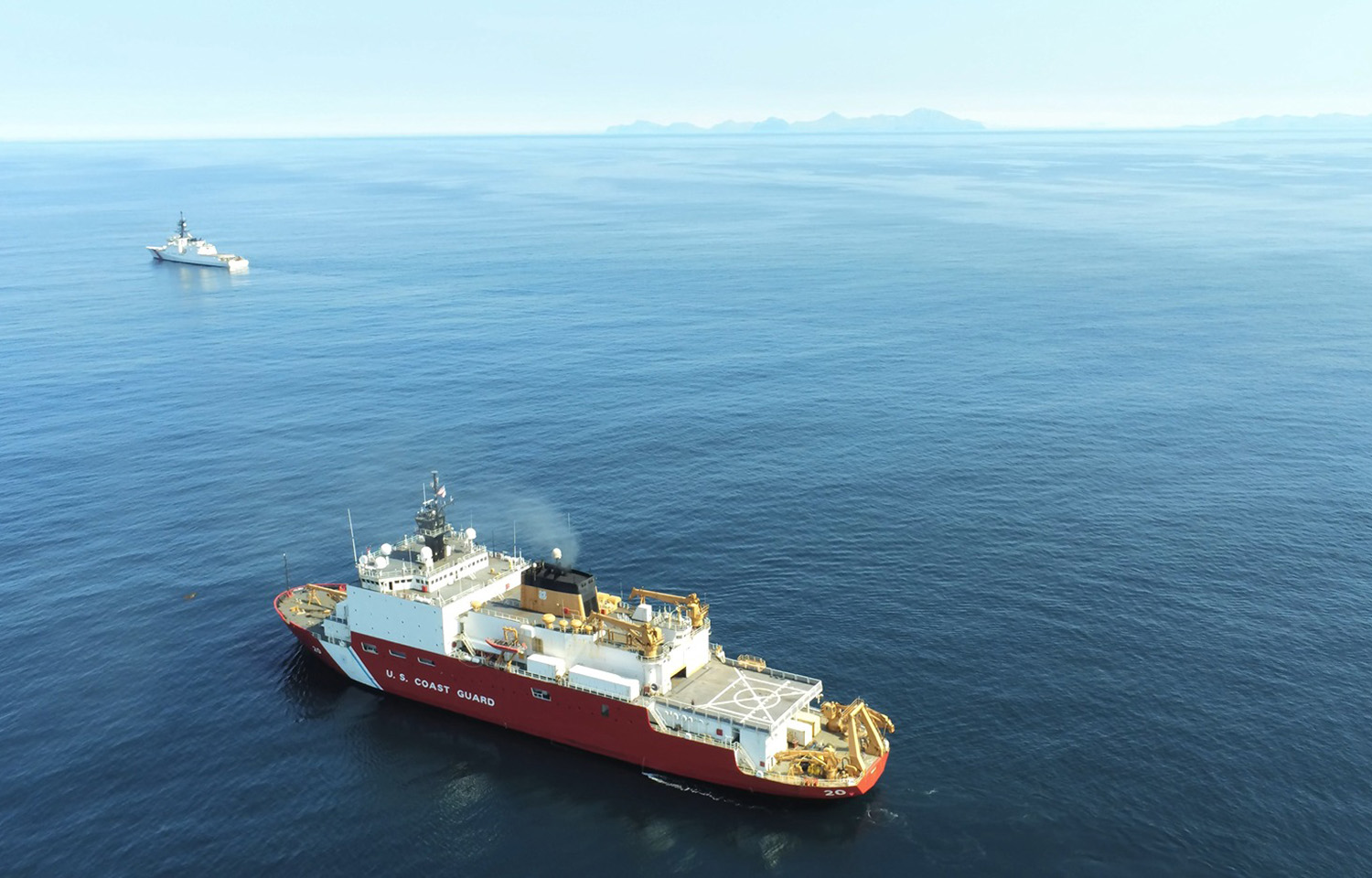
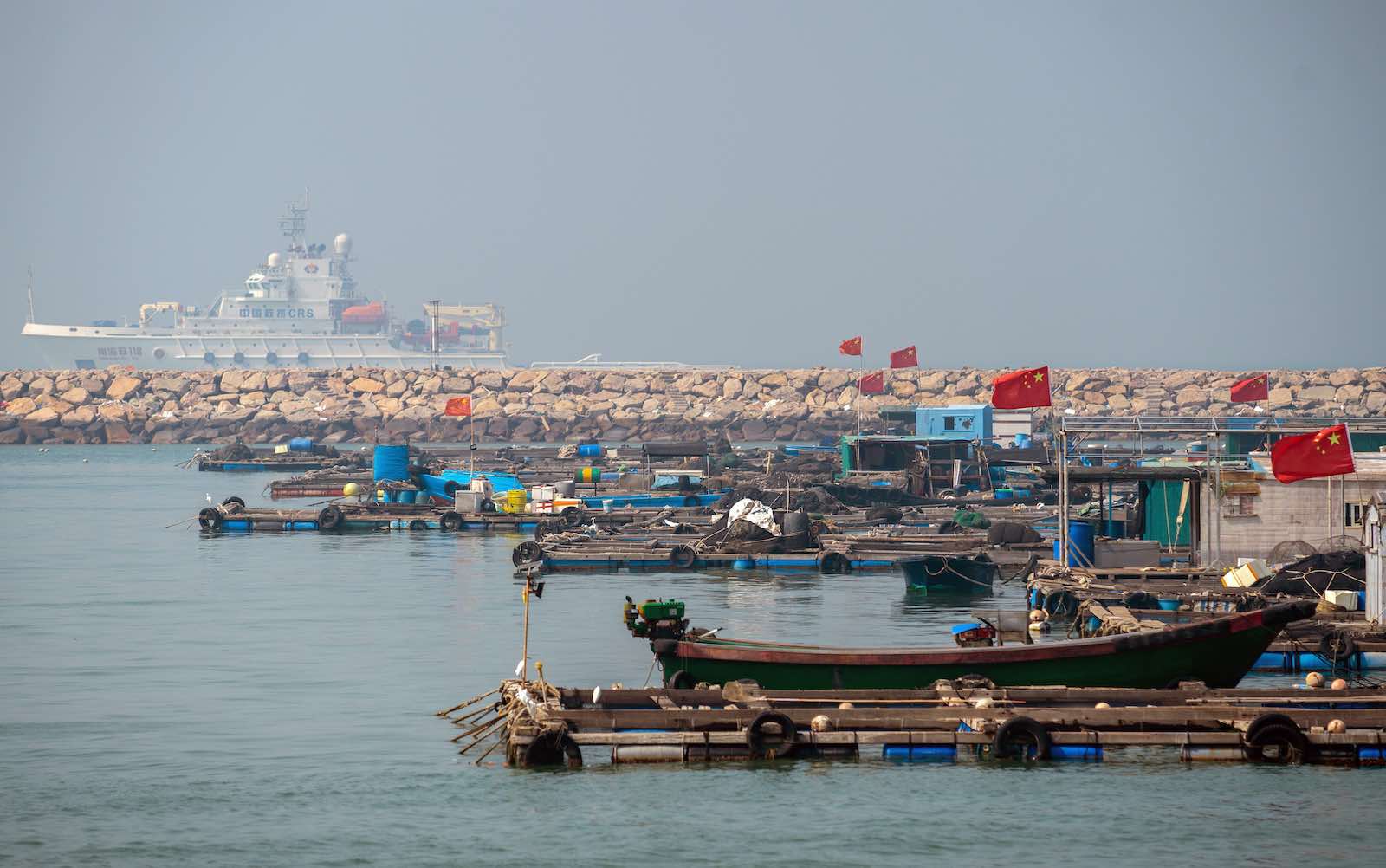
What if China forces the Northwest passage issue. They do exactly what the US is doing around Taiwan/China, but they do it in the northwest. They sail ~30 submarines, a couple of carrier groups through the northwest passage in summer, a particularly hot summer in 2030. They do it because they claim its international waters. They move their fishing fleet into the area. They are backed by J20s and bombers operating overhead.
This is a huge "what if". Cruising through the NW passage is a great way to risk expensive naval assets for SFA. Their fleet would be thousands of km away from reliable support in a constrained passage. Thirty SSNs in the NW passage by 2030, no way even if they have that many by then. As for a fishing fleet being protected by J20s, where exactly are they going to be based to reach the NW passage? Bombers maybe but what a waste of valuable strategic assets.

China is not the same actor as soviet Russia. In some ways it less straight up combative. The Chinese tend not to be as reckless as the Russians.
Agree, and this is why risking a large naval fleet in the NW passage is extremely unlikely


But they are far better equipped, far larger force, way greater technological capabilities. They aren't really interested in destroying the west, as they are in controlling it and running it. The Chinese never really subscribed heavily into MAD escalations.
Again, I agree albeit once their nuke inventory expands MAD may be more applicable
 

StingrayOZ

Super Moderator
Staff member
This is a huge "what if". Cruising through the NW passage is a great way to risk expensive naval assets for SFA. Thirty SSNs in the NW passage by 2030, no way even if they have that many by then.
Why would they have to be SSNs? Is Canada buying SSNs?

China operates about 60 submarines. Building more. They have ~24 AIP conventional subs today. They will have 25 SSN by the mid 2030s.

Their fleet would be thousands of km away from reliable support in a constrained passage.
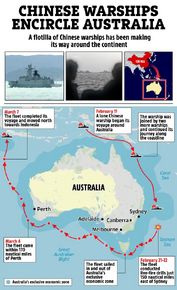
The Chinese operate further away in the European waters and around Australia. Canada would be easier and closer.
1783035083796.png
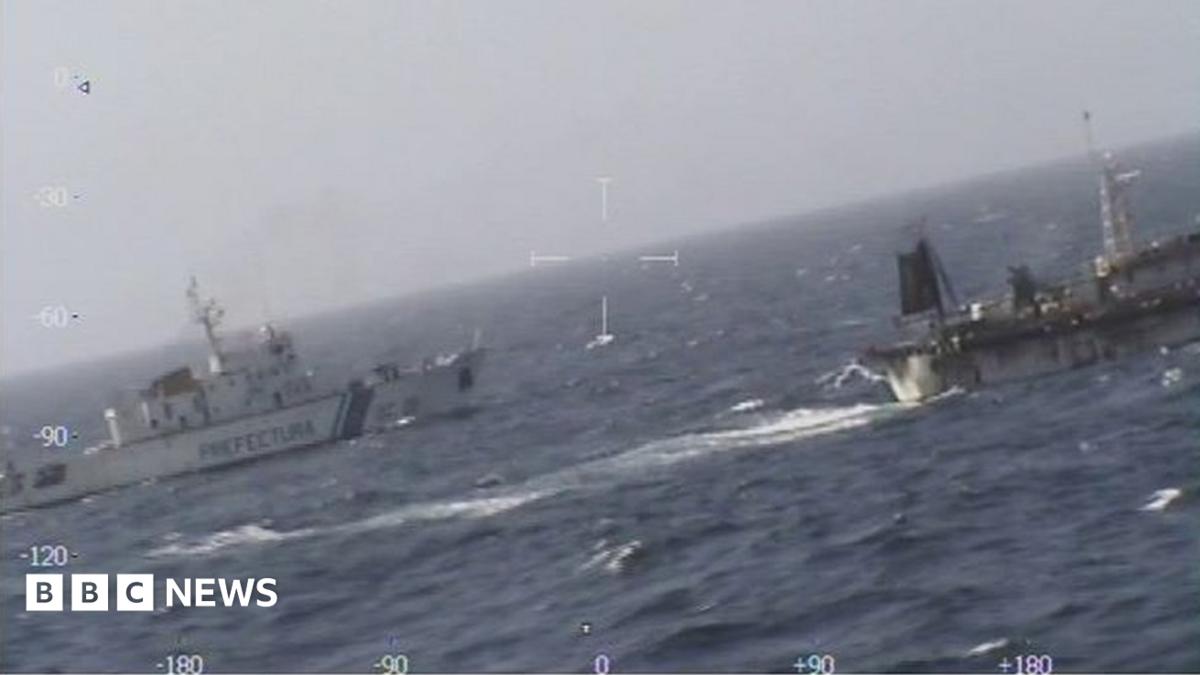
China has operated their fishing fleet in South America.. Including the Argentinians sinking a few of their ships. I don't know why Canada would be "too far" as a concept. Canada is literally just out the front of China.

As for a fishing fleet being protected by J20s, where exactly are they going to be based to reach the NW passage? Bombers maybe but what a waste of valuable strategic assets.
The J20 has a range of 6000 km and is capable of air to air refuelling. They could take off in bases in northern Russia. As a show of force in peacetime, maybe fly over Ontario or Vancouver. They have hundreds of them, they will need something to keep their pilots and planners busy. They have a ever growing refuelling fleet now too. Plenty of need to try ambitious flex of strength type ops. No doubt the Russians might be interested in Buying J20 if the Chinese could demonstrate that.

Agree, and this is why risking a large naval fleet in the NW passage is extremely unlikely
We thought it would be unlikely a Chinese fleet lead by a cruiser would turn up off the coast of Sydney and Auckland and start an unannounced live fire drill into dense commercial airspace, causing commercial aircraft to take evasive action. But here we are. The relationship wasn't even in the toilet at that stage, so that was even more odd, perhaps a bit of disconnect between military and political circles in China.

Again, they may not do it in actual war time. But as a grey zone activity. Sure, Northwest passage is exactly the kind of situation they want to enforce around the 1st island chain. Canada has been involved in FoN exercises which annoy the Chinese.

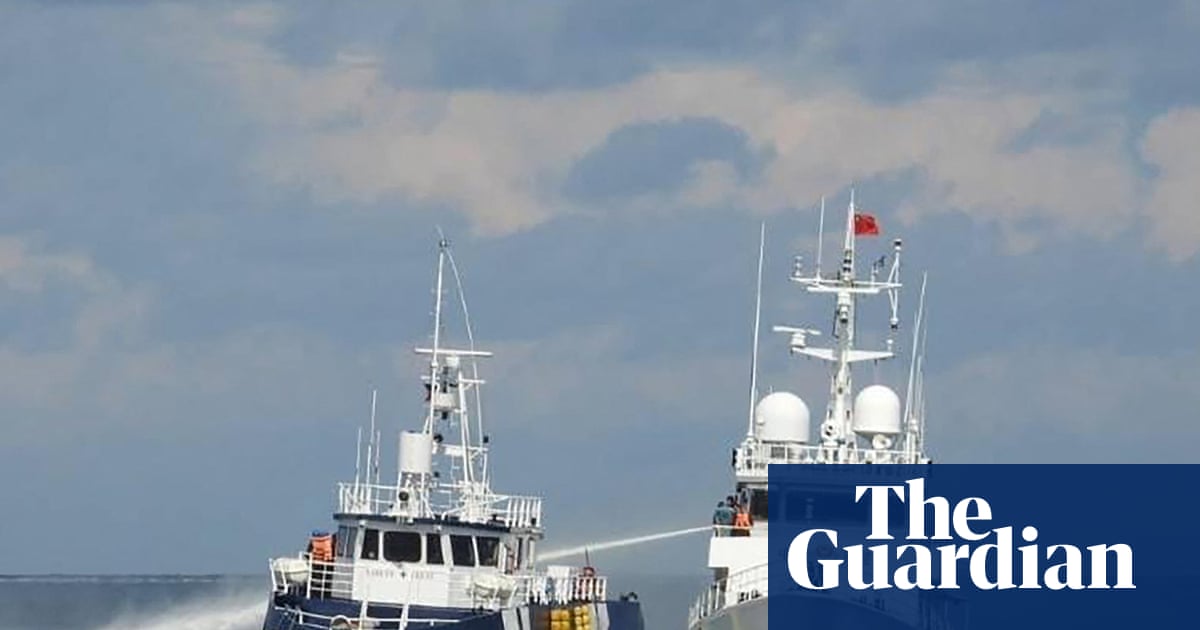
Or you know, release more surveillance balloons, or drone overflights. Drone FON exercises. Fish in Canadian waters in the Northwest. Ram Canadian flagged vessels, intimidate warships, use sonar to harass divers, etc.

I am not saying its a certainty. But are there realistic scenarios. Sure. China is a handful. As the US Canada relationship fractures, they might want to drive a wedge in and just cause chaos, or get the Americans to reploy forces outside of Asia.
 

swerve

Super Moderator
The Chinese operate further away in the European waters and around Australia. Canada would be easier and closer.
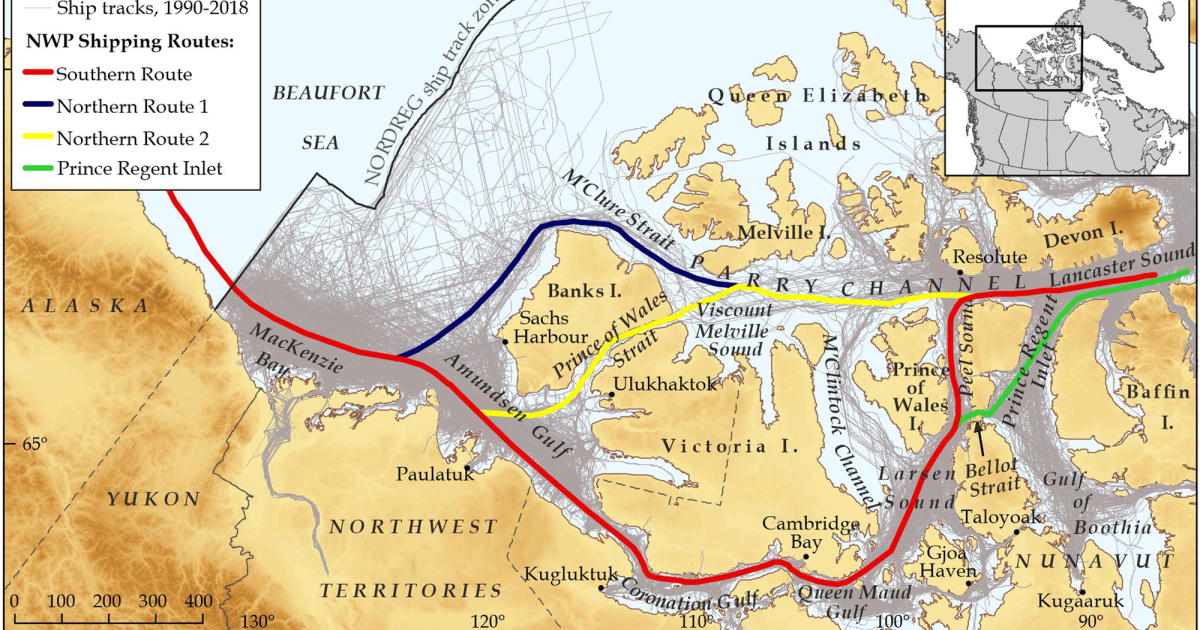
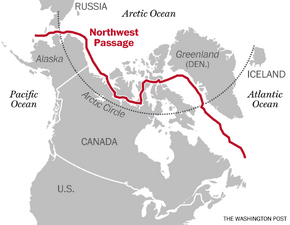
The NW passage isn't easy. Look at a map.

You can sail all the way round Australia in international waters. Europeans have been doing it since the 17th century. The first voyage through the NW passage was in the early 20th century, & the boat had to overwinter, & was prepared for it. It was shallow draught, so it could use waters not navigable by ships, & had a very small crew able to hunt. First transit in one year was in 1944. Easy?

And it can't be done without sailing through Canadian territorial waters.
 

StingrayOZ

Super Moderator
Staff member
I am not trying to deliberately annoy people, but I thought these views were pretty well known and articulated academically.

And it can't be done without sailing through Canadian territorial waters.
Says who and who's navy?

The U.S. Argument for an International Strait: The United States asserts that the NWP qualifies as an international strait under Article 37 of the United Nations Convention on the Law of the Sea (UNCLOS), arguing that the NWP connects the Atlantic and Pacific Oceans and thus must be treated as a strait with a right of transit passage for all nations. The U.S. position on international straits is that they do not depend on a waterway being ice-free or frequently used historically – if a passage connects two high seas/exclusive economic zone (EEZ) areas, it can be considered an international strait subject to transit rights. The United States has never accepted Canada’s historic waters claim and regularly reasserts that the Passage is an international waterway.
So the Canadian forces are going to resist a combined global effort to enforce its uniquely Canadian view that its Canadian internal territory, a precedent that would mean the gulf is Iran's territory, Malacca is Singapore/Indonesia/Malaysia's, etc. China claims everything out to the third island chain.

You are going to start a global war with this position. If you expect NATO support on this, I think that is also a mistake.

The NW passage isn't easy. Look at a map.
1783138918086.png

Well with warming definitely a thing, the southern passage is quite doable in the future. Chinas point isn't to actually use the route. Its to create tension between the US and Canada. People tell me they can't see a way the US or Canada would ever differ on a defence issue, and this is a mighty huge one.

China didn't circumnavigate Australia to find a new route to trade spices from the Dutch indies. China already operates many Artic bases, including in Norway, Iceland, Sweden etc.


Im just saying. Entirely possible to have a falling out.
 

Todjaeger

Potstirrer
I am not trying to deliberately annoy people, but I thought these views were pretty well known and articulated academically.


Says who and who's navy?


So the Canadian forces are going to resist a combined global effort to enforce its uniquely Canadian view that its Canadian internal territory, a precedent that would mean the gulf is Iran's territory, Malacca is Singapore/Indonesia/Malaysia's, etc. China claims everything out to the third island chain.

You are going to start a global war with this position. If you expect NATO support on this, I think that is also a mistake.


View attachment 55098

Well with warming definitely a thing, the southern passage is quite doable in the future. Chinas point isn't to actually use the route. Its to create tension between the US and Canada. People tell me they can't see a way the US or Canada would ever differ on a defence issue, and this is a mighty huge one.

China didn't circumnavigate Australia to find a new route to trade spices from the Dutch indies. China already operates many Artic bases, including in Norway, Iceland, Sweden etc.


Im just saying. Entirely possible to have a falling out.
That particular US take on the NWP is not something universally held as true, even in the US.

The NWP is also quite a bit different from international waterways like the Strait of Malacca or Strait of Hormuz, so even if the current US interpretation of UNCLOS (interestingly it appears that the US has not ratified UNCLOS either...) should things end up before an international court or tribunal, it is distinctly possible that the end result could affirm the position of Canada. After all, part of the NWP as a SLOC if it were open/ice-free would pass between a portion of Nunavut on mainland Canadian, and Victoria Island which is an inhabited Canadian island split between the Nunavut and Northwest Territories administratively. Furthermore, Victoria Island at it's closest point is only ~27 km from the Canadian mainland, with no non-Canadian land or territorial claims adjacent to or on the shore of long stretches of the waterway. That lack of valid territorial claim makes it quite different IMO from the situation in places like along the Strait of Malacca, where the strait also functions as a boundary between Malaysia and Indonesia, or between Indonesia and Singapore, or in areas where both Singapore and Malaysia could have claims to the waterway. If one looks even further east, there are portions of what would be the NWP which are only ~1.7 km wide between the Canadian mainland and some of the smaller islands between Baffin Island and the mainland. For further context, the Bass Strait is not considered an int'l waterway whilst being ~210 km at the narrowest point between TAS and mainland Australia.
 

StevoJH

The Bunker Group
Hang on a sec, don't forget all the inhabited (and uninhabited) Islands between Tasmania and the Mainland.

Plus the only reason a ship would enter Bass Straight would be to enter one of the Ports inside the straight.

Any ship transiting (for ex) from South America to Africa is going to have a much shorter trip if they stay south of Tasmania.
 

StingrayOZ

Super Moderator
Staff member
I am not really trying to personally debate the claim or the legal situation. I am using it as an example of a situation, outside of apparently the only conceivable situation where Canada would come under threat, that does not include ICBMs being fired at Canada and therefore the US as a unified holistic entity will always 100% side with any and all Canadian interests and that will always, come to Canada's defence, even if they don't want to.

That particular US take on the NWP is not something universally held as true, even in the US.
There is no universal truth in America. There is no universally held truth that the earth is round or the orbits the sun or that we are more than 5,000 years old. The fact that it not universally held is not that important, its more important that is it and issue where some Americans might disagree with some Canadians. So perhaps which Americans believe what. The current administration seems to openly challenge not just the NWP, but the entire sovereignty of Canada.

The NWP is also quite a bit different from international waterways like the Strait of Malacca or Strait of Hormuz, so even if the current US interpretation of UNCLOS (interestingly it appears that the US has not ratified UNCLOS either...) should things end up before an international court or tribunal, it is distinctly possible that the end result could affirm the position of Canada.
Given the current state of the world I think its unlikely that China will respect the international court. If that was the solution there would be no dispute in the South China Sea.
South China Sea Arbitration - Wikipedia

After all, part of the NWP as a SLOC if it were open/ice-free would pass between a portion of Nunavut on mainland Canadian, and Victoria Island which is an inhabited Canadian island split between the Nunavut and Northwest Territories administratively.
Not sure that matters. That seems like Canadian norms and code.
Furthermore, Victoria Island at it's closest point is only ~27 km from the Canadian mainland, with no non-Canadian land or territorial claims adjacent to or on the shore of long stretches of the waterway. That lack of valid territorial claim makes it quite different IMO from the situation in places like along the Strait of Malacca, where the strait also functions as a boundary between Malaysia and Indonesia, or between Indonesia and Singapore, or in areas where both Singapore and Malaysia could have claims to the waterway.
So, by extension, Canada also support China closing the Taiwan strait to international shipping? Also the seas between Mainland China and all of its far flung converted atolls? Again, the legal status or strength of the case is not particularly important. Its that it can be challenged. Any territory can be challenged, Ukraine is being challenged right now, and no motions through the international courts is stopping Russian tanks. No magical NATO police force has appeared. The US hasn't come in and saved everyone. Both the US and Iran closed the straits. It was not resolved in a court of international law.

For further context, the Bass Strait is not considered an int'l waterway whilst being ~210 km at the narrowest point between TAS and mainland Australia.
Bass strait is totally open to international shipping, so is in a different category to NWP. The distance between the islands in the island chain between Tasmania and mainland Australia is about 40km. There are smaller islands there. Its not just a clear open water strait.

Prof Donald Rothwell, who specialises in international law at the Australian National University, said Bass Strait was used for international navigation and had special status under the UN convention on the law of the sea and related International Maritime Organisation guidelines. As a party to the Unclos, Australia was obliged to remove all structures from Bass Strait when they were no longer in use, he said
This is what international law is more about. Not to physically stop two states warring.

But generally there is no need for international shipping unless its going to NZ or AU to really pass through there. Australia is a big place, we aren't particularly sweating it. There is no state, not the US or China, that seems to want to interfere with our bass strait Big island-Tasmania controversy. Fewer still who could project power there, even fewer that could do it in a conflict. And there is no foreseeable gain.

The NWP is different, people may be interested in using it. People may definitely be interested in using the NWP controversy to annoy Canada and create ambiguity in western views on the South China Sea.

I understand Canadians see it differently. That's the point. I'm just not sure that All of America sees it the same way, and will prioritise protecting Canada's claims over quarter of a million of its own citizens. Every nation has limits, the US can totally be over committed. While US power may seem limitless, it definitely isn't. US political security is essentially non-existent at this point.

In a world where the global order is broken, there is no international law, global shipping is impossible, the US is in an existential fight or competition with China, relying on anything other than hard power to continue norms, assert territorial claims, secure shipping, EEZ, national sovereignty and security is perhaps too optimistic.

 
Last edited:

swerve

Super Moderator
I am not trying to deliberately annoy people, but I thought these views were pretty well known and articulated academically.

Says who and who's navy?

So the Canadian forces are going to resist a combined global effort to enforce its uniquely Canadian view that its Canadian internal territory, a precedent that would mean the gulf is Iran's territory, Malacca is Singapore/Indonesia/Malaysia's, etc. China claims everything out to the third island chain.

You are going to start a global war with this position. If you expect NATO support on this, I think that is also a mistake.
I think you misunderstand the status of an international waterway.

If a channel is agreed to be an international waterway, even though it's through territorial waters, the littoral state (in this case Canada) still has rights, & there are many activities which are prohibited without the explicit permission of the littoral state. For example, submarines must pass through on the surface, & the littoral state may impose traffic rules, as the UK & France do in the Dover strait, which ships in passage must obey. Littoral straits may not interfere with or obstruct ships which obey the rules.

NATO should, & I expect would, back Canada in enforcing the law, & any reasonable additional rules Canada might choose to impose, just as it does in the Dover strait, the Sound, the Great Belt, & the Turkish Straits - a rather special case. Why would Canada be different?

Canada enforcing international law would not set "a precedent that would mean the gulf is Iran's territory, Malacca is Singapore/Indonesia/Malaysia's, etc.", or imply recognition of China's claims. China's & Iran's claims are contrary to international law. In some cases, China claims parts of the territorial waters of other countries, far from China. Canada's rights in, for example, Barrow Strait (15.5 km at its narrowest) are undisputed. You can sail most of the way in international waters, but not between Resolute & Russell Island. That's Canadian waters.

Through the Strait of Hormuz, the best navigable routes run through Omani waters, so Iran has no jurisdiction. Further west, the preferred channels run through waters which are Iranian in some parts, UAE in others, & disputed in some: Iran occupies some islands which are claimed by & used to be occupied by the UAE. Until recently, Iran didn't restrict traffic in the accepted lanes (there are designated inwards & outwards lanes, for safety).

The Malacca Strait has a traffic management system jointly run by Malaysia, Singapore & Indonesia. Everyone accepts it. The Malacca Strait is their territory, & they can not only legally enforce their rules, but they're generally welcomed by both shipowners & other governments. Without them it'd be rather dangerous, because of the volume of traffic.

And so on . . ..

I don't know why you think Canada doing something which is both completely legal & normal, & internationally accepted in other straits, might "start a global war".
 

StingrayOZ

Super Moderator
Staff member
If a channel is agreed to be an international waterway, even though it's through territorial waters, the littoral state (in this case Canada) still has rights, & there are many activities which are prohibited without the explicit permission of the littoral state. For example, submarines must pass through on the surface, & the littoral state may impose traffic rules, as the UK & France do in the Dover strait, which ships in passage must obey. Littoral straits may not interfere with or obstruct ships which obey the rules.
Submarines don't have to travel on the surface. Quite often they don't, either in international transits or even within other states territorial waters.

States imposing rules and rights is also an increasingly grey area.

In a world where rules and order are breaking down, without significant capability to enforce rules and orders nothing is going to happen. If the Canadian response to Chinese incursions and disruption is a mildly worded letter several months after the event, I doubt it will shifting thinking in China away from such operations.

I think we are getting too bogged down in the legal specifics. China isn't particularly worried about legal specifics. There is no one to sanction them, no one who can threaten them, no one to limit their actions, no international entity the are particularly concerned about. There are countless examples of the Chinese flaunting international law, local law, contesting other navies, using its navy or civilian vessels, From pole to pole, from South America, to Africa, to Europe and North America. China can sometimes be friendly and sometimes be belligerent. They are a global power.


The Malacca Strait has a traffic management system jointly run by Malaysia, Singapore & Indonesia. Everyone accepts it. The Malacca Strait is their territory, & they can not only legally enforce their rules, but they're generally welcomed by both shipowners & other governments. Without them it'd be rather dangerous, because of the volume of traffic.
Disrupting the Malacca strait would be against Chinese interests. Many straits are the same. Not Sure on the NWP. China might seek to deliberately block, disrupt or contest. If the US is using the strait in a conflict with China, then that may change its value.

Again, China may seek to aggrivate those who conduct FoN.

Moreover, China’s interpretation of the territorial sea is that the state has the exclusive right to make, apply and execute its own laws in that space without foreign interference. But according to UNCLOS, all ships, civilian or military, enjoy the right of innocent passage through other states’ territorial seas. Moreover, the contiguous zone is considered part of international waters, and states do not have the right to limit navigation or exercise any control for security purposes.

Lastly, China claims 200 nm from the end of the territorial sea as its exclusive economic zone (EEZ), where it claims to have the right to regulate military activity. The US insists that freedom of navigation of military vessels is a universally established and accepted practice enshrined in international law – in other words, states do not have the right to limit navigation or exercise any control for security purposes in EEZs. Australia shares this view, but not all countries accept this interpretation. Argentina, Brazil, India, Indonesia, Iran, Malaysia, the Maldives, Oman and Vietnam agree with China that warships have no automatic right of innocent passage in their territorial seas. Twenty other developing countries (including Brazil, India, Malaysia and Vietnam) insist that military activities such as close-in surveillance and reconnaissance by a country in another country’s EEZ infringe on coastal states’ security interests and therefore are not protected under freedom of navigation.

In other words, while international law may support the position of the US and Australia on legal behaviour within the EEZs, countries need to work harder to solidify this norm more broadly.

Through these three positions alone on internal waters, territorial seas and EEZs, China lays claim to approximately 80% of the South China Sea. Then China uses the nine-dash line to cover the remaining territory and provide redundancy by claiming “historic waters” – i.e., that China has historically controlled this maritime environment – again, a view that has no basis in international law.
So China is currently looking around the globe and looking at US allies, and looking at how they can annoy them. It is trying to divide US support, and it does that by acting belligerently.


The NWP is just one avenue. Honestly, its far away, not really used for commercial shipping, even if they did those exercises, it wouldn't physically disrupt Canada hugely.

More aggressive move would be doing freedom of navigation around Vancouver island, Canada's Taiwan or live fire exercises just off its coast. Drawing parallels between it and Taiwan. Any Canadian protests would be mirrored back at the US and Canada. So quoting international law, and violations is what they want. That is why they would be doing it.

All of these sound stupid. But so does doing a FoN and circumnavigating Australia and doing live fire off 150km from Sydney.
 

swerve

Super Moderator
Submarines don't have to travel on the surface. Quite often they don't, either in international transits or even within other states territorial waters.
Article20
Submarines and other underwater vehicles

In the territorial sea, submarines and other underwater vehicles are required to navigate on the surface and to show their flag.
If they don't, they're breaking a legally binding treaty, apart from the two handfuls of countries that haven't signed it. China is a party to it., but I heard that Chinese submarines had been passing between Japanese islands submerged to get to the open sea, & China was ignoring Japanese protests - until the JMSDF instead of just tracking them sat a destroyer on the surface over a sub in passage, with its hull sonar on high power, aimed at the sub. I'm told that would be very unpleasant for the crew. The Chinese didn't complain.

States imposing rules and rights is also an increasingly grey area.
Maritime law & treaties are pretty clear. Countries breaking them isn't grey, whether it's the USA murdering Latin Americans (whether smugglers or not) in international waters, or China seizing fishing boats in the territorial waters of Indonesia or the Philippines. The only "grey" area is in the ability to do anything about such blatant breaches of international law.

In a world where rules and order are breaking down, without significant capability to enforce rules and orders nothing is going to happen.
This is true - & is why NATO should back Canada to the hilt.

I think we are getting too bogged down in the legal specifics. China isn't particularly worried about legal specifics. There is no one to sanction them, no one who can threaten them, no one to limit their actions, no international entity the are particularly concerned about. There are countless examples of the Chinese flaunting international law, local law, contesting other navies, using its navy or civilian vessels, From pole to pole, from South America, to Africa, to Europe and North America. China can sometimes be friendly and sometimes be belligerent. They are a global power.
Again, why NATO should back Canada to the hilt.

Re Vancouver Island: FON through the Seymour Narrows would seem unwise for large vessels. Too much risk of deep embarrassment, & would they really want Canadian pilots aboard? They're required for safety. Reasonable - the Seymour Narrows is very challenging. BTW, innocent passage is meant to cover going from one place to another. That can be justified though the Taiwan strait (which in any case, can be done entirely in international waters), but where would a Chinese warship be going from & to that would take it that way?
 

StingrayOZ

Super Moderator
Staff member
Again, why NATO should back Canada to the hilt.
NATO intervening on this seems unlikely. I don't image any strongly drafted letters.

Who's NATO? You mean the US, and then dragging most of the other NATO nations along, most of which are focused on their own problems. NATO has shown as a collective very little interest in anything outside of western Europe. Certainly the interest in European NATO members in issues in Americas is small.

NATO also has its own long history of issues down this road. The Cod wars. Lobster wars, the Cherbourg incident, the Turbot war.

That is part of the problem of the breakdown. Entities that used to make and show strong actions for the good of global security are breaking down.

With climate change affecting ocean currents, and the already massive depletion of northern hemisphere fish stocks its highly likely all nations will be pushing boundaries on fishing rights and EEZ. Hungry states will literally do anything. It isn't purely just China that has to be the big bad here. Nationalism is growing near universally, globally. As economic, social, environmental pressures all mount on top of populations that have had enough.

Again, why I don't think its prudent to rely on the US is protect Canada's interests. I am not sure how well aligned they are going forward.
Re Vancouver Island: FON through the Seymour Narrows would seem unwise for large vessels. Too much risk of deep embarrassment, & would they really want Canadian pilots aboard? They're required for safety. Reasonable - the Seymour Narrows is very challenging. BTW, innocent passage is meant to cover going from one place to another. That can be justified though the Taiwan strait (which in any case, can be done entirely in international waters), but where would a Chinese warship be going from & to that would take it that way?
The exact scenario is up to debate. How about a fleet of Chinese survey vessels.. How about a fishing fleet.

Sure they are unlikely to risk their ship in really bad narrows and tight spaces, but again, doesn't stop them doing literally everything else. Only what physically cannot be done.

A stronger defence force will always be required in global shifts like we are experiencing.
 

seaspear

Well-Known Member
The only real aspect that this large split F-35/Gripen fleet makes sense in is with regard to supporting domestic jobs and building local industry however, I think even that falls apart upon inspection. Gripen E is cheaper in regard to operational costs than the F-35A, but it's initial purchase costs are equal or higher and if we assemble in Canada, they will certainly only go up even more. We would be hitching half of the RCAF's fighter fleet to a platform with few customers, substantial production bottlenecks and questionable long term viability in order to prop up a domestic industry.

The current F-35 delivery timeline claims to have the whole 88 aircraft order delivered to the RCAF between 2032 and 2034, while Saab is going to likely take 5+ years just to set up an assembly facility within Canada. There is no existing expertise in Canada to even assembly 4th generation fighters, this is not an industry you can just swap over from say Bombardier's commercial jet lines with a snap of your fingers. If we assume contract signature in 2026 for work on the facility in Canada ASAP, we're likely going to be waiting until the early 2030's until the factory is ready and starting to deliver aircraft. I should specify as well that Canada is almost certainly getting the same arrangement as Brazil where Gripen parts and equipment are primarily exported from Sweden to Canada, who assembles them into the final product with some limited manufacturing. This is not licensed production and we are not actually building the airframes, thus not truly gaining the real valuable expertise required to go off on our own or be a valuable future partner. If other projects are anything to go off, 5+ years is likely overly optimistic and delays/problems will push this back even further. Saab's Swedish production line is relatively low volume and still has to support Brazil while also making deliveries to Sweden and the few other foreign customers which exist. This process will take time and the high job figures provided are likely a mirage.

So we have an assembly facility operating in the early to mid 2030's, at which point we have the majority of if not the entire F-35A order already delivered to the RCAF. During the run up to this process, we'd likely have to start sending personnel over to Sweden to train on the Gripen and further splinter the training pipelines and personnel pools we already are having issues with. The majority of the fighter force would already be transitioned to the F-35, so we'd be undergoing another transition before the original is even complete. Where are all of these personnel even coming from? We would need to establish more infrastructure as the F-35A and Gripen cannot cohabitate within the same hangers and infrastructures due to security risks. Our current bases cannot handle this many fighters, so there's billions more in expansions, refurbishment of old fields or entirely new airbases. It would likely be into the later 2030's before Gripen's were operational in a useful quantity, and we'd likely be looking at another 5-10 years before we actually got the entire fleet of 72+ Gripens as is being discussed.

Now we're well into the 2040's with a fleet split between the F-35 and the Gripen E, effectively a modernized 4th gen fighter with worse performance in most aspects than the other aircraft in the fleet, having been delivered on a slower timeline and is far less relevant at this point. Gripen E is perfectly fine for the world we face right now, but it will be long past its prime in the late 2030's and into the 2040's when both enemies and allies alike will have heavily proliferated 5th gen stealth fighters and even started adopting 6th gen aircraft at this point. Given the time, effort and money invested into the Gripen at this point in time, Canada would need to operate them for another 25-30 years to make any financial sense. I don't think I have to point out the issues that come from operating an aircraft like the Gripen into the 2050's, 2060's and 2070's+ when aviation as we know it now is rapidly changing. How do we justify this purchase when even heavily modified Chinese and Russian 4th gen fighters can fight on a relatively equal playing field as the Gripen now? What about the SU-57, which is being proliferated abroad to nations like Algeria? What about Chinese 5th generation fighters which will almost surely see major exports in the coming years? What about the multitude of Chinese 6th gen fighters concepts we see flying right now? Our allies in Europe are already moving on right now towards their own 6th generation programs, and we're talking about attaching ourselves to yesterdays aircraft for the foreseeable future at great financial cost and effort?

Why doesn't Canada take the money, effort and time proposed for a Gripen assembly facility and use it to set up our own domestic CCA drone wingman program? We can develop our own platform or license actual full production at home, selling it to our allies abroad and using it ourselves. This would be a more realistic and worthwhile endeavor than the Gripen, given actual realistic export possibilities in comparison. In addition to this, why don't we follow through on our interest in GCAP and procure an actual 6th generation fighter to replace or supplement the F-35? That would provide us with a cutting edge capability going forward that would transition us away from the F-35 when it actually made sense, not now in our current predicament.

This entire saga is a massive boondoggle that seems like it's going to sink the RCAF if it goes through in any of these hypothetical situations. Gripen is not the right aircraft for Canada now or in the future, domestically assembled or not. The world has largely passed the design by, lets move onto greener pastures and not get caught up in Saab's shiny sales brochure. We should be looking forward, not taking a firm step backwards capability wise.

GlobalEye is a far, far more worthwhile and reasonable system for Canada to assemble and operate in comparison.
Re Global Eye as a comparisoan to the Australian developed Wedgetail what are the determining factors regarding choice of either for Canada?
 
Top