Middle East Defence & Security

swerve

Super Moderator
Martlet would be my bet - we've moved a pair of Wildcat helicopters out there and they can carry dozens of them - they're lightweight, laser guided and as cheap as chips.

If you're wanting to splash drones then you could carry 30 plus rounds quite easily.
Tens of thousands of quid for Martlet rather than hundreds of thousands for CAMM & millions for Aster, Standard, Patriot, ESSM etc.

For those flying low & slow enough door gunners, a trainer equipped with a gun pod, etc. should be cheaper. I'm all for using everything that works, while taking into account cost effectiveness. Small drones to blow up bigger ones, guided APKWS, whatever. And non-kinetic when available & suitable.
 

uguduwa

Member
Against low and slow drones a door gunner works too, or a gun-pod. Russia and Ukraine are doing that quite actively.


It might be a sign that they cant reliably cover the strait with radar and have to opt for this instead. In principle the US can clear mines, the issue is they have to send assets in to do that. So the question is, can Iran still hit ships in that area or not?
Maybe they just want oil prices to go up after prices went down. It doesn‘t seem like they have a Hortsge of missiles or drones. Tonight they sent more missiles than the past few days. This is either going to be a long war or a humiliating TACO that could cost the Us the entire middle east.
 

Feanor

Super Moderator
Staff member
Maybe they just want oil prices to go up after prices went down. It doesn‘t seem like they have a Hortsge of missiles or drones. Tonight they sent more missiles than the past few days. This is either going to be a long war or a humiliating TACO that could cost the Us the entire middle east.
It wouldn't be a missile shortage. It would be a targeting issue, I think.
 

MARKMILES77

Well-Known Member
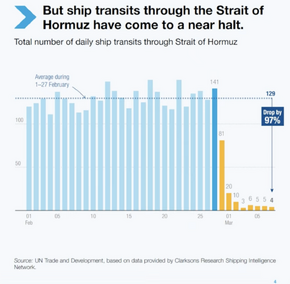
For anyone interested in the implications of the Closure of the Strait of Hormuz, The UN trade and development organization has put out a useful report.Screenshot 2026-03-11 at 12.18.18.png

Few points:

1:Are the straits really closed? The answer is yes to everyone except the Chinese.

Screenshot 2026-03-11 at 12.19.07.png


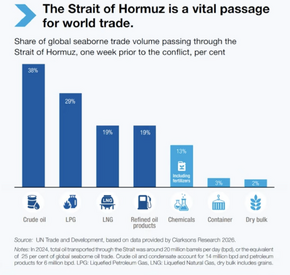
2:What actually flows through the Straits:
Screenshot 2026-03-11 at 12.18.40.png
 

MARKMILES77

Well-Known Member
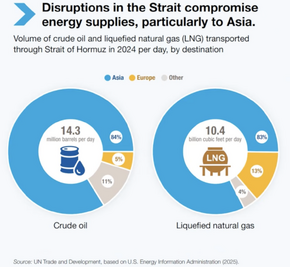
3:What regions are most effected?
Screenshot 2026-03-11 at 12.19.31.png

4:And don't forget how severely World food production will be hit due to fertilizer shortages.
Note also Australia is very vulnerable to this problem.Screenshot 2026-03-11 at 12.20.05.pngScreenshot 2026-03-11 at 12.20.31.png


crest

Active Member
Ships sre being hit by projectiles. I don‘t think there‘s any problem with targeting.
Also worth noting that many of the ships on either side of the strait either have there a.i.s turned off or are using it in ways that spoof there actual locations. But in all honesty it's fairly possible that between agents in the Gulf states and positions in Iran proper they have actual eyes on large chunks of the strait. That does provide targeting options not generally available and harder to counter. Provided they have adequate communications available. That said I would think that radars for Iran on the coast are no doubt seriously degraded or simply turned off untill something like a u.s warship is the target
 

crest

Active Member

Part of the article discusses how the u.s is using attack helicopters to hit drones more cost efficient. I'm wondering how long untill we start to see drones armed with air to air interceptors like in Ukraine. Personally i understand the u.s position is difficult here but getting withing machine gun fire of drones seems to me to be a bit short-sighted and likely to at some point prove disastrous

Edit.
Just a add on here showing how using f-16s for the same task brings more risk then one would think. Video shows how slow plains have to slow down to target drones
 
Last edited:

Feanor

Super Moderator
Staff member

Part of the article discusses how the u.s is using attack helicopters to hit drones more cost efficient. I'm wondering how long untill we start to see drones armed with air to air interceptors like in Ukraine. Personally i understand the u.s position is difficult here but getting withing machine gun fire of drones seems to me to be a bit short-sighted and likely to at some point prove disastrous

Edit.
Just a add on here showing how using f-16s for the same task brings more risk then one would think. Video shows how slow plains have to slow down to target drones
It's not really a surprise. Ukraine has lost multiple aircraft including an F-16, in scenarios not too different from what we've got in the Middle East. On top of that flight hours for jets are quite expensive and their availability is limited. Every jet hunting Iranian drones, is a jet not available for operations against Iran itself. Now if the US can lean on allies for defensive work, then it might not matter. But if the drone threat becomes robust enough to force some US and Israeli jets to play defense, that would impact the op-tempo of the strikes against Iran.
 

crest

Active Member
It's not really a surprise. Ukraine has lost multiple aircraft including an F-16, in scenarios not too different from what we've got in the Middle East. On top of that flight hours for jets are quite expensive and their availability is limited. Every jet hunting Iranian drones, is a jet not available for operations against Iran itself. Now if the US can lean on allies for defensive work, then it might not matter. But if the drone threat becomes robust enough to force some US and Israeli jets to play defense, that would impact the op-tempo of the strikes against Iran.
I'm regards to flight hours for all the other probloms the u.s has with a aging fleet. I think the air to air refueling is the real weak link here IIRC the backbone of the fleet is neering it's retirement and the new ones have both limited numbers and issues wit both the plane itself and the probe for the actual refuelings design
 

StobieWan

Super Moderator
Staff member
Tens of thousands of quid for Martlet rather than hundreds of thousands for CAMM & millions for Aster, Standard, Patriot, ESSM etc.

For those flying low & slow enough door gunners, a trainer equipped with a gun pod, etc. should be cheaper. I'm all for using everything that works, while taking into account cost effectiveness. Small drones to blow up bigger ones, guided APKWS, whatever. And non-kinetic when available & suitable.

Absolutely - the sort of drones that are being used - they're slow enough to be easily intercepted by means other than a fast jet with a full load of AIM-9X or whatever the alternative is. I'm suspecting adapting a Global Hawk style MALE to carry APKWS/similar, which might also be able to carry some RF tracking kit to get reach at the perimeter might be making sense. Bags of endurance and low operating costs etc.

And yes, soft kill measures where possible.

Ukraine is basically a testing lab for this sort of stuff - get 'em on zoom and start taking notes I say.
 

Ananda

The Bunker Group

Thai bulk carrier being hit by two projectiles. The crew bail out from the ship, rescue by Oman Navy.


While 2 of Indonesia State Oil company Pertamina tankers, manage to get out of strait of Hormuz.


Feanor

Super Moderator
Staff member
Absolutely - the sort of drones that are being used - they're slow enough to be easily intercepted by means other than a fast jet with a full load of AIM-9X or whatever the alternative is. I'm suspecting adapting a Global Hawk style MALE to carry APKWS/similar, which might also be able to carry some RF tracking kit to get reach at the perimeter might be making sense. Bags of endurance and low operating costs etc.

And yes, soft kill measures where possible.

Ukraine is basically a testing lab for this sort of stuff - get 'em on zoom and start taking notes I say.
The environment in Ukraine is very different from the Middle East. So in the Middle East where Iranian jets aren't much of a threat you can probably get away with a UAV drone hunter, over Ukraine it would be trickier. That drone hunter would have to stay well away from the front line, especially with the RVV-BD being part of the threat. You could probably get away with something like that over Kiev, but further east would get problematic fast.

Ships sre being hit by projectiles. I don‘t think there‘s any problem with targeting.
Yes it appears no problems there.
 

StobieWan

Super Moderator
Staff member
The environment in Ukraine is very different from the Middle East. So in the Middle East where Iranian jets aren't much of a threat you can probably get away with a UAV drone hunter, over Ukraine it would be trickier. That drone hunter would have to stay well away from the front line, especially with the RVV-BD being part of the threat. You could probably get away with something like that over Kiev, but further east would get problematic fast.


Yes it appears no problems there.
Oh, absolutely - the MALE idea needs a permissive environment with depth to work from -but I'm sure the Ukrainians have plenty of thoughts on other measures.


I also suspect that SPAAG will be coming back into fashion.
 

Feanor

Super Moderator
Staff member
I also suspect that SPAAG will be coming back into fashion.
They should never have "left" fashion. Something like Russia's Pantsyr system is relevant to just about everyone. I say something "like" because there were choices made with that system. I think future AAA needs to be able to use EO or radar alternatively or in combination, and needs to be able to combine gun and missile options, and I think future AAA will need to be integrated both into ground combined arms formations and air force/air defense as companion SHORAD/drone defense for facilities.

EDIT: Iran has begun using unmanned boats to attack tankers. *gasp *shock *insert Russo-Ukrainian war reference... if course the port in question had barriers in place, and pickets for engaging unmanned boats posted at elevated positions. I for one I can't wait to see what other obvious lessons from the Russo-Ukrainian war nobody learned.

 
Last edited:

personaldesas

Active Member

Screenshot 2026-03-12 at 15.24.12.png

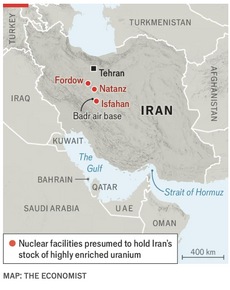
Economist summary: Could special forces eliminate Iran’s nuclear programme?

Even after heavy bombing, Iran still possesses roughly 400kg of highly enriched uranium (HEU), enough for around ten nuclear weapons if further enriched. Some American officials have suggested that special forces could physically seize or destroy the material, but doing so would require an enormous and extremely complex military operation.

Most of the uranium is believed to be stored at the Isfahan nuclear complex, about 500km inside Iran, possibly inside tunnels. Reaching and securing the site would likely require helicopters, airborne troops, and the seizure or construction of a nearby airstrip to bring in heavy equipment needed to access underground facilities.

A large force, potentially more than 1,000 troops, would have to secure the area, supported by continuous air cover, drones, satellites, and refuelling aircraft. Israeli forces might participate because of their experience with tunnel warfare, but American logistical support would still be essential.

Handling the uranium itself would also be dangerous. The material is likely stored as uranium hexafluoride in multiple containers. Options include destroying it in place, chemically diluting it, or physically removing it. Each approach carries serious technical and environmental risks.

Such a raid would appeal politically because it could provide a dramatic end to the conflict, but it would also be one of the largest and most complicated special-forces operations ever attempted. Even supporters acknowledge that it would involve significant military risk and extensive preparation.

The conclusion: while technically possible, only the United States likely has the capability to attempt such a mission, and it would require a massive and highly coordinated operation.

 

View attachment 54465

Economist summary: Could special forces eliminate Iran’s nuclear programme?

Even after heavy bombing, Iran still possesses roughly 400kg of highly enriched uranium (HEU), enough for around ten nuclear weapons if further enriched. Some American officials have suggested that special forces could physically seize or destroy the material, but doing so would require an enormous and extremely complex military operation.

Most of the uranium is believed to be stored at the Isfahan nuclear complex, about 500km inside Iran, possibly inside tunnels. Reaching and securing the site would likely require helicopters, airborne troops, and the seizure or construction of a nearby airstrip to bring in heavy equipment needed to access underground facilities.

A large force, potentially more than 1,000 troops, would have to secure the area, supported by continuous air cover, drones, satellites, and refuelling aircraft. Israeli forces might participate because of their experience with tunnel warfare, but American logistical support would still be essential.

Handling the uranium itself would also be dangerous. The material is likely stored as uranium hexafluoride in multiple containers. Options include destroying it in place, chemically diluting it, or physically removing it. Each approach carries serious technical and environmental risks.

Such a raid would appeal politically because it could provide a dramatic end to the conflict, but it would also be one of the largest and most complicated special-forces operations ever attempted. Even supporters acknowledge that it would involve significant military risk and extensive preparation.

The conclusion: while technically possible, only the United States likely has the capability to attempt such a mission, and it would require a massive and highly coordinated operation.
Of all the wishful thinking going on right now (invading the Iranian coastline, escorting tankers, etc) I think this one takes the cake. I love the idea of sending in 1,000+ SOF guys on helicopters (plus paratroopers?) 500km into Iranian territory to take on a tunnel complex that is likely completely unmapped and filled with completely unknown numbers of IRGC. Of course the Iranians will know as soon as they arrive, if not sooner, and be able to throw drones/artillery at them. Oh yeah and then, should they somehow complete the insane mission, they have to get out, once again across Iranian airspace no doubt teeming with MANPADS.

Sounds like a recipe for 1000+ SOF casualties
 
Top