Middle East Defence & Security

Feanor

Super Moderator
Staff member
1. Probably yes, as long as it is mutually beneficial as it so far has been.
Is it mutually beneficial to the US as a nation-state? I have my doubts. If Israel is really going to cut the US leash, it may lead to the US reconsidering how much it's willing to provide diplomatic support.

2. Probably unaffected. Israel has many reasons to buy American. The aid mechanism is pretty low on the list.
The person you quoted implies this would happen. I'm specifically doubting that argument.

3. Why would it? Except a negligible amount.
Ok so the leash remains. Refuse to sell Israel extra bombs or artillery shells when they need them for a big campaign and you continue to control Israel's behavior. Her whole argument seems to be that by cutting the aid Israel would no longer depend on the US.

4. True.
5. A step in a direction is a step nonetheless.
I think this is no step at all. I think direct aid is only a small portion of Israel's dependence on the US. Cutting it would hurt Israel in terms of financial benefits but wouldn't substantially help in cutting the leash. I think if Israel really wants to be independent on US influence then Israel needs to diversify their security partners. Israel is too small to go it alone, but increasing domestic capacity somewhat might help. Partnering with other major players would too, though it gets really tricky. Because in principle Israel could by Russian FABs and I'm pretty sure Israel has the technical skills to integrate them on their platforms. Except Russia is busy bombing Ukraine into sawdust and anyone openly working with them will have problems in their relationship with most western countries, not to mention issues of availability. Turkey is hostile to Israel and China is a Russian supporter, not to mention they're heading for a potential war with the US, though I suppose Israel could try to partner with them. EU countries are likely to be more of a problem than the US when it comes to Israel going into Gaza. Who's left? South Korea, Indonesia, Japan I guess. There isn't a good alternative to the US for Israel.
 

Big_Zucchini

Well-Known Member
Is it mutually beneficial to the US as a nation-state? I have my doubts. If Israel is really going to cut the US leash, it may lead to the US reconsidering how much it's willing to provide diplomatic support.
It is usually mutually beneficial because often the message or action behind these proposed resolutions is detrimental to the US either by undermining its authority or by undermining its allies and reinforcing its enemies.

Recall UNSC resolution 1701. It sought to end the war in Lebanon. But it didn't do just that - it set up the mechanism for it. And the chosen mechanism was doomed to fail as it indeed have. Does it benefit the US that the political capital it put into extinguishing a war result in just a clock being restarted? Does it benefit the US that a key regional ally in a hostile region is constantly at risk of dragging into a border war?
The ceasefire agreement between Israel-USA-Lebanon achieved in November of 2024 still lacks some crucial elements but is already far more robust than what the UNSC achieved, and more quickly with just a tri-party agreement.

And if it was up to the UNSC to determine the future of Gaza we know it'd get eternally stuck. The US is currently setting up a mechanism more or less to its taste.

The person you quoted implies this would happen. I'm specifically doubting that argument.
Then go ahead and ask her. Don't think you'll be getting an objective response though.

Ok so the leash remains. Refuse to sell Israel extra bombs or artillery shells when they need them for a big campaign and you continue to control Israel's behavior. Her whole argument seems to be that by cutting the aid Israel would no longer depend on the US.
You quoted me, so I thought you were asking me those questions.

I think this is no step at all. I think direct aid is only a small portion of Israel's dependence on the US.
So is a small portion and therefore a step, or not a step? Big confusion.

Cutting it would hurt Israel in terms of financial benefits but wouldn't substantially help in cutting the leash.
Small financial change. Small influence change.

I think if Israel really wants to be independent on US influence then Israel needs to diversify their security partners. Israel is too small to go it alone, but increasing domestic capacity somewhat might help. Partnering with other major players would too, though it gets really tricky. Because in principle Israel could by Russian FABs and I'm pretty sure Israel has the technical skills to integrate them on their platforms. Except Russia is busy bombing Ukraine into sawdust and anyone openly working with them will have problems in their relationship with most western countries, not to mention issues of availability. Turkey is hostile to Israel and China is a Russian supporter, not to mention they're heading for a potential war with the US, though I suppose Israel could try to partner with them. EU countries are likely to be more of a problem than the US when it comes to Israel going into Gaza. Who's left? South Korea, Indonesia, Japan I guess. There isn't a good alternative to the US for Israel.
Nice. Except the Israel's 2nd largest DIB manufacturing partner is India.
 

Feanor

Super Moderator
Staff member
It is usually mutually beneficial because often the message or action behind these proposed resolutions is detrimental to the US either by undermining its authority or by undermining its allies and reinforcing its enemies.

Recall UNSC resolution 1701. It sought to end the war in Lebanon. But it didn't do just that - it set up the mechanism for it. And the chosen mechanism was doomed to fail as it indeed have. Does it benefit the US that the political capital it put into extinguishing a war result in just a clock being restarted? Does it benefit the US that a key regional ally in a hostile region is constantly at risk of dragging into a border war?
The ceasefire agreement between Israel-USA-Lebanon achieved in November of 2024 still lacks some crucial elements but is already far more robust than what the UNSC achieved, and more quickly with just a tri-party agreement.

And if it was up to the UNSC to determine the future of Gaza we know it'd get eternally stuck. The US is currently setting up a mechanism more or less to its taste.
Sure, if it's in the interests of the US to shoot down the resolution, then they will. But losing their influence on Israel may lead them to reconsider protecting Israel specifically (as opposed to incidentally). And again if Israel depends on US diplomatic cover, then the US has leverage. The two are inseparable.

Then go ahead and ask her. Don't think you'll be getting an objective response though.


You quoted me, so I thought you were asking me those questions.
Yeah, sorry for the confusion. I was responding to the linked material posted.

So is a small portion and therefore a step, or not a step? Big confusion.


Small financial change. Small influence change.
Not a step. Losing US aid without being any less dependent on the US MIC means Israel is just as dependent as before and now misses out on the money.

Nice. Except the Israel's 2nd largest DIB manufacturing partner is India.
Good point. I don't know how I missed India, as an obvious partner and with a history of joint projects with Israel. In that case the smartest move for Israel would be to invest in joint ventures and mutually compatible tech with India, especially in things like SAMs and munitions (arty and air-surface PGMs). This would mean that a cutting of US supplies at a critical juncture would be something Israel could work around. No need to give up on US aid.
 

Big_Zucchini

Well-Known Member
Sure, if it's in the interests of the US to shoot down the resolution, then they will. But losing their influence on Israel may lead them to reconsider protecting Israel specifically (as opposed to incidentally). And again if Israel depends on US diplomatic cover, then the US has leverage. The two are inseparable.
Losing some interest, not all. Usually when you lose some interest you want to find another way to gain it. This is a good way, and benefits both.

Not a step. Losing US aid without being any less dependent on the US MIC means Israel is just as dependent as before and now misses out on the money.
Israel never really did get much money out of it. In the last decade, every bit of money earned was most likely squandered away on lost deals due to marketing restrictions imposed by the US. It's arguable if Israel benefits monetarily from this at all.

A trend seen since mid-2024 is that Israel's reliance on the US DIB (or MIC) is gradually reducing. Actually this trend existed in a way since the beginning of Israel's modern incarnation, but really picked up the pace recently. The industrial independence of Israel is in a state of gradual increase, to the point where the US can only threaten to hurt peacetime buildup but not really impact wartime supplies. Meaning Israel is already pretty much in a position where outsized US pressure on its war stocks can be weathered until the end of a war.
We saw how Biden era pressure via blockage of munitions was weathered until the Trump administration, and Israel didn't cave to Bidenian demands.
Trump also wasn't rewarded immediately with obedience in return for unblocking arms. It took Trump another 9 months or so to reach some tangible results.
 

Big_Zucchini

Well-Known Member
Saudi Arabia seems to be moving ahead with an F-35 request, hoping for 2 squadrons. The US is obligated to maintain Israel's qualitative military edge in the region, but if Saudi Arabia joins the Abraham Accords then it's a good trade.
Yet I remind that UAE also conditioned its entry to the Abraham Accords on Israel's approval to an F-35 buy, which eventually did not materialize.
 

Big_Zucchini

Well-Known Member

This is potentially larger then 2+ Sq of F-35. This is basically green light to Saudi to developed their own nuclear tech. This might open Iran arguments for continues their enrichment program for civilian nuclear fuel.
Civilian nuclear tech. Can't make weapons with that infrastructure.
Iran's "civilian nuclear program", i.e. their HEU, remains reportedly buried. Their political situation means digging it up is a huge gamble. IMO too much risk, too little gain.

Iran also isn't in any apparent dialogue right now. They withdrew from NPT and aren't allowing IAEA to inspect. Kinda rogue right now. I'm guessing because they don't have a clear strategy for this post war situation yet.
 

Big_Zucchini

Well-Known Member
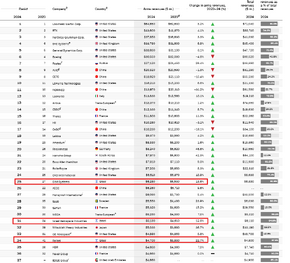
Israeli defense companies made a steep climb in 2024 according to a SIPRI global top 100 ranking.

source

Elbit: 27 -> 25 ; 13.6% climb.
IAI: 34 -> 31 ; 12.6% climb.
Rafael: 41 -> 34 ; 22.7% climb.


1764611997617.png
 

Big_Zucchini

Well-Known Member
In the 2025 June war in Iran, aka Operation Rising Lion, the US chose a finishing strategy. Come in at the last day, achieve some tangible and significant objective, call it a day and avoid a decisive victory, and go back to normal.
The obvious downside to this strategy is that leaving things open - does in fact leave things open. The war will restart unless Iran somehow collapses, which is a huge gamble.


The bipartisan American approach to wars is to let the next administration handle the consequences. But it's only 2025.


The flip side is that in military terms, there were already diminishing returns. And the next step was regime change which was ultimately not pursued. It is up to their respective intelligence agencies to decide if such endeavor is feasible.
 

kato

The Bunker Group
Verified Defense Pro
German corvette Ludwigshafen shot down an attacking UAV of unknown origin in Lebanese waters a few days ago. A "defense system" resulted in a "controlled crash" of the drone during which a charge carried onboard exploded.
If that is true then it should be treated as a major incident. A drone should not be able to get that close to a warship, even if its supposed attack vector doesn't put it in harm's way. It could quickly turn and strike the ship, causing major damage.
The (former) crew of the corvette has now received the "Mission Medal, Level 'Combat'" on Dec 5th this year, i.e. the incident has since been formally acknowledged as combat.

The ship was immediately offshore at the time since it was providing supplies and support by RHIB to the adjacent UNIFIL HQ in Naqoura, which had been attacked by Israeli tanks and artillery in the previous week.
The suicide drone was intercepted while it was already on its diving terminal attack vector towards the ship.
The supply mission was continued after the ship returned to the position later the same day.
 

Big_Zucchini

Well-Known Member
Never? 50 years ago Israel hugely benefited from it. US annual aid was several per cent of Israel's GDP for a while.
A lot of it was wasted. Bought up a lot of milsurp that ended up never being used or even trained on, ultimately costing the storage money.

The aid mechanism didn't really get interesting until Israel could get quality items for it. But that came at a time of Israel's economic boom about 30 years ago.
 

swerve

Super Moderator
You mean like A-4, F-4, AIM-7, AIM-9, M60, M109, HAWK, TOW . . .. US aid paid for the bulk of Israel's heavy weapons & a lot more besides for a long time. At the start of the Yom Kippur war, over 70% of Israeli combat aircraft were American, funded by aid, & the USA supplied replacements for losses throughout the war, e.g. aircraft direct from USAF stocks with only the insignia changed. The US taxpayer paid.

And so on . . . .
 

Big_Zucchini

Well-Known Member
You mean like A-4, F-4, AIM-7, AIM-9, M60, M109, HAWK, TOW . . .. US aid paid for the bulk of Israel's heavy weapons & a lot more besides for a long time. At the start of the Yom Kippur war, over 70% of Israeli combat aircraft were American, funded by aid, & the USA supplied replacements for losses throughout the war, e.g. aircraft direct from USAF stocks with only the insignia changed. The US taxpayer paid.

And so on . . . .
I think you're taking one statement, misinterpret it, then build an entire argument around it that's not even really connected to it anymore.

Is this supposed to be an intelligent debate, or some attempt at bashing a political group you dislike?

Because I can keep answering it with facts and logic, but I'm feeling like that's really the opposite of what you want.
Anyway, what do you think this thing costs the US tax payer right now?
1765301112762.png
 

Feanor

Super Moderator
Staff member
I think you're taking one statement, misinterpret it, then build an entire argument around it that's not even really connected to it anymore.

Is this supposed to be an intelligent debate, or some attempt at bashing a political group you dislike?

Because I can keep answering it with facts and logic, but I'm feeling like that's really the opposite of what you want.
What exactly is being misinterpreted? Your position has been to downplay the significance of US aid to Israel. Swerve is pointing out that Israel received many important pieces of kit that were likely vital to Israel's war efforts over the years, and that the volume of aid to Israel has been absolutely massive.

Anyway, what do you think this thing costs the US tax payer right now?
View attachment 54009
The cost is the price that those Strykers could be sold for on the open market minus the cost of delivering them to whoever would buy them. In this case it's also likely a form of competition on behalf of private interests with public funds. Poland produces the Rosomak APC. In theory they shouldn't need the Stryker. But if the US taxpayer writes them off to Poland for free, then US contractors now have an in, and if Poland decides they need more APCs, they might opt for more Strykers. It's also maintenance and support contracts for keeping those vehicles operating.
 

Big_Zucchini

Well-Known Member
What exactly is being misinterpreted? Your position has been to downplay the significance of US aid to Israel. Swerve is pointing out that Israel received many important pieces of kit that were likely vital to Israel's war efforts over the years, and that the volume of aid to Israel has been absolutely massive.
American aid to Israel is objectively the aid mechanism most favorable to the US and least favorable to the nominal recipient, and one of the most volumetrically insignificant ones. And yet it is talked about x100 more than all other aid mechanisms combined.

It is therefore clear that at least 99% of debate on the topic is emotional and not reasonable. The best case for that is that most critics of the mechanism do not understand the basic facts of this and general aid programs.

I said that Israel never really got much money out of it. That is an objective statement. It never was nor meant to be some financial driver. Israel got military surplus items. The word surplus means all those missiles cited earlier are of variants and age that the US preferred not to use anymore. They ended up in warehouses. The US gave Israel a quota and said go pick whatever you find that's useful. And most of that stuff before the 2000's just found its way into Israeli warehouses and never really used.
In the 2000's the Israeli MoD started making effective use of the program, buying more advanced items. But the Israeli economy which had just opened to the global market - boomed. And the nominal sum of the aid was no longer relevant.

After the 1973 war the US sent emergency aid to Israel in the form of more tanks and aircraft but that's a separate program, not the FMF.

The cost is the price that those Strykers could be sold for on the open market minus the cost of delivering them to whoever would buy them. In this case it's also likely a form of competition on behalf of private interests with public funds. Poland produces the Rosomak APC. In theory they shouldn't need the Stryker. But if the US taxpayer writes them off to Poland for free, then US contractors now have an in, and if Poland decides they need more APCs, they might opt for more Strykers. It's also maintenance and support contracts for keeping those vehicles operating.
And without knowing it you just made the entire case for the US aid to Israel. Make Israeli domestic hardware redundant, or at least force them to source parts from the US instead of from someone else.

Examples: German engines and transmissions manufactured in the US for Israeli AFVs.
American AA missiles (AIM-120, AIM-9) instead of Israeli (Derby, Stunner, Python).
JDAM and SDB instead of SPICE.
M109 instead of Sholef.
F-16 instead of Lavi.

Did you know the entire Merkava program was very close to being shut down, with Abrams and Stryker taking over the Merkava and Namer programs?

The aid mechanism has been widely criticized for its effect on Israel's own DIB and the increased reliance on the US instead.

Consequently the US now has a massive stake in Israel's arms industry.

Israel traded away a significant portion of its national defense and resilience for an aid mechanism which Israel's economy rapidly outpaced.

 
Top