Royal Australian Navy Discussions and Updates 2.0

seaspear

Well-Known Member
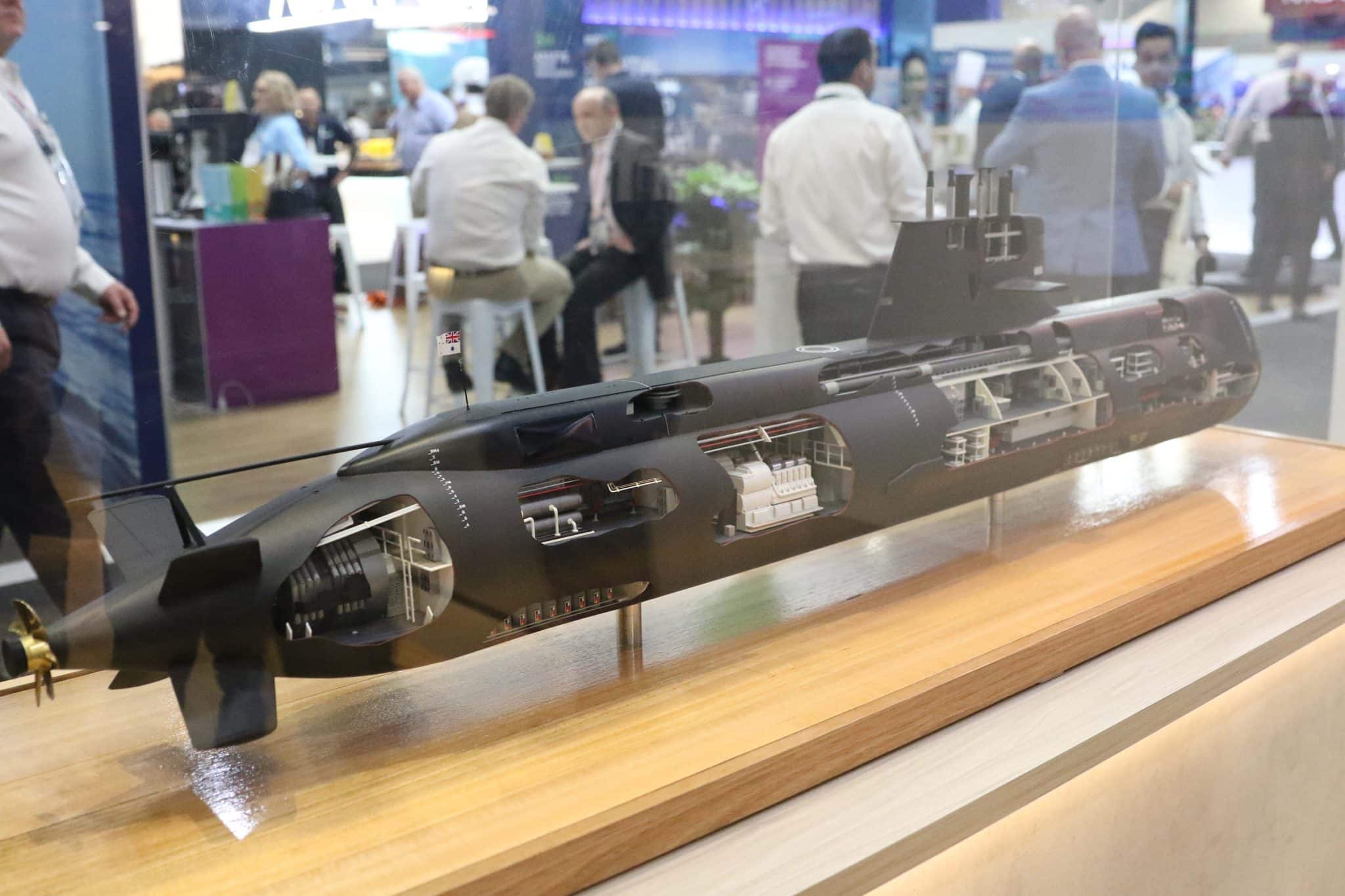
This article from the U.S suggests that the Lamprey a similar concept to Ghost Shark can be deployed from submarines per hitchhiking not torpedo launched ,would such an arrangement work for the Ghost shark to get it into location quicker and save battery life
.https://www.armyrecognition.com/news/navy-news/2026/u-s-launches-lamprey-sub-drone-with-torpedoes-and-uav-launch-capability-for-undersea-warfare
 

Lofty_DBF

Defense Professional
Verified Defense Pro
As per suggestion of two crews per boat , the U.S ballistic missile boats perform such to maximise their usage , this may make it attractive to crews if they have a long time at home before deployment to be used for shore based training and whatever. The reason also the Collins class coming to end of life spend long periods tied up , perhaps we would have more submarines at at once.
No plans to two crew our Virginia SSNs and what makes you think the Collins class either spend long times tied up or ever will?
 

Morgo

Well-Known Member
As per suggestion of two crews per boat , the U.S ballistic missile boats perform such to maximise their usage , this may make it attractive to crews if they have a long time at home before deployment to be used for shore based training and whatever. The reason also the Collins class coming to end of life spend long periods tied up , perhaps we would have more submarines at at once.
Green & Gold crews?
 

seaspear

Well-Known Member
No plans to two crew our Virginia SSNs and what makes you think the Collins class either spend long times tied up or ever will?
This was one article
 

Bob53

Well-Known Member
You think that destroying civilian boats, killing their occupants, in international waters, hundreds of km from your shores, with no provocation, is something Australia should emulate?

Since when has it been allowable for Australian law enforcement to execute suspected smugglers far from Australia? That's what the Americans have done.
Unprovoked? Shooting at ABF…is what…an invite for tea.. And since when is Bynoe Harbour international waters? did you get the full story? They came from a mothership that was in international waters in fast boats. They dumped several packages in Bynoe and returned to the mothership unmolested. I have no problem with returning fire and what happens happens. I suspect the question was pushed up the line regarding what response and the idea of potentially killing an Indonesian national would be a political problem. Still deeply embarrassing.
 

Todjaeger

Potstirrer
Unprovoked? Shooting at ABF…is what…an invite for tea.. And since when is Bynoe Harbour international waters? did you get the full story? They came from a mothership that was in international waters in fast boats. They dumped several packages in Bynoe and returned to the mothership unmolested. I have no problem with returning fire and what happens happens. I suspect the question was pushed up the line regarding what response and the idea of potentially killing an Indonesian national would be a political problem. Still deeply embarrassing.
You might want to pause and look back through the reply chain. @swerve was replying to a comment made by @koala regard some responses ordered by the current POTUS to what the administration declared were narcotics smuggling vessels.

Shortly after Koala's post, another member (rightly IMO) requested that people not start justifying things because, "well Trump does it..."

There is a significant difference between Australian forces intercepting and then getting engaged by suspected smugglers, and US forces conducting maritime strikes upon what administration officials claim are drug smuggling vessels.
 

spoz

The Bunker Group
Verified Defense Pro
Yes there is; however there is also an inherent right to self defence. It would be worrying if the ROE did not permit the CO to return fire in such circumstances. There is also the right of hot pursuit, so a return to international waters after committing an offence is not a get out of jail free card. The problem, as always, is that we do not have the full story - just the sensational bit. We don’t know the lead up, or what happened afterwards. Whatever it was, though, does not change the argument for a decent main armament, though.
 

hauritz

Well-Known Member
I simply think that the commander of a patrol vessel should have options. If you have an unarmed vessel you really haven’t got those options. Nobody would seriously want us to do a Trump but when our navy patrol fleet has significantly less firepower than a speed boat smuggling cigarettes then something is seriously wrong.
 

Todjaeger

Potstirrer
Yes there is; however there is also an inherent right to self defence. It would be worrying if the ROE did not permit the CO to return fire in such circumstances. There is also the right of hot pursuit, so a return to international waters after committing an offence is not a get out of jail free card. The problem, as always, is that we do not have the full story - just the sensational bit. We don’t know the lead up, or what happened afterwards. Whatever it was, though, does not change the argument for a decent main armament, though.
My take on the divergence is that the actions taken following the orders from POTUS were offensive, rather than defensive in nature and outside of wartime conditions, I do not think it wise for the ADF and RAN to adopt a "shoot first, shoot again, shoot some more and then maybe try to ask some questions..."-type policy.

Unfort with the Australian patrol boat incident, we indeed do not know enough of what happened, before during and after, to really grasp things. This is likely one of those situations where details, even minor ones, can really matter. I am sure that the patrol boat was operating with some set of ROE's in place, though what those were/are and whether or not they are realistic and appropriate is also an open question. Then of course there are questions about the suspect vessel, it's crew and armament. If the suspect vessel was anything like a number of the power boats which operate in and around Miami, Florida in the US and have been used at times to smuggle alcohol, tobacco, and/or drugs off and on for decades, then the suspect vessel could potentially have a top speed of triple the published top speed for Cape-class patrol boats. If there was a significant speed advantage in favour of the smuggling vessel, it could possibly have taken shots to deter the Australian crew from acting whilst the smugglers maneuvered to create distance and break contact.

Where I start to get concerned when one talks about the armament of patrol boats is that such discussion can easily lead into rabbit holes. For instance, Israel has operated a number of patrol boat classes which are smaller and significantly lower displacement than Australian patrol boats, yet are also more heavily armed. It works for Israel because of how they are operated and what role(s) they are used for. If one were to try and cram every capability to meet every potential need, that sort of scope and design creep would balloon the cost and overall size of the patrol boat.

Now I am not adverse to the RAN establishing a patrol boat force which could accurately be described as minor warships, and then leaving the constab roles and boats for the ABF, but this would likely require the establishment of a number of additional naval postings to various small ports around Australia.
 

Stampede

Well-Known Member
My take on the divergence is that the actions taken following the orders from POTUS were offensive, rather than defensive in nature and outside of wartime conditions, I do not think it wise for the ADF and RAN to adopt a "shoot first, shoot again, shoot some more and then maybe try to ask some questions..."-type policy.

Unfort with the Australian patrol boat incident, we indeed do not know enough of what happened, before during and after, to really grasp things. This is likely one of those situations where details, even minor ones, can really matter. I am sure that the patrol boat was operating with some set of ROE's in place, though what those were/are and whether or not they are realistic and appropriate is also an open question. Then of course there are questions about the suspect vessel, it's crew and armament. If the suspect vessel was anything like a number of the power boats which operate in and around Miami, Florida in the US and have been used at times to smuggle alcohol, tobacco, and/or drugs off and on for decades, then the suspect vessel could potentially have a top speed of triple the published top speed for Cape-class patrol boats. If there was a significant speed advantage in favour of the smuggling vessel, it could possibly have taken shots to deter the Australian crew from acting whilst the smugglers maneuvered to create distance and break contact.

Where I start to get concerned when one talks about the armament of patrol boats is that such discussion can easily lead into rabbit holes. For instance, Israel has operated a number of patrol boat classes which are smaller and significantly lower displacement than Australian patrol boats, yet are also more heavily armed. It works for Israel because of how they are operated and what role(s) they are used for. If one were to try and cram every capability to meet every potential need, that sort of scope and design creep would balloon the cost and overall size of the patrol boat.

Now I am not adverse to the RAN establishing a patrol boat force which could accurately be described as minor warships, and then leaving the constab roles and boats for the ABF, but this would likely require the establishment of a number of additional naval postings to various small ports around Australia.
I have heard the argument that Park ranges should be armed because they are in remote locations often having to engage/educate people that they are doing the wrong thing.

At the end of the day, a constabulary function will at times be confrontational and when words fail difficult circumstances will need to be addressed.
Sadly with physical force.

Someone has to do it and in the maritime space it’s not unreasonable that both BF and Navy have that task.
Nether should pass the baton to someone else.

Going forward I don’t envisage this recent incident as an isolated case and suggest this will be a more common challenge in the region both to our North and to the right hand side across the Pacific islands.

UAV / Drones need to be adopted in a big way off the Capes and OPV for both surveillance and potentially response.

Cheers S
 

StevoJH

The Bunker Group
It’s not only RAN and ABF that have offshore patrol craft. The state police forces and fisheries departments also have varying levels of capability.

NSW Police for example have a 32m OPV in Sydney, numerous 20m vessels and many 12m vessels.

As far as I am aware they only have small arms though.
 

Todjaeger

Potstirrer
I have heard the argument that Park ranges should be armed because they are in remote locations often having to engage/educate people that they are doing the wrong thing.

At the end of the day, a constabulary function will at times be confrontational and when words fail difficult circumstances will need to be addressed.
Sadly with physical force.

Someone has to do it and in the maritime space it’s not unreasonable that both BF and Navy have that task.
Nether should pass the baton to someone else.
The problem as I see it, is that in law enforcement/policing/constabulary responses, there are degrees or levels of response capability, and at a certain point one has to set parameters around what capabilities are 'reasonable'.

Consider land-based policing for instance. Where I am, every on duty uniformed office on patrol will have an issued pistol on them, with a long gun (usually either a rifle or carbine chambered in a rifle calibre) issued and secured in their vehicle. In addition officers might also be issued and equipped with less lethal options like chemical sprays, pepper balls, and/or tasers. For the vast majority of calls or interactions, these loadouts are more than sufficient, albeit officers will often call for assistance when interacting with various individuals to ensure safety via numbers and force options. Having been involved in dog piles to get control of people under the influence of PCP and LSD at the same time, there are times when overwhelming someone with sheer strength in numbers was the only way other than officers using lethal force repeatedly until they hit something vital which had immediate effect. However, law enforcement at times would encounter situations where more and more specialized force capabilities are required, capabilities usually found in specialized policing teams often referred to as SWAT. These 'extra' capabilities can include being issued enhanced protective body armour sufficient to protect vs. battle rifle AP rounds, automatic rifles, carbines or SMG's, snipers, etc. However, all these capabilities are unnecessary for the vast majority of law enforcement interaction so they are not typically deployed.

I would imagine in maritime constabulary interactions, it would likely be at least somewhat similar. The majority of intercepts of SIEV's, illegal fishers, smugglers, etc. would not need a few rounds from a 57 mm or 76 mm to establish capability overmatch. It would seem a more reasonable approach would be to have patrol boats fitted out in a fashion appropriate for their roles and capable of dealing with the majority of what they will encounter, whilst having systems in place to call in aid or support from other assets in the event that one of the more unusual responses is required. That seems more realistic an approach to me, than having every ABF and RAN patrol boat on constab ops be kitted out with full spectrum offensive and defensive suites on the off chance that a suspected smuggler vessel being intercepted is actually armed with short-range missiles.
 

iambuzzard

Well-Known Member
The problem as I see it, is that in law enforcement/policing/constabulary responses, there are degrees or levels of response capability, and at a certain point one has to set parameters around what capabilities are 'reasonable'.

Consider land-based policing for instance. Where I am, every on duty uniformed office on patrol will have an issued pistol on them, with a long gun (usually either a rifle or carbine chambered in a rifle calibre) issued and secured in their vehicle. In addition officers might also be issued and equipped with less lethal options like chemical sprays, pepper balls, and/or tasers. For the vast majority of calls or interactions, these loadouts are more than sufficient, albeit officers will often call for assistance when interacting with various individuals to ensure safety via numbers and force options. Having been involved in dog piles to get control of people under the influence of PCP and LSD at the same time, there are times when overwhelming someone with sheer strength in numbers was the only way other than officers using lethal force repeatedly until they hit something vital which had immediate effect. However, law enforcement at times would encounter situations where more and more specialized force capabilities are required, capabilities usually found in specialized policing teams often referred to as SWAT. These 'extra' capabilities can include being issued enhanced protective body armour sufficient to protect vs. battle rifle AP rounds, automatic rifles, carbines or SMG's, snipers, etc. However, all these capabilities are unnecessary for the vast majority of law enforcement interaction so they are not typically deployed.

I would imagine in maritime constabulary interactions, it would likely be at least somewhat similar. The majority of intercepts of SIEV's, illegal fishers, smugglers, etc. would not need a few rounds from a 57 mm or 76 mm to establish capability overmatch. It would seem a more reasonable approach would be to have patrol boats fitted out in a fashion appropriate for their roles and capable of dealing with the majority of what they will encounter, whilst having systems in place to call in aid or support from other assets in the event that one of the more unusual responses is required. That seems more realistic an approach to me, than having every ABF and RAN patrol boat on constab ops be kitted out with full spectrum offensive and defensive suites on the off chance that a suspected smuggler vessel being intercepted is actually armed with short-range missiles.
At least a 25mm should be the minimum for RAN/ABF Capes/Evolved Capes. We live in dangerous times and that should be sufficient in a hostile situation like the other day.
If smugglers start using missiles you back off and scramble fighters to eliminate the problem.
In Victoria we have the Special Operation Group, not SWAT, and they are called "Sons Of God" for a very good reason.
 

Morgo

Well-Known Member
Completely agree. Def need at least 25mm.

What are we going to do when someone, inevitably, launches an FPV drone at a Cape Class? What's the ABF going to use to take it down? Harsh language?
 

Todjaeger

Potstirrer
Completely agree. Def need at least 25mm.

What are we going to do when someone, inevitably, launches an FPV drone at a Cape Class? What's the ABF going to use to take it down? Harsh language?
I am making some assumptions here, but I assume that when one is referring to an FPV drone being launched at a Cape-class patrol boat, you are referring to a one-way/suicide drone being used in an attempt at striking the patrol boat in question, correct?

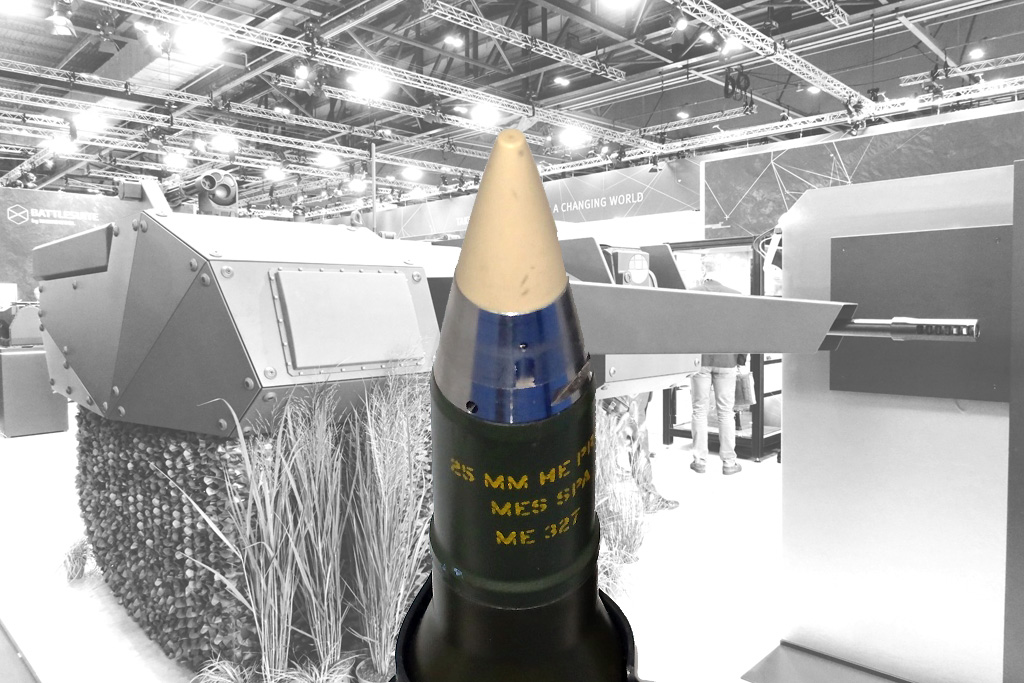
Similarly, I assume that when one is advocating for a 25 mm gun, one is referring to a Rafael Typhoon RWS/25 mm M242 Bushmaster gun/mounting arrangement like was fitted aboard the Armidale-class patrol boats.

If those two assumptions are indeed correct, then realistically an ABF crew would have no good options and might indeed be forced to rely upon strong and/or colourful language. The 25 mm chain gun was never intended for use against aerial targets or threats and this is reflected in the ammunition feed system as well as the types of ammunition which have been developed and produced. Similarly, the Typhoon mounting for the M242 Bushmaster can only elevate to about +40 degrees, less than half the elevation which many of the short-range air defence gun systems can achieve.

These gaps or limitations in gun/mounting capability could of course be addressed by selecting different guns and mountings, but doing so would almost certainly increase the costs and complexity of both the weapon system and vessel overall. Also at a certain point, one would have to question whether a patrol boat's fitout was really for a constabulary or law enforcement role or not. If the threat matrix is such that an ABF or RAN patrol boat might get engaged with weaponry sufficient to seriously damage and/or sink the vessel, then perhaps the design itself (and not just armament) should be re-thought in terms of where and how it is employed. Now the Cape-class was not built to HSC standards, unlike the Armidale-class which preceded it, but despite being classed by DNV naval/gov't patrol vessel rules I tend to think the design did not anticipate a need to be survivable following battle damage.
 

StobieWan

Super Moderator
Staff member
I'd agree- most other countries seem to put something a cannon at the front end of any OPV they're running - the UK equivalents run a rickety 20mm on the batch 1's and a much more serviceable 30mm CSG. *Something* that presents overmatch would surely help calm folks down if they're reaching for an RPK or an RPG ?

As I literally said to a friend of mine who's crew on one, if your OPV starts taking missiles, someone screwed up your tasking, because you're in the wrong place and we need a frigate.
 

Bob53

Well-Known Member
You might want to pause and look back through the reply chain. @swerve was replying to a comment made by @koala regard some responses ordered by the current POTUS to what the administration declared were narcotics smuggling vessels.

Shortly after Koala's post, another member (rightly IMO) requested that people not start justifying things because, "well Trump does it..."

There is a significant difference between Australian forces intercepting and then getting engaged by suspected smugglers, and US forces conducting maritime strikes upon what administration officials claim are drug smuggling vessels.
I didn’t mention Trumo or US actions and they had no bearing on my response… but understand I may have missed context at old mate @swerves response.
 

ADMk2

Just a bloke
Staff member
Verified Defense Pro
I am making some assumptions here, but I assume that when one is referring to an FPV drone being launched at a Cape-class patrol boat, you are referring to a one-way/suicide drone being used in an attempt at striking the patrol boat in question, correct?

Similarly, I assume that when one is advocating for a 25 mm gun, one is referring to a Rafael Typhoon RWS/25 mm M242 Bushmaster gun/mounting arrangement like was fitted aboard the Armidale-class patrol boats.

If those two assumptions are indeed correct, then realistically an ABF crew would have no good options and might indeed be forced to rely upon strong and/or colourful language. The 25 mm chain gun was never intended for use against aerial targets or threats and this is reflected in the ammunition feed system as well as the types of ammunition which have been developed and produced. Similarly, the Typhoon mounting for the M242 Bushmaster can only elevate to about +40 degrees, less than half the elevation which many of the short-range air defence gun systems can achieve.

These gaps or limitations in gun/mounting capability could of course be addressed by selecting different guns and mountings, but doing so would almost certainly increase the costs and complexity of both the weapon system and vessel overall. Also at a certain point, one would have to question whether a patrol boat's fitout was really for a constabulary or law enforcement role or not. If the threat matrix is such that an ABF or RAN patrol boat might get engaged with weaponry sufficient to seriously damage and/or sink the vessel, then perhaps the design itself (and not just armament) should be re-thought in terms of where and how it is employed. Now the Cape-class was not built to HSC standards, unlike the Armidale-class which preceded it, but despite being classed by DNV naval/gov't patrol vessel rules I tend to think the design did not anticipate a need to be survivable following battle damage.
The RAN doesn’t use the 25mm M242 Bushmaster in any capacity except in combination with the Typhoon RWS mount, so I think it can be taken as as a given, that is the combination people are referring to when they say it should be fitted with “a” 25mm.

As for counter- UAS with that weapon? Merely a choice of ammunition type. Plenty of proximity fused 25x137mm ammunition natures around that require no programming system and are already qualified on the M242.


In any case, I am absolutely certain a counter-drone capability has not formed any part whatsoever of RAN’s “threat assessment” for any of it’s ships, especially it’s “minor” war vessels, given the complete paucity of systems, trials or even ammunition natures they have procured to address such a situation.

The one single attempt at such we are aware of is RAN exploring 127mm ammunition natures that include counter-UAS capability.

Even Army has done more with various drone shield systems, LAND 156 trials and so forth and RAAF with their 3 yr Anduril trial in the NT and both are regularly panned for their lack of counter-UAS capability or even urgency in that space…

I get the feeling the term “threat assessment” should be more accurately termed “budget assessment” in this day and age - seemingly the real driver of ADF capability (or lack thereof)...

 

Bob53

Well-Known Member
The RAN doesn’t use the 25mm M242 Bushmaster in any capacity except in combination with the Typhoon RWS mount, so I think it can be taken as as a given, that is the combination people are referring to when they say it should be fitted with “a” 25mm.

As for counter- UAS with that weapon? Merely a choice of ammunition type. Plenty of proximity fused 25x137mm ammunition natures around that require no programming system and are already qualified on the M242.


In any case, I am absolutely certain a counter-drone capability has not formed any part whatsoever of RAN’s “threat assessment” for any of it’s ships, especially it’s “minor” war vessels, given the complete paucity of systems, trials or even ammunition natures they have procured to address such a situation.

The one single attempt at such we are aware of is RAN exploring 127mm ammunition natures that include counter-UAS capability.

Even Army has done more with various drone shield systems, LAND 156 trials and so forth and RAAF with their 3 yr Anduril trial in the NT and both are regularly panned for their lack of counter-UAS capability or even urgency in that space…

I get the feeling the term “threat assessment” should be more accurately termed “budget assessment” in this day and age - seemingly the real driver of ADF capability (or lack thereof)...
I think you’re 100% correct. We dont have a revenue problem. We have a spending problem. It’s just that we don’t have a spending problem in defence unless it’s submarines.
 

spoz

The Bunker Group
Verified Defense Pro
The RAN has done threat assessments that apply to drones - aerial, surface and sub surface. There is nothing whatsoever that is unique about drones; they are merely potentially multiple small and highly manoeuvrable, if mostly slow, versions of threats we have been dealing with for generations.
 
Top