Royal Australian Navy Discussions and Updates 2.0

Stampede

Well-Known Member
So I confess to a little bit of sarcasm above; and I apologise to @Tbone, @Stampede and @Murse for appearing to dismiss them

But the sad reality that has to be hammered home to all the commentators is that, like it or love it, there is no option but SSN. Even if you scrap SSNs now, you are going to not see a SSK until the late 30s. Remember also that there will have to be additional hulls and capabilities to make up for what has been lost with SSNs. People consistently under-estimate the cost, time into service, or workforce that a submarine fleet needs. As @Todjaeger makes it clear with the Japanese example, there are no nations sitting around with free SSK/SSN industry. And making it built in Australia just adds to those estimates.

Repeat after me - there is no plan B. Or C. Those feasible options were ejected in 2024. There is only one way forward.... Collins -> Virginia -> AUKUS.
Yes ……Limited options but to go with Plan A.

Agree with the enormity of time , coin and energy to start another “SEA 1000 “

That said I will still keep the looking glass handy for Plan D , just in case

Hornet, F111 -> F35

Hornet, F111 -> Super Hornet + Growler -> F35

Sometimes unscripted stop gap acquisitions work out well.
Yes , we had time to make that prudent decision.

Note to self

Submarine not sub !

Cheers S
 

iambuzzard

Well-Known Member
Yes ……Limited options but to go with Plan A.

Agree with the enormity of time , coin and energy to start another “SEA 1000 “

That said I will still keep the looking glass handy for Plan D , just in case

Hornet, F111 -> F35

Hornet, F111 -> Super Hornet + Growler -> F35

Sometimes unscripted stop gap acquisitions work out well.
Yes , we had time to make that prudent decision.

Note to self

Submarine not sub !

Cheers S
And they're boats, not ships. Hollywood always get it wrong.
 

spoz

The Bunker Group
Verified Defense Pro
Subs - subnormal, subhuman, subordinate, Sub-Lieutenant, Sub Inspector, subliminal, substandard - but not submarines! (And if I’m in one of the Navy’s camps, it’s the FAA, not the upholstered sewer pipes, but still….)
 

MARKMILES77

Well-Known Member
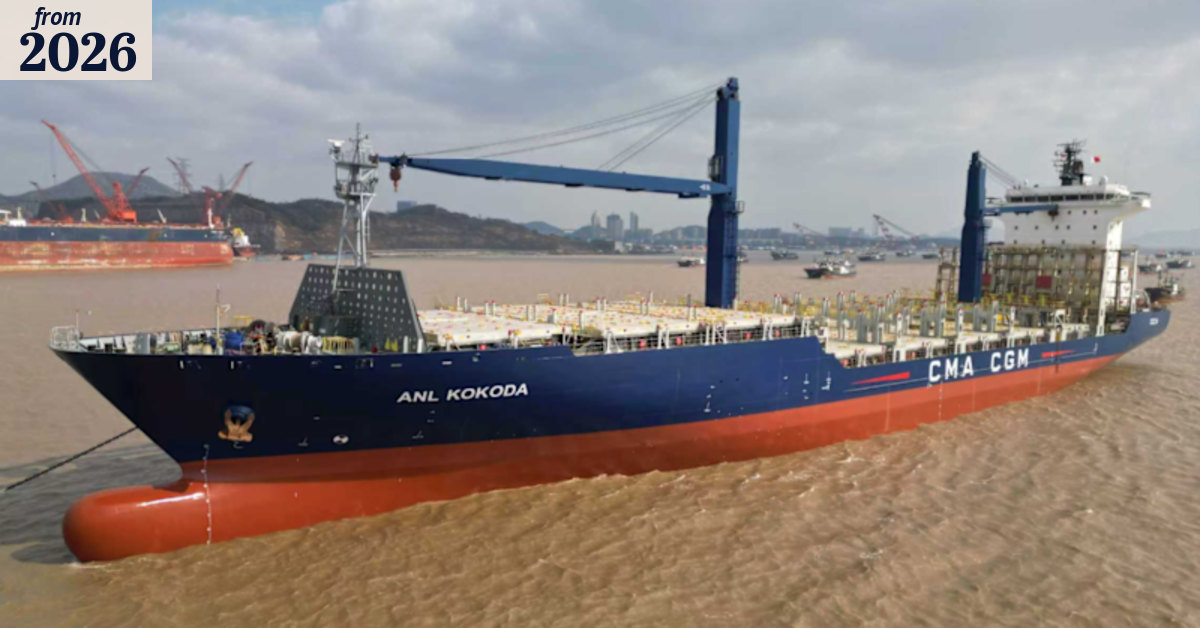
ANL Kokoda revealed as first vessel for the Strategic Fleet.
Transport Minister Catherine King will announce on Friday that the government has signed a contract for container ship ANL Kokoda, which is 175 metres long and 27 metres wide, to be the first of three vessels in a pilot program for the strategic fleet.

Built in 2011, the ship has a maximum capacity of 23,000 metric tonnes and has a crew size of 36. It had previously been sailing under the Maltese flag.

The government still hopes to create a fleet of 12 privately owned and commercially operated ships that can be requisitioned in times of crisis, including natural disasters and supply chain disruptions.
Screenshot 2026-05-29 at 16.26.58.png
 

koxinga

Well-Known Member
A couple of points.

I don't think the weight for the Hunter is in the mast frame. The "heavyness" is in the radar panels and associated gear that has to be in the mast. I suspect the weight differential between aluminium and carbon fibre doesn't make a huge difference in this context. Whats a few kilos when the radar weighs tonnes

The T26 is different in that it is a much lighter radar mounted higher. Carbon fibre might have a weight advantage in this application.

Carbon fibre is a great material, but it can be an absolute pain to maintain. Repairing cracks in it are not easy, and sometimes it is cheaper to scrap and build a new one.

Carbon fibre has its weaknesses. It can be brittle. There are plenty of high end yachts that have suffered sudden mast failures as an example. It delaminates over time and is suseptible to water ingress. Carbon fibre usually has an outer layer for water protection, but once that is damaged, salt degrades the resin.

Any yachtie will tell you that anything carbon fibre means expensive to buy, expensive to keep and every weekend looking after it.
There are a number of reasons why the use of carbon fibre is limited; effects of damage and fire, ability to flex and to form faraday cages; and maintainability amongst them. It is used, but in fairly carefully selected places.
For all the reasons stated, it is being implemented on a large scale by the Republic of Singapore Navy with Saab, first with the LMV and now with the MRCV. These are not small applications but entire sections like the mast and main superstructure and in the MRCv case, housing the fixed AESA panels for Thales SeaFire.

Perhaps for commercial applications it might be true but it is an assumption that it is the same construction or materials used in naval applications.

 
Last edited:
Top