
US Navy News and updates
- Thread starter AegisFC
- Start date
Can't see how this is relevant to the USN topic but such decisions are usually threat based as much as economics.As a self-defense option, is RAM in the full 21-shot reloadable launcher sufficient for the use cases where this ship would be expected to operate on its own?
The Germans seems to think so
For the USN, I always thought it was unusual that they have not invested further in deploying guided 57mm or 76mm munitions. There were start/stops programs which seems to have led to nowhere. Given the drone and surface swarm threats as we saw in the Red Sea, these would be cost effective options compared to missiles.

Northrop Grumman to Develop New Guided Ammunition for the US Navy - EDR Magazine
PLYMOUTH, Minn. – Oct. 4, 2023 – The U.S. Navy has awarded Northrop Grumman Corporation (NYSE: NOC) a development contract
 www.edrmagazine.eu
One snag I see with the BBG is that it's being touted as carrying nuclear armed cruise missiles. Will that be a breach of any existing arms agreement? And will the nuclear tipped TLAM be sufficient or will this require a new platform and potentially a new warhead? And yes, I'm over thinking here, it's incredibly unlikely this thing will ever get to the stage of cutting steel.

AndyinOz
Active Member
From memory it wouldn't be a breach of any formal Treaty as such but it would be a change from the 1991 Presidential Nuclear Initiatives arrangement that was put in place by Bush Snr insofar as tactical nuclear weapons were removed from surface vessels. I tend to agree it might be a moot point in terms of it coming to fruition. Then again stranger things could happen.One snag I see with the BBG is that it's being touted as carrying nuclear armed cruise missiles. Will that be a breach of any existing arms agreement? And will the nuclear tipped TLAM be sufficient or will this require a new platform and potentially a new warhead? And yes, I'm over thinking here, it's incredibly unlikely this thing will ever get to the stage of cutting steel.

FormerDirtDart
Well-Known Member
A program to upgrade W80 warheads for new cruise missile applications has been ongoing for several years now. Including specific work for use in naval sea launched cruise missiles. Program was initiated during the first Trump term, with funding continued through the Biden administration at the direction of Congress. I do not believe a missile has been identified for naval SLCM use, but the existing BGM-109A TLAM-N were dismantled during the second term of the Obama administration.One snag I see with the BBG is that it's being touted as carrying nuclear armed cruise missiles. Will that be a breach of any existing arms agreement? And will the nuclear tipped TLAM be sufficient or will this require a new platform and potentially a new warhead? And yes, I'm over thinking here, it's incredibly unlikely this thing will ever get to the stage of cutting steel.
Edit: The only existing nuclear arms agreement NewSTART expires in 2026, Russia withdrew from participation in 2023, and there have been no negotiations to extend or develop a new treaty since 2022.
Last edited:
The Germans are spending like drunken sailors on a spree these days. Aircraft, missiles, AFVs, guns, ammunition, radars, UAVs . . . It's over 2% of GDP now, & planned to reach 3.5%.Do you mean in terms of missile numbers or lack of redundancies for radar targeting systems?
If you mean for the F125, that is something that puzzles many , given they chose zero VLS for such a large ship. However, it seems to be a ship which prioritises deployment over actual firepower.
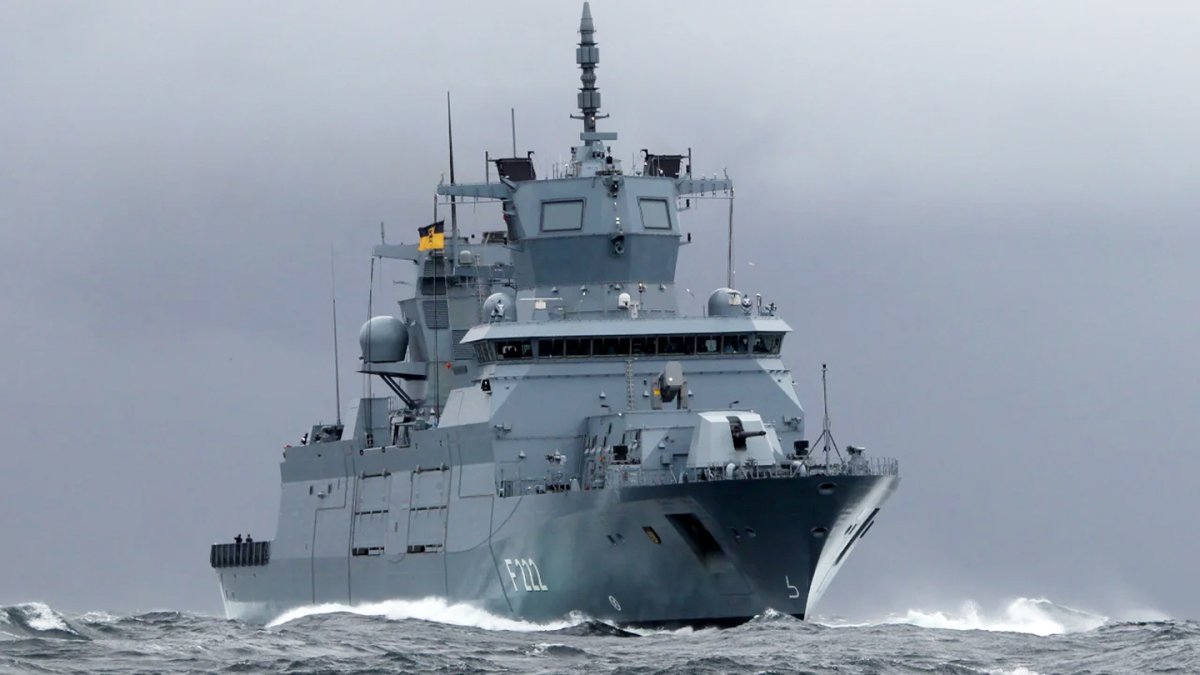
German Navy Confirms Its Supersized Frigate Will Avoid The Red Sea
Strictly limited air defense armament has long been a puzzling feature of the German F125 class frigate. Strictly limited air defense armament has long been a puzzling feature of the German F125 class frigate.www.twz.com
Other German warships don't have this issue.
My personal take on this puzzling design for the F125 is that the German's were actively reducing the costs and firepower of ships due the Cold War Peace dividend, and Germany's anti war politics. Their military was famously run down, despite having high end equipment on paper. Their defence budget was about 1% of GDP. I recall at one time they even had to charter a commercial flight to flight Angela Merkel to the Argentina G20 Summit 2018 because their Air Force 1 equivalent didn't work. It was maintained by the German Air Force.
Of course Russia has famously made them change this attitude, at least in public
An interesting old video on the NSC, notably before the plan to convert it into a frigate. It talks about the growth potential (see about 12:30). There are other articles that indicate significant unallocated space and weight in this hull, however this video is a bit more direct in information around space and fitted services for a forward VLS and variable depth sonar. It would seem the base design was close to a "fitted for but not with" principle.
I know the NSCs use the Sea Commander combat system, which is a Lockheed Martin product. One would therefor assume it can be upgraded to connect to a mk41 VLS and ESSM without heavy alteration. I don't know much about this product, but I'll take a stab that it is a simplified/stripped down CMS 330.
One would think these systems could be retrofitted and don't require a fundamental hull, power or propulsion upgrade. It would suggest that a flight 1 could be built to the same baseline as the NSC, and then upgraded at some point thereafter with a small point VLS defence and basic ASW package.
I know several of the existing NSCs are based out of Hawaii. I wonder if these could be the first to be upgraded and provide an early pathway to capability. The Coast Guard would loose a capability needed for their existing mission, however they have a lot of other hulls coming online including the offshore patrol cutter that the NSCs could be swapped out for.

Todjaeger
Potstirrer
I could be wrong, but I tend to think that SeaCommander and CMS330 are separate and distinct combat systems that likely similar in some ways, but have different origins that may very well not have any crossover at all. My reasoning behind this is SeaCommander appears to be a US LockMart product, whilst LockMart Canada is where CMS330 comes from. Both are LockMart in origin, but one is from the Canadian subsidiary with the other appearing to have been developed by US facilities. Given that these are defence software and computer packages, the IP ownership and source country can make a difference in terms of what can be designed/written into the CMS.I know the NSCs use the Sea Commander combat system, which is a Lockheed Martin product. One would therefor assume it can be upgraded to connect to a mk41 VLS and ESSM without heavy alteration. I don't know much about this product, but I'll take a stab that it is a simplified/stripped down CMS 330.
IMO it would be more likely that there was some sort of compatibility between LockMart's COMBATSS-21 CMS used aboard Freedom-class LCS, though it is also quite possible that the SeaCommander's origin is something else entirely.

Given that both systems are working with some of the same sensors and effectors, and are developed by the same parent company using common original base concepts that came out of Aegis, I would suspect there will be some commonality - at least in the interfaces. The USN already has access to COMBATSS-21 through the Freedoms, so I shouldn’t imagine it would be too difficult to swap out one for the other if they want to - with one major caveat - the power and cooling requirements would have to remain within the available margins. Of course, I have zero knowledge of SeaCommander and it may actually be fine for what the USN wants to do so the point might be moot!
The commonality lies in the common source library or CSL. TWZ had an article on it. SeaCommander is a USCG specific program known as the Integrated Command & Control Spiral 2, as part of the original Deepwater C4ISR program.Given that both systems are working with some of the same sensors and effectors, and are developed by the same parent company using common original base concepts that came out of Aegis, I would suspect there will be some commonality - at least in the interfaces. The USN already has access to COMBATSS-21 through the Freedoms, so I shouldn’t imagine it would be too difficult to swap out one for the other if they want to - with one major caveat - the power and cooling requirements would have to remain within the available margins. Of course, I have zero knowledge of SeaCommander and it may actually be fine for what the USN wants to do so the point might be moot!
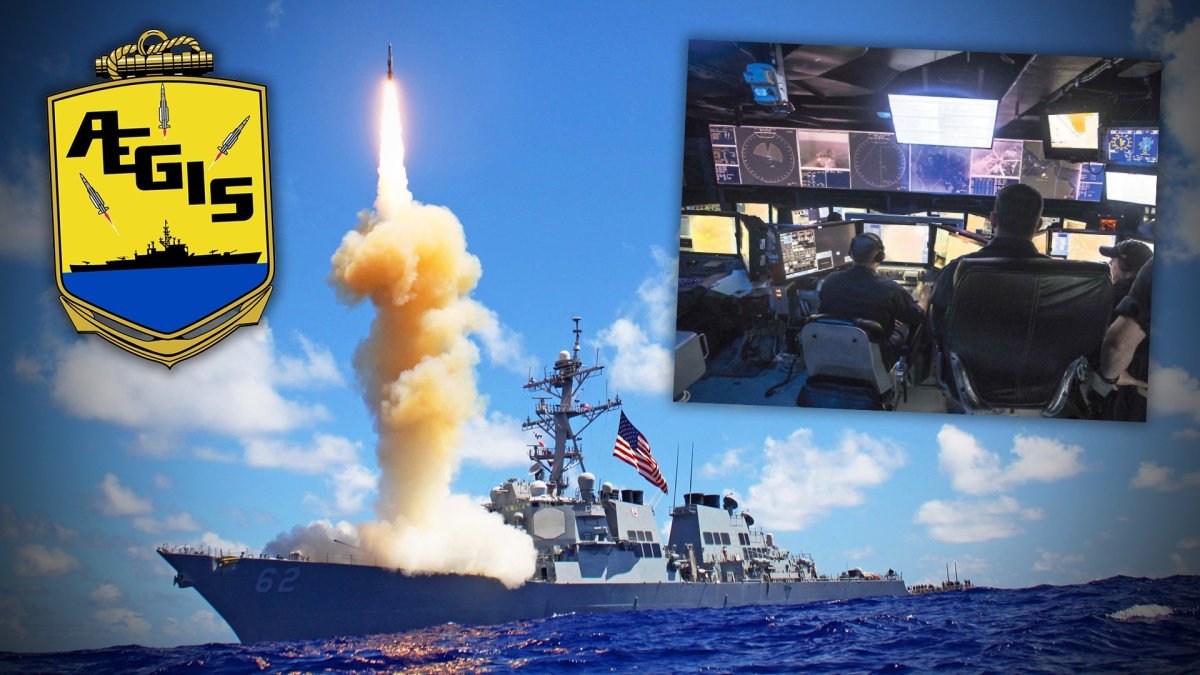
Everything You Ever Wanted To Know About The Navy's Ever-Evolving Aegis Combat System
We go in-depth with Lockheed's point man on Aegis about the combat system's revolutionary past, evolving present, and universal future.
www.twz.com
But caveat here is how much plug and play is unclear. Open architectures (same with Thales / Tacticos) means while there is a common base artifacts, it is supposed to make customisation easier, sort of like different flavors of UNIX.
And we have much the same problems with programmes failing as the USN.The Germans are spending like drunken sailors on a spree these days. Aircraft, missiles, AFVs, guns, ammunition, radars, UAVs . . . It's over 2% of GDP now, & planned to reach 3.5%.
Next one likely up for the usual USN "oh no, we're not cancelling it, we're just stopping procurement of what we planned and buying something 'better' since no one cares about money" spiel over here now is F126...
Correct for F125. Planned operations were (and are) somewhat similar to LCS, albeit without the multifunctionality and without the unnecessary high speed requirement. In turn with a stronger focus on support for deployed land forces (fire support, helicopter basing, ELINT/EW and command facilities) - based on German operational experience around the late 90s and early 00s.The F125 and F126 seem to be very heavily focused towards long duration out of area operations in low/medium threat level conditions?
F126 was planned for symmetric warfare with an ASW focus. Well, ultimately. It originally started as a planned corvette followup and turned into a design for an underarmed cruiser.
This piece of news seem to have flown under the radar between a neutered FF(X) and Trump BBG(X).

 naval-special.hhi.co.kr

 www.venturionventures.com
HD HYUNDAI HEAVY INDUSTRIES NAVAL & MEDIUM SIZE SHIPS BUSINESS UNIT
Starting with the building of the Ulsan-class frigate, the first indigenous Korean naval ship, HHI is playing a pioneering role in shipbuilding and defense industry export.
naval-special.hhi.co.kr
Digging abit deeper, MOG is offering:Under the agreement, the two companies will collaborate on:
- Design and construction of diesel-electric submarines optimized for US Navy training, RDT&E, and special mission support;
- Advancement of US shipyard capabilities through HD HHI’s manufacturing and MRO expertise;
- Development of procurement, certification, and lifecycle support frameworks enabling commercially owned and operated submarines to be rapidly integrated into the US defense ecosystem;
- Integration of undersea systems and payloads aligned with US and allied operational requirements.
$1.25B Submarines-as-a-Service (DOD) | Startup Pitch & Case Study | Venturion
Explore case studies to witness how our comprehensive consulting services in pitch deck development, investor outreach, and financial modeling empower seed-stage startups to transform their company's narratives into triumphant ventures, ushering in a new era of success in the VC funding landscape.
www.venturionventures.com
So, are we seeing the equivalent of an USAF adversarial training program where private operators (e.g MOG) runs their own SSK for training exercises? The first of class Type 209 / ROKS Jang Bogo is retiring or has retired (December 2025). Originally offered for transfer to Poland which fell through when they choose the Swedish A26 design.At the heart of MOG's strategy is its Submarine-as-a-Service (SaaS) model, a groundbreaking approach that mirrors successful platforms in other domains such as aviation-as-a-service and space-as-a-service. MOG will refit existing foreign-built hybrid submarines for approximately $400 million per vessel

Takao
The Bunker Group
With 2 - 10 employees, all they seem to be able to deliver is relieving the US Government of $1.25 b.This piece of news seem to have flown under the radar between a neutered FF(X) and Trump BBG(X).
HD HYUNDAI HEAVY INDUSTRIES NAVAL & MEDIUM SIZE SHIPS BUSINESS UNIT
Starting with the building of the Ulsan-class frigate, the first indigenous Korean naval ship, HHI is playing a pioneering role in shipbuilding and defense industry export.
Digging abit deeper, MOG is offering:
$1.25B Submarines-as-a-Service (DOD) | Startup Pitch & Case Study | Venturion
Explore case studies to witness how our comprehensive consulting services in pitch deck development, investor outreach, and financial modeling empower seed-stage startups to transform their company's narratives into triumphant ventures, ushering in a new era of success in the VC funding landscape.
So, are we seeing the equivalent of an USAF adversarial training program where private operators (e.g MOG) runs their own SSK for training exercises? The first of class Type 209 / ROKS Jang Bogo is retiring or has retired (December 2025). Originally offered for transfer to Poland which fell through when they choose the Swedish A26 design.

John Fedup
The Bunker Group
Here’s an article that provides a good assessment of the Trump battleship and the only outcome for this program.
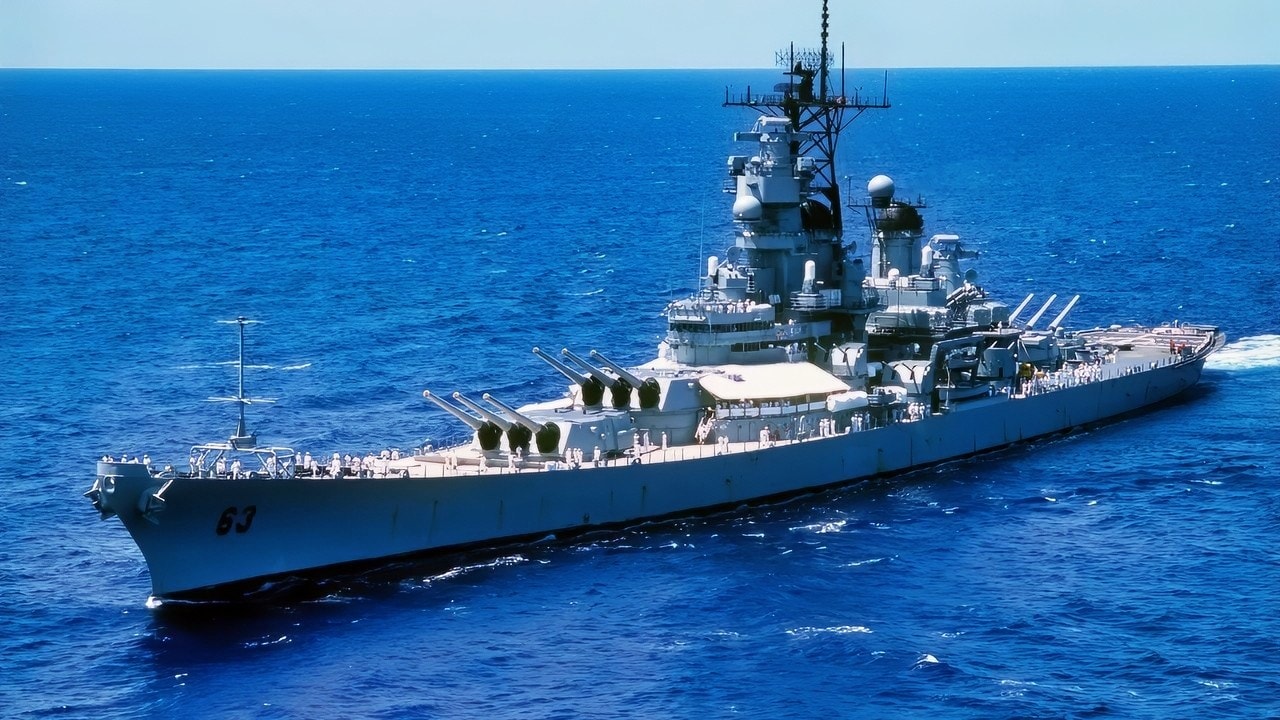
 www.19fortyfive.com
The Navy's Trump-Class Battleship Will Be 'Quietly Shelved'
Trump’s-class battleship pitch grabs headlines, but it’s a high-cost, high-visibility ship that doesn’t solve China’s modern A2/AD challenge.
www.19fortyfive.com
That article claims, without providing any evidence - basically because there isn’t any - that large surface ships are “sitting ducks”; and on that basis that it is a bad idea. While I might agree that the concept as revealed the other day is, in detail, a bit silly and that the vessel as depicted will probably never be built, I certainly don’t accept that assumption. The US navy needs a Tico replacement, and the AB hull is at its limit. Plus, it has some inherent issues from the age of the original design.
So they need to build something - whether you call it DDG(X), CG(X) or BBG(X) is irrelevant. It’s going to be bigger than the ABs or Ticos, and probabably the Zummies, and it’s going to have lots of Mk41, CPS capability and provision for energy weapons etc. So it’s going to have some of the same characteristics as this announcement - and probably enough that the then Administration can claim it is the same thing, assuming it wants to.
So they need to build something - whether you call it DDG(X), CG(X) or BBG(X) is irrelevant. It’s going to be bigger than the ABs or Ticos, and probabably the Zummies, and it’s going to have lots of Mk41, CPS capability and provision for energy weapons etc. So it’s going to have some of the same characteristics as this announcement - and probably enough that the then Administration can claim it is the same thing, assuming it wants to.
Last edited:
John Fedup
The Bunker Group
Basically the Zumwalt minus the 2 AGSs and adding more missiles is a good start. The two MT30s can provide the power for future energy weapons and it has IEP. Surely building more of these Zumwalts is a faster and better solution than designing yet another large surface combatant. Perhaps a third MT30 is doable if rail guns and large lasers are perfected.That article claims, without providing any evidence - basically because there isn’t any - that large surface ships are “sitting ducks”; and on that basis that it is a bad idea. While I might agree that the concept as revealed the other day is, in detail, a bit silly and that the vessel as depicted will probably never be built, I certainly don’t accept that assumption. The US navy needs a Tico replacement, and the AB hull is at its limit. Plus, it has some inherent issues from the age of the original design.
So they need to build something - whether you call it DDG(X), CG(X) or BBG(X) is irrelevant. It’s going to be bigger than the ABs or Ticos, and probabably the Zummies, and it’s going to have lots of Mk41, CPS capability and provision for energy weapons etc. So it’s going to have some of the same characteristics as this announcement - and probably enough that the then Administration can claim it is the same thing, assuming it wants to.

Terran
Well-Known Member
The Trump branding of “Trump class”,”Golden Fleet”, “Battleship” and “BBG-X” I think have drawn more of the ridicule than anything else. As part of that we get this concept that has flooded the conversation with a smokescreen of confusion.
From every practical aspect the “USS Defiant” is a glorified fan design. It’s not yet a program of the USN but a proposal. One made by the Oval Office as opposed to the Navy requirements office. What has been shown was a graphic about as reliable and slick as some old Popular Mechanics magazine articles.
The concept is in part based on taking and trying to “super size” the DDG-X to the size of a battleship almost as long as an Iowa class and just as heavy as a South Dakota class.
Filling the space left with the hanger of a San Antonio class LPD, doubling up on the Mk45 guns, a Rail gun and the addition of 12 CPS hypersonic cruise missiles.
The DDG-X has been in the works for the last 2 decades. It’s taking lessons from the DD-1000, GC-X/CGN-X programs but would use a new hull. A Neo-Zumwalt would face issues as much of the architecture was dedicated to the design. The radar, mission systems , AGS and Mk 57 PVLS was never continued on to any other ship classes. Leading to the Zumwalts being more or less the three white elephant they became.
From every practical aspect the “USS Defiant” is a glorified fan design. It’s not yet a program of the USN but a proposal. One made by the Oval Office as opposed to the Navy requirements office. What has been shown was a graphic about as reliable and slick as some old Popular Mechanics magazine articles.
The concept is in part based on taking and trying to “super size” the DDG-X to the size of a battleship almost as long as an Iowa class and just as heavy as a South Dakota class.
Filling the space left with the hanger of a San Antonio class LPD, doubling up on the Mk45 guns, a Rail gun and the addition of 12 CPS hypersonic cruise missiles.
The DDG-X has been in the works for the last 2 decades. It’s taking lessons from the DD-1000, GC-X/CGN-X programs but would use a new hull. A Neo-Zumwalt would face issues as much of the architecture was dedicated to the design. The radar, mission systems , AGS and Mk 57 PVLS was never continued on to any other ship classes. Leading to the Zumwalts being more or less the three white elephant they became.
It appears to be a tico replacement, probably the largest concept that the USN never imagined would get across the line, but then someone came up with the idea of calling it a battleship to get a certain persons approval.That article claims, without providing any evidence - basically because there isn’t any - that large surface ships are “sitting ducks”; and on that basis that it is a bad idea. While I might agree that the concept as revealed the other day is, in detail, a bit silly and that the vessel as depicted will probably never be built, I certainly don’t accept that assumption. The US navy needs a Tico replacement, and the AB hull is at its limit. Plus, it has some inherent issues from the age of the original design.
So they need to build something - whether you call it DDG(X), CG(X) or BBG(X) is irrelevant. It’s going to be bigger than the ABs or Ticos, and probabably the Zummies, and it’s going to have lots of Mk41, CPS capability and provision for energy weapons etc. So it’s going to have some of the same characteristics as this announcement - and probably enough that the then Administration can claim it is the same thing, assuming it wants to.
It looks a lot like a modern day strike cruiser, something the USN should have built in the 80s but didn't.
military-review.com
Find information, resources and relevant links for military-review.com. This domain may be for sale.
military-review.com
Todjaeger
Potstirrer
If one were to consider the likely value the concentration of force which a non-carrier capital ship would have, then TBH I do not have much issue with people classifying such a vessel as a 'sitting duck'. Yes, depending on ship systems and fitout a large surface warship would likely have self and area defence capabilities, at least to some degree. However, we are also talking about a ship that would have a displacement ~50% greater than the largely discarded 'arsenal ship' concept. Assuming the design were actually fitted with VLS cells for air defence and land attack, at some point, the value of the ship as a target would likely force the USN to assign BB(G) escorts to screen it from hostile air, surface and subsurface threats, just like the USN current does in CSG's to screen CVN's.That article claims, without providing any evidence - basically because there isn’t any - that large surface ships are “sitting ducks”; and on that basis that it is a bad idea. While I might agree that the concept as revealed the other day is, in detail, a bit silly and that the vessel as depicted will probably never be built, I certainly don’t accept that assumption. The US navy needs a Tico replacement, and the AB hull is at its limit. Plus, it has some inherent issues from the age of the original design.
So they need to build something - whether you call it DDG(X), CG(X) or BBG(X) is irrelevant. It’s going to be bigger than the ABs or Ticos, and probabably the Zummies, and it’s going to have lots of Mk41, CPS capability and provision for energy weapons etc. So it’s going to have some of the same characteristics as this announcement - and probably enough that the then Administration can claim it is the same thing, assuming it wants to.
If the USN is already currently projected to have issues providing sufficient escort forces for CSG's, then trying to introduce an entirely new class of what would be a high value vessel requiring additional escorts...
IMO it would be far better for actual naval planners (USN and civilian) to work out what the USN needs now and likely into the future for in a Ticonderoga-class CG replacement vessel and then use that as a basis for figuring out what is needed, how large a vessel is required, etc. If one looks at the history of new naval vessel development for the USN from the last ~25 years or so, the results IMO do speak for themselves. Unfort, what they are saying leaves quite a bit to be desired, and much of this does seem to trace back to efforts to effect 'transformational change' within the US armed forces which appear to have started under the leadership for SecDef Rumsfeld. It also does appear that much of the 'transformational changes' were to rely upon new tech getting developed which was problematic because it does look like much of the new tech which was to be developed either could not ultimately get developed into a viable operational capabilities (AGS of the Zumwalt-class DDG) or else they could, but the compromises to achieve the development ended up effectively compromising the rest of the vessel (the LCS programme and the stupidly fast speed requirement comes to mind).
Now from my POV, the USN could certainly use additional escort vessels that are also capable of providing command capabilities for a TF, like the Ticonderoga-class CG's had been doing for decades. What I do not think would be good would be to try and pack every single surface warship capabilities into such a vessel, resulting in some colossal vessel which is inherently high value whilst not being particularly good at any single thing. USN CVN's are themselves high value targets which do not have much in terms of their own intrinsic combat capabilities, but they are how they are because of what is needed to get modern aircraft aloft from ships currently Further, the carrier is reliant upon the capabilities, both combat and ISR, that the embarked aircraft can provide to not only the carrier, but the rest of the TF vessels in a CSG. Unfortunately though, even if the USN were to start fielding a new DDG/CG/BBG displacing some 35,000 tonnes, such a vessel own it's own would like the sensor footprint available from a CAG which would drastically limit the vessel's ability to defend itself especially relative to how important a target it would likely be.