Royal Australian Navy Discussions and Updates 2.0

Stampede

Well-Known Member
In such scenarios where the ordinary constabulary duties have gotten to the point where it has become reasonable to think a hostile, armed response is possible or even likely, then the role is no longer really a constabulary one and therefore should be handled by a proper warship.

After all, in the event that a hostile power has become willing to target or engage an Australian patrol vessel, the hostile platform(s) could be surface warships, subs, or aerial threats. This in turn means that future Australian patrolling assets would need some sort of sensing and awareness capability covering air/surface and subsurface approaches, as well as some ability to respond to threats coming from same, assuming such a scenario does develop.

This necessity to cover air, surface and subsurface would effectively require at a minimum, corvette-level capabilities and IMO frigate systems would likely be more appropriate for Australia. In effect, such a scenario would mean Australia would need to task GP frigates to conduct patrols due to the breadth of potential threats. An upgraded patrol vessel kitted out with some sort of missile/gun CIWS would just not be adequate, since the Australian vessel could be targeted with hostile torpedoes, AShM (air, surface, and/or sub-surfaced launched), hostile air or ASuW from hostile escorts. Once one has started talking about scenarios where an Australian vessel might become the target of maritime strikes launched using anti-ship cruise missile-armed H-6 bombers, then one has gotten into something where upgrades just would not be sufficient. Without redesigning and then rebuilding the vessels, the damage control and redundancies found in a proper warship design just cannot be achieved in the OPV, and if we have gotten to a scenario where the OPV might be threatened by medium-range assets, one has to assume there is a risk of leakers and thus a need for damage control and survivability measures.
This is what I don’t understand.

There are so many nations that operate Navy and Coastguard vessels that have the modest type of capability that some of us suggest the OPVs should have.

I am genuinely intrigued as to dynamic.

What is it that we don’t get that countless other nations do .

It’s like Army having a rifleman and a MBT and absolutely nothing in firepower or options between.

I’m sure those advocates for the status quo are as frustrated re the up gun OPV thing as are those of us advocates frustrated re the lack of investment in capitalising on the potential of the Arafuras

Again we always look for over match for any given scenario

Cheers S
 

Todjaeger

Potstirrer
This is what I don’t understand.

There are so many nations that operate Navy and Coastguard vessels that have the modest type of capability that some of us suggest the OPVs should have.

I am genuinely intrigued as to dynamic.

What is it that we don’t get that countless other nations do .

It’s like Army having a rifleman and a MBT and absolutely nothing in firepower or options between.

I’m sure those advocates for the status quo are as frustrated re the up gun OPV thing as are those of us advocates frustrated re the lack of investment in capitalising on the potential of the Arafuras

Again we always look for over match for any given scenario

Cheers S
I did not go through the entire list of nations that operate Coast Guard forces, or an equivalent type maritime agency, but TBH I only came across a few that have anything with significantly greater armament than the OPV's so I am at a bit of a loss. The USCG of course, and similarly the PRC Coast Guard, and for that matter it appears that the S. Korean Coast Guard might have vessels like you are describing.

Japan does operate some Coast Guard vessels with slightly greater armament (one or two 40 mm guns for instance) but this would still fall well short of what would be needed in the event of a clash with a hostile naval or coast guard vessel.

If one looks, it does appear that nations which operate OPV's they are typically only armed with one or two small calibre guns usually between 20 mm and 40 mm. Of the nations whose OPV's are armed with something larger like a 57 mm or 76 mm, that seems to be their major units serving in place of something like a frigate.

As for looking for a capability in between constabulary and combatant, I would argue that comparing that to the difference between an infantrymen and a MBT is looking at it the wrong way. Remember that the OPV's are for constabulary patrolling duties, not combat. As such, the between comparison would likely be making it between a police officer and an infantrymen.

When and how those types are personnel are used is quite different from each other in most circumstances. Yes, depending on area and laws, rules and regulations in place there might be some special police teams that exist which can perform some of the same tactical functions as infantrymen, but those are very much the exception rather than rule.

Now if people feel that Australia needs something more than what the OPV's can really do to use for patrolling, that is fine. Have orders placed for the RAN for some sort of patrol frigate. Just keep in mind that people are once again going to want to engage in scope/mission/capability creep and the more capable one makes such a design, the more expensive it becomes.
 

Tbone

Active Member
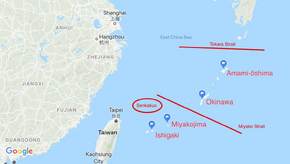
Do people on this forum understand when war breaks out then a lot of peace time agreements are out the window? Basing won’t be an issue to northern countries if they are also being overcome by Chinese aggression! We have agreements to most countries around us that will easily allow us to forward to deploy once a conflict breaks out in Taiwan. Let’s get real here!
 

StevoJH

The Bunker Group
Now if people feel that Australia needs something more than what the OPV's can really do to use for patrolling, that is fine. Have orders placed for the RAN for some sort of patrol frigate. Just keep in mind that people are once again going to want to engage in scope/mission/capability creep and the more capable one makes such a design, the more expensive it becomes.
Which is what the ANZAC class effectively started out as? And what the updated Mogami class are effectively going to be?

Tbone said:
Do people on this forum understand when war breaks out then a lot of peace time agreements are out the window? Basing won’t be an issue to northern countries if they are also being overcome by Chinese aggression! We have agreements to most countries around us that will easily allow us to forward to deploy once a conflict breaks out in Taiwan. Let’s get real here!
Lets say hypothetically that China attacked Taiwan.

Now lets say that Japan, Korea, the United States and Australia aid Taiwan in some way, shape or form. And that may *not* necessarily include supplying combat forces.

Unless China attacks them directly, what benefit would countries like Indonesia, Vietnam and Malaysia get from joining a war against China?
 

Reptilia

Well-Known Member
Richard Marles headed to Japan to talk with DM Koizumi tomorrow.
Looks like the Mogami announcement may not happen, possibly waiting for PM Takaichi who will be visiting Australia at the end of the month or early next?


-Ministry of Defense

‘Reporter:
Regarding the Japan–Australia Defense Ministers’ Meeting you mentioned earlier, Japan has been selected as a partner for the joint development of the Royal Australian Navy’s next-generation general-purpose frigates. At the meeting last December, you stated that both sides aimed to conclude the final contract by the end of March this year. Could you update us on the current status of the contract?

Minister Koizumi:
With regard to the contract for the Royal Australian Navy’s next-generation general-purpose frigates, as this involves the partner country, Australia, I would ask for your understanding that Japan cannot comment on the status before the Australian government makes an official announcement.

Once an official announcement is made by the Australian side, the Japanese side will provide an explanation at an appropriate time. In any case, this project is important for deepening Japan–Australia defense cooperation, and the Ministry of Defense will continue to work closely with the Australian Department of Defence.’
 
Top