
Royal Australian Air Force [RAAF] News, Discussions and Updates
Nope, but I’m thinking you would need a crane and it probably wouldn’t be a real quick process.…….and I’m guessing you don’t have to drive it to a port to reload it!
Two cells per launcher means 2x SM-2/6 per firing unit before you need to reload, or 8x ESSM.

Murse
Member
Which begs the question, who operates them, RAAF or Army? Being of the green persuasion, I'd advocate for Army as they can defend themselves and have recency of practice WRT GBAD and LR fires.There is more too. Any Mk 41 VLS missile is up for shooting, meaning that Tomahawk and other surface-strike missiles are a possibility. And it's not too hard to develop very good decoys for the launcher.
Now you have a launcher that can shoot air or surface targets, and no-one knows until it fires. Even then, the reload could be anything. So, for REDFOR, is that a SAM or SSM launcher? Or is it a decoy? Anything that complicates their decision making cycle is healthy - that it saves BLUEFOR on training and integration is a bonus

OldTex
Well-Known Member
Why should the Army operate a medium/long range ADS rather than the RAAF? Surely it is more in the operational domain of the RAAF, especially if the IAMD is also likely to be managed by The RAAF. A medium/long range ADS could be provided as part of the RAAF elements attached to an Australian Task Force or deployed force.Which begs the question, who operates them, RAAF or Army? Being of the green persuasion, I'd advocate for Army as they can defend themselves and have recency of practice WRT GBAD and LR fires.
Although a MRADS could also be provided to the Army using this system and relying only on the ESSMs and SM-2 (which would allow for the shorter tactical length Mk41 VLS to be utilised. Such a system would still need to be integrated into the IAMD system for the ADF.
Also if tomahawks are being fired from the same type of land based launchers that will be more likely to be again a RAAF capability (i.e. strategic strike) in the same vein as the F-111s were employed.
Last edited:
Murse
Member
In the voice of Mr Bill Lawry "yes hes got one!"Why should the Army operate a medium/long range ADS rather than the RAAF? Surely it is more in the operational domain of the RAAF, especially if the IAMD is also likely to be managed by The RAAF. A medium/long range ADS could be provided as part of the RAAF elements attached to an Australian Task Force or deployed force. Although a MRADS could also be provided to the Army using this system and relying only on the ESSMs and SM-2 (which would allow for the shorter tactical length Mk41 VLS to be utilised.
Also if tomahawks are being fired from the same type of land based launchers that will be more likely to be again a RAAF capability (i.e. strategic strike) in the same vein as the F-111s were employed.
Rationale though, is as per my post. Organic self defence (to an extent) and recency of practice. I'm sure the counter arguments will be better thought out and I'll concede that RAA operating them is not a hill I'll die on...
MRAD is for the RAAF, most likely purple in reality particularly if they choose the virtual AEGIS solution, CEAFAR and SM based effectors.In the voice of Mr Bill Lawry "yes hes got one!"
Rationale though, is as per my post. Organic self defence (to an extent) and recency of practice. I'm sure the counter arguments will be better thought out and I'll concede that RAA operating them is not a hill I'll die on...
4/5 star hotels will never be so well protected as they will be then!
Slight correction mate. Displayed with but not attached. I’d guess integration won’t take long but nit done yet or they would of slung it under a wing…don’t think it would fit in weapons bay.Yes and no. They typically use low latency network links, they usually aren't just sending it through the cloud. Active seekers mean they are less reliant for a kinetic kill in that final phase, so if that data can get them as close as possible that the munitions sensors can lock in, and send them trajectory and threats etc, then most munitions will be able to make that last loop on their own.
Some aspects like the radar and sensor fusion, there is already latency from data processing etc.
Yes, locally hosted is going to be better most of the time, but in some situations, coordinating complicated attacks with multiple munitions from multiple platforms, local means different things.
MQ28 has been seen with meteor missile attached.
Boeing, MBDA Showcase MQ-28 With Meteor Missile | Aviation Week
Boeing Defense, Space and Security CEO Steve Parker says the MQ-28, which appeared alongside MBDA Meteor missiles, is designed to quickly integrate weapons.aviationweek.com
The Germans are apparently very excited about it.

120d AIM and meteor are about the same size.Slight correction mate. Displayed with but not attached. I’d guess integration won’t take long but nit done yet or they would of slung it under a wing…don’t think it would fit in weapons bay.
I could see the appeal of this for Germany, they can build that drone locally, fire local missiles, control it with their own C3. Its already flying not just a development mule. Having something with long reach from an already long range platform opens up plenty of options.
You could see how having Globaleye or E7, and then using those long range sensors couples with mq28 to make long range kills, or have a bubble even further out of manned fighters, and they cue with their radars.

John Fedup
The Bunker Group
Some more Ghost Bat news. The ability to share a CCA is interesting.
Australian MQ-28 Ghost Bat Fighter Drones Could Be Commanded By U.S. Pilots
Australian MQ-28 Ghost Bat Fighter Drones Could Be Commanded By U.S. Pilots
The success of the MQ28 is bittersweet. It’s great to see it doing well, but by all accounts it’s yet another example of us paying a fortune to develop IP that we don’t get the benefit of the billions of dollars of offshore sales, like the E7, or Bluey for that matter.
The AGs department really needs to do a much better job of helping protect our national assets.
The AGs department really needs to do a much better job of helping protect our national assets.
Delivering new advanced missiles for Australia's Air Force
2nd pass approval for AIM-260 for RAAF.
2nd pass approval for AIM-260 for RAAF.
Yeah I read this, $736 M, price per missile is reported at @ $5.8 M USD, so 100 or so?Delivering new advanced missiles for Australia's Air Force
2nd pass approval for AIM-260 for RAAF.
Aardvark144
Active Member
Original Congressional notification was for up to 450 JTAM's, I wonder if this is the first tranch?Yeah I read this, $736 M, price per missile is reported at @ $5.8 M USD, so 100 or so?

AndyinOz
Active Member
100 or so might make sense given that there was an offer made to the Government of $3.16b including up to five (5) AIM-260 JATM Integration Test Vehicles (ITV), thirty (30) AIM-260 JATM Guided Test Vehicles (GTV) and up to four hundred fifty (450) AIM-260 Joint Advanced Tactical Missiles (JATM) Federal Register :: Request Access - https://www.govinfo.gov/content/pkg/FR-2026-03-17/pdf/2026-05140.pdf on the 17th of March this year. I remember reading somewhere Naval News perhaps that the first batch of missiles was due to for delivery 3rd quarter of 2033 I believe
I was humbled to see the Chief of the Air Force, Air Marshal Stephen Chappell, DSC, CSC, OAM strapping in for a sortie in a F/A 18 during Pitch Black, I think he must like his flying job over his office job, as Chief!
But what I really like is a boss getting his hands dirty and showing the team and not just barking orders.
Air Force Images: Search: Pitch Black
Air Force Images: All images
But what I really like is a boss getting his hands dirty and showing the team and not just barking orders.
Air Force Images: Search: Pitch Black
Air Force Images: All images
Last edited:
MARKMILES77
Well-Known Member
First low rate production order has been placed for JDAM-LR.Boeing Defence has revealed their new version of the JDAM, the JDAM-LR.
It was created by adding a Technical Directions TDI-185 turbine to the standard JDAM-ER.
The project was a collaboration between Boeing Defense and Ferra Engineering Australia.
The addition of the turbine increases the range of the standard JDAM-ER by 200 Nautical Miles,
meaning it should have a range of around 450km.
It has already been sucessfully test fired from Super Hornets.
This has to be a no brainer for manufacture in Australia as part of the GWEO.
Australia already manufactures the 500Ib bombs and Ferra makes the wing kits in Australia.
The cost is likely a fraction of the cost of a cruise missile with similiar capability such as JASSM.
View attachment 54725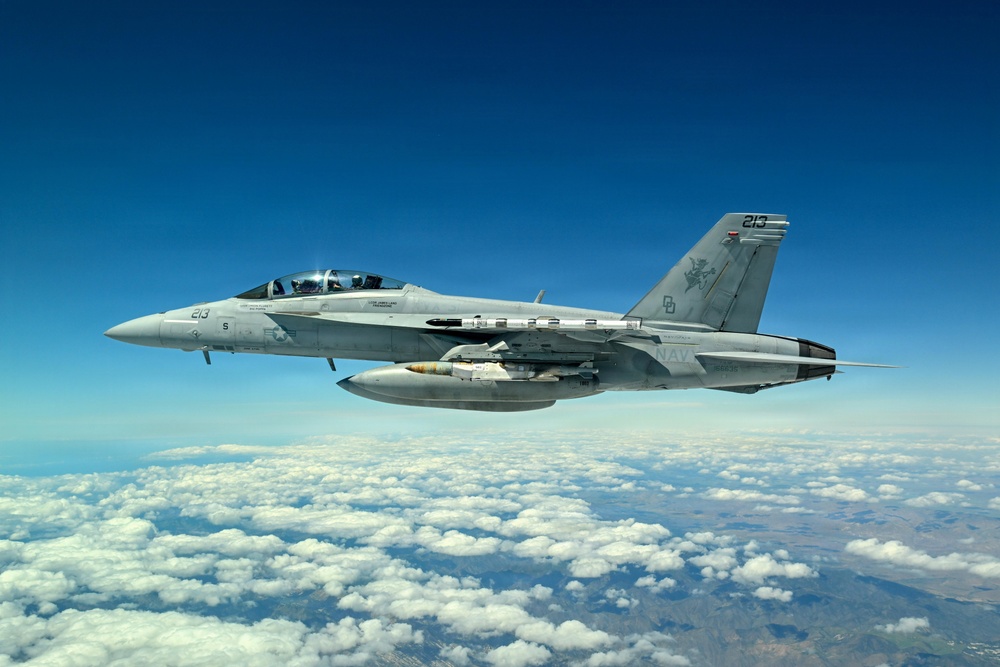
New JDAM LR capability completes successful demonstration flights; milestone achievement for long-range naval strike
The Navy recently demonstrated the new Joint Direct Attack Munition (JDAM) Long Range (LR) variant in early April, marking a significant milestone in bringing a new option for affordable, producible, standoff strike capability to the Carrier Air Wing.www.dvidshub.net
View attachment 54726
Confirmation it can be fired by any aircraft capable of delivering standard JDAMs.

Air Force greenlights long-range JDAM production
ST. CHARLES, Mo., August 5, 2026, 2026 – The U.S. Air Force has awarded Boeing [NYSE:BA] a $75 million Undefinitized Contract Action (UCA) to acquire the BSU-111/B Payload Delivery Unit (PDU)...

ThunderChunder
Member
I was once (a long time ago) skeptical Super Hornet/Growler purchase, thinking it would be a costly stop-gap, but I must say that it has really paid off dividends with integration of JATM and other weapons (like LRASM) going first onto those platforms - sometimes years ahead of other platforms. Doubly so knowing now that F-35 TR-3/Block IV development has struggled and stalled, which is a prerequisite for integration of a lot of newer weapons (and considering only a few RAAF jets are TR-3, most won't even be capable until they are converted). It has put the RAAF first in the queue on a lot of these weapons that the F-35-only countries are going to have to wait a bit to get.
As long it fits - apparently the interface is standardized for JDAM-family weapons, but it will be aircraft dependent on size/shape where it can be carried.Confirmation it can be fired by any aircraft capable of delivering standard JDAMs.
This seems like a logical next step. Jet-Powered JDAM Production Is A Go For The U.S. NavyHi AD. Also of interest as mentioned elsewhere, RAAF will be currently the only user of JDAM-ER. Which is the wing kit tested with the weapon a long long time ago in early JDAM history but never funded for field use in the U.S. A very nice extra stand-off option for the RAAF frag planners to use when needed.