
You are using an out of date browser. It may not display this or other websites correctly.
You should upgrade or use an alternative browser.
Royal Australian Air Force [RAAF] News, Discussions and Updates
Redlands18
Well-Known Member
The major problem though for the RAAF is the program is currently not due to be funded until 2028 at the earliest, so you are looking at a decision around 30-31 at the very earliest and I don’t think we can be sure of whats going to be available in 10 years time. The A400, C-2 and the KC-390 may need decent new orders for their production lines to be still open. None of our normal suppliers have currently got a program in place that will deliver a new Aircraft in that time frame.The ADF will have a lot more kit to move around over the next decade. If it could get its hands on more C-17 they would jump at the opportunity. The A400M might be about as close as the RAAF will get to a heavy lifter.
Yeah, the timing will be tricky. The USAF doesn't seem to have any plans for recapitalising its fleet in the foreseeable future. The C-130J might be a little too small. The C-390 might not be large enough either. When you look at both the A-400 and C-2 you have to wonder if their production lines will still be running by the end of the decade.
On a positive, the global market for a C-130 Plus sized airlifter will still be there.Yeah, the timing will be tricky. The USAF doesn't seem to have any plans for recapitalising its fleet in the foreseeable future. The C-130J might be a little too small. The C-390 might not be large enough either. When you look at both the A-400 and C-2 you have to wonder if their production lines will still be running by the end of the decade.
I think this market will want the A-400 and C-2 to succeed.
The former has had some challenges but as a size it ticks a lot of boxes.
As to the C-2, it has not had any international customers to date which is a same as I understand it to be a superb aircraft.
Hopefully both can achieve sales to keep production going and hopefully drive down cost.
Regards S

John Fedup
The Bunker Group
On a positive, the global market for a C-130 Plus sized airlifter will still be there.
I think this market will want the A-400 and C-2 to succeed.
The former has had some challenges but as a size it ticks a lot of boxes.
As to the C-2, it has not had any international customers to date which is a same as I understand it to be a superb aircraft.
Hopefully both can achieve sales to keep production going and hopefully drive down cost.
Regards S
An A400M with turbofans might help sales but I doubt Airbus (or partner nations) wants to invest anymore money in the program.
Don,'t get me excited, always been a fanboi of airships and can lead myself to beleve that a resurgence is just around the corner.Join the club, one minute reading expected posts next minute people want us to get C-5's?!
Hell at this point in time it would be no more costly or risky to skip the C-5 fantasy and go after one of those cargo airships that have been developed on and off since late 90's. At least some of those designs are good for 1,000+ tons cargo and longer ranges. Lol
Be happy with what we have got, not a fantasy fleet.

I like the C-2 a lot. Saw one here in Christchurch about 2 years ago and KHI didn't try to reinvent the power plants. They used American commercial jet engines, the GE CF6-80C2, which is the same engine certified for the C-5M. I think that it would make a great strategic platform for the RNZAF and a good platform for the RAAF if it was looking for something to fit between the C-17A and C-130J.On a positive, the global market for a C-130 Plus sized airlifter will still be there.
I think this market will want the A-400 and C-2 to succeed.
The former has had some challenges but as a size it ticks a lot of boxes.
As to the C-2, it has not had any international customers to date which is a same as I understand it to be a superb aircraft.
Hopefully both can achieve sales to keep production going and hopefully drive down cost.
Regards S
Like Embraer & the C-390 (Embraer's dropped the K): a standard commercial turbofan, in the C-390's case the IAE V-2500. Several thousand sold, worldwide support, & an absolutely known quantity.
Has the problem of taking on the C-130J almost head-on, though. Slightly more payload, slightly bigger cargo box, etc., but very much in the same league.
John Fedup
The Bunker Group
Like Embraer & the C-390 (Embraer's dropped the K): a standard commercial turbofan, in the C-390's case the IAE V-2500. Several thousand sold, worldwide support, & an absolutely known quantity.
Has the problem of taking on the C-130J almost head-on, though. Slightly more payload, slightly bigger cargo box, etc., but very much in the same league.
Indeed, the Herc is a touch act to follow. Still, the minor advantages along with half the number of engines to maintain could be a plus for some potential customers. The failed marketing/support agreement with Boeing was probably a letdown but given Boeing’s issues of late, maybe not so much.
The Japanese have ongoing plans for the C-2 airframe. This includes developing an airborne electronic warfare version due to enter service in the mid to late 20s.
I am pretty sure that the A-400 will remain in production until the end of the decade. There are still over 70 on order with an annual production rate of 8 or 9 units.
The C-390 has orders out to 2027. There seems to be a lot of interest from nations that probably can't really afford to buy them, but some of those sales might pan out.
The venerable old C-130 still remains in production and probably won't be going away anytime soon. I wouldn't surprise me at all if it won selection which would mean that the RAAF could eventually rack up 100 years of operating the same aircraft type. The first C-130A flew with the RAAF back in 1958.
The Japanese probably have some fairly sound strategic reasons for wanting to keep the C-2 in production. They have current plans to use that airframe in a project to replace the electronic warfare fleet. They will also need to replace their own Hercules fleet at some point.On a positive, the global market for a C-130 Plus sized airlifter will still be there.
I think this market will want the A-400 and C-2 to succeed.
The former has had some challenges but as a size it ticks a lot of boxes.
As to the C-2, it has not had any international customers to date which is a same as I understand it to be a superb aircraft.
Hopefully both can achieve sales to keep production going and hopefully drive down cost.
Regards S
I am pretty sure that the A-400 will remain in production until the end of the decade. There are still over 70 on order with an annual production rate of 8 or 9 units.
The C-390 has orders out to 2027. There seems to be a lot of interest from nations that probably can't really afford to buy them, but some of those sales might pan out.
The venerable old C-130 still remains in production and probably won't be going away anytime soon. I wouldn't surprise me at all if it won selection which would mean that the RAAF could eventually rack up 100 years of operating the same aircraft type. The first C-130A flew with the RAAF back in 1958.
An article of interest from ASPI in todays Strategist.
The history and future of the F35 and where we may head going forward.

 www.aspistrategist.org.au
Not a bad overview.
Enjoy
Regards S
The history and future of the F35 and where we may head going forward.
ASPI’s decades: Betting, fretting and getting—buying and flying the F-35 | The Strategist
ASPI celebrates its 20th anniversary this year. This series looks at ASPI’s work since its creation in August 2001. When ASPI began its work, the F-35 joint strike fighter was Australia’s biggest and most expensive ...
www.aspistrategist.org.au
Not a bad overview.
Enjoy
Regards S
We are entering interesting times as far as the next generation of combat aircraft are concerned. The USAF suggested approach of designing a new combat aircraft every 5 years and building them in smaller batches could be appealing to Australia.
When it said "additional air combat capability" in the 2020 Strategic Defence Update the language used would have been deliberate. I wouldn't automatically assume that meant we would be buying additional F-35s.
Yes but then aren't you just hanging on the US waiting for a break through and their recent history as been short on delivery on defence platforms. So what if you decide Ok ....we bring it forward and we do something every 5 years and then the US come up with a DUD or go back to the drawing board or come up with something brilliant that isn't in step with Australis requirements. Or they decide on small batches which keeps costs high....You need a Crystal Ball, Tea Leave's and will have to get Uri Gellar and Doris Stokes back from the grave to get this right.We are entering interesting times as far as the next generation of combat aircraft are concerned. The USAF suggested approach of designing a new combat aircraft every 5 years and building them in smaller batches could be appealing to Australia.
When it said "additional air combat capability" in the 2020 Strategic Defence Update the language used would have been deliberate. I wouldn't automatically assume that meant we would be buying additional F-35s.
Right now as a betting man ...would you take this bet for $100 ... 1. RAAF and AU Gov make a decision, 2. The US will invite us in, 3. actually deliver an aircraft in 5 years, 4. that meets Australia's requirements and 5. be able to supply it in a squadron quantity 6. at a cost we can afford 7. in a time frame that suits. I'd be amazed if all of the above happens. We might get past step 1 there in about 5 years.
Every 5 years is a major stretch. Back in the days when it was all mechanical and cheap and quick to develop the prop aircraft ie: anything WW2 and before yea not a worries but these days not a chance.
With development time frames even if everything is going right they would still be having 3+ different programs developing new aircraft and another building current batch.
That's just asking for trouble, be no less risky to design and build something domestically by ourselves.
If the US truly goes that way I think we may end up looking towards Europe for our next combat jets.
Actually I wouldn't be so quick to dismiss the idea. IIRC the idea is to design using modern computer technology and build a virtual aircraft down to the last rivet. This way some of the testing etc., can be completed before the aircraft is built. The second point is that all of the components would be MOTS and COTS with upgrades in technology proven before they are incorporated into a design. If for example you want to use a new engine, then it must be working and successfully passed a series of test points before it's considered. So that cuts down the delays and cost overruns.Every 5 years is a major stretch. Back in the days when it was all mechanical and cheap and quick to develop the prop aircraft ie: anything WW2 and before yea not a worries but these days not a chance.
With development time frames even if everything is going right they would still be having 3+ different programs developing new aircraft and another building current batch.
That's just asking for trouble, be no less risky to design and build something domestically by ourselves.
If the US truly goes that way I think we may end up looking towards Europe for our next combat jets.
John Fedup
The Bunker Group
Actually I wouldn't be so quick to dismiss the idea. IIRC the idea is to design using modern computer technology and build a virtual aircraft down to the last rivet. This way some of the testing etc., can be completed before the aircraft is built. The second point is that all of the components would be MOTS and COTS with upgrades in technology proven before they are incorporated into a design. If for example you want to use a new engine, then it must be working and successfully passed a series of test points before it's considered. So that cuts down the delays and cost overruns.
Sounds good and if the first jet can be successfully delivered in this time frame then it would be proof of concept. The next question would the time interval. Would the advantages of a new design with new technology acquired in 5 years be worth it or should production on a new design last longer, say 10 years?
Well if I recall correctly the requirements were first out laid for FA-XX around 2008. A request for information was put out around 2013 so you can surmise that even if they have a plane in production by 2025 this will be a 15 year exercise. Think about how long it takes to build the supply chains? Sure some MOTs items but it’s a new plane and I’m sure there will be no compromise to shoe horn existing sensors and weapons systems … so fitting existing kit fmight be a stretch in some cases.
if a genuine position is a new design every 5 years then they should be well advanced on the 2030 edition and by working on the 2035 design ASAP.
I personally think it will be a design that can grow with and designed to take advancing technologies from the outset.
No it's not the FA-XX from back then. This is something new put forward IIRC by the USAF CAF in 2019. He wants to get away from the one size fits all mentality and go back to the century series from the 1950s / 60s where you have multiple contractors building aircraft with some in specialised roles, such as A2A or ground attack etc. It simplifies things, makes it affordable, and they're able to get from the drawing board into air force service within five years because they aren't introducing a plane load of new technologies.Well if I recall correctly the requirements were first out laid for FA-XX around 2008. A request for information was put out around 2013 so you can surmise that even if they have a plane in production by 2025 this will be a 15 year exercise. Think about how long it takes to build the supply chains? Sure some MOTs items but it’s a new plane and I’m sure there will be no compromise to shoe horn existing sensors and weapons systems … so fitting existing kit fmight be a stretch in some cases.
if a genuine position is a new design every 5 years then they should be well advanced on the 2030 edition and by working on the 2035 design ASAP.
I personally think it will be a design that can grow with and designed to take advancing technologies from the outset.
EDIT:
I erred in some details. It was Will Roper the then Deputy Acquisition Secretary of the USAF. The following is from the article linked below.
Instead of maturing technologies over time to create an exquisite fighter, the Air Force’s goal would be to quickly build the best fighter that industry can muster over a couple years, integrating whatever emerging technology exists. The service would downselect, put a small number of aircraft under contract and then restart another round of competition among fighter manufacturers, which would revise their fighter designs and explore newer leaps in technology.
The result would be a networked family of fighters — some more interrelated than others — developed to meet specific requirements and including best-in-breed technologies aboard a single airframe. One jet might be optimized around a revolutionary capability, like an airborne laser. Another fighter might prioritize state-of-the-art sensors and include artificial intelligence. One might be an unmanned weapons truck.
But the point, Roper said, is that instead of trying to hone requirements to meet an unknown threat 25 years into the future, the Air Force would rapidly churn out aircraft with new technologies — a tactic that could impose uncertainty on near-peer competitors like Russia and China and force them to deal with the U.S. military on its own terms.
Imagine “every four or five years there was the F-200, F-201, F-202 and it was vague and mysterious [on what the planes] have, but it’s clear it’s a real program and there are real airplanes flying. Well now you have to figure out: What are we bringing to the fight? What improved? How certain are you that you’ve got the best airplane to win?” Roper wondered.
“How do you deal with a threat if you don’t know what the future technology is? Be the threat — always have a new airplane coming out.”
- Put at least two manufacturers on contract to design a fighter jet. These could include the existing companies capable of building combat aircraft — Boeing, Lockheed Martin and Northrop Grumman — as well as new entrants that could bring a unique technology to the table.
- Have each company create a hyper-realistic “digital twin” of its fighter design using advanced 3D modeling. Use those models to run myriad simulations of how production and sustainment could occur, hypothetically optimizing both and reducing cost and labor hours.
- Award a contract to a single fighter manufacturer for an initial batch of aircraft. Roper said that industry could build about a squadron’s worth of airplanes per year, or about 24 aircraft. Include options in the contract for additional batches of aircraft. Air Combat Command leadership has told Roper that 72 aircraft — about the number of aircraft in a typical Air Force wing — would be a viable amount for normal operations.
- While that vendor begins production, restart the competition, putting other companies on contract to begin designing the next aircraft.
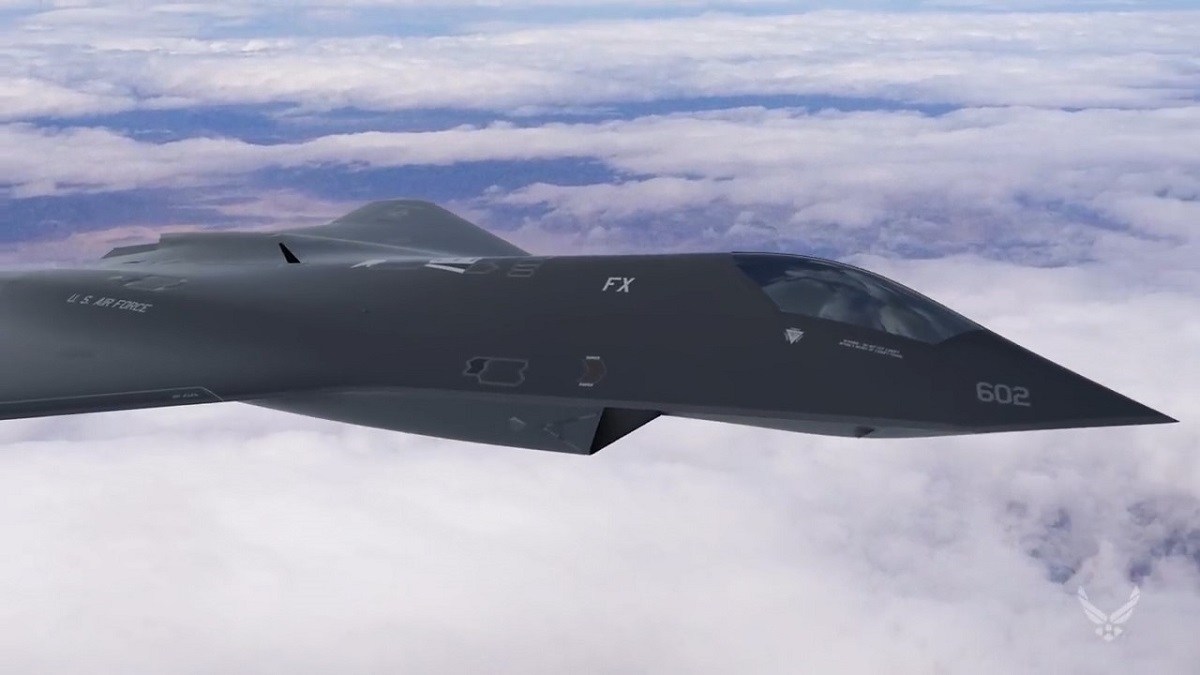
The US Air Force’s radical plan for a future fighter could field a jet in 5 years
The U.S. Air Force is seeking rapid-fire plane production as it tries to surpass the capabilities of near-peer competitors like Russia and China.
 www.defensenews.com
So you can see his idea is quite different, radical but has a good possibility of success.
Last edited:
John Fedup
The Bunker Group
No it's not the FA-XX from back then. This is something new put forward IIRC by the USAF CAF in 2019. He wants to get away from the one size fits all mentality and go back to the century series from the 1950s / 60s where you have multiple contractors building aircraft with some in specialised roles, such as A2A or ground attack etc. It simplifies things, makes it affordable, and they're able to get from the drawing board into air force service within five years because they aren't introducing a plane load of new technologies.
One concern however is the loss of numerous military aviation companies from the 1950s-1970s due to mergers and being starved to bankruptcy by diminishing project opportunities. Are some of smaller players willing to venture into this concept or will the few large players just force their way in and inflate costs?
Five years maybe pushing it but I think the point is that it won't be a twenty year development cycle. It may also open up the opportunity to customise an aircraft design while at the same time managing the risk. The air force often just goes with a MOTS design that doesn't necessarily meet all of its requirements. Now the possibility exists to at least allow it to customise a design in the virtual world before committing to a buy.