JAXA and Japanese space programs

A very remarkable project.
Japan plans a 2023 launch of the world's first satellite made out of wood.
Awesome solution if something can be developed with organic materials like wood.
A very remarkable project.
Japan plans a 2023 launch of the world's first satellite made out of wood.
Wood debris in space travelling at 15-20k mph doesn’t address the high speed collision dangers and likely does little about reflection screwing with earth based telescope image acquisition. Wasn’t aware about the alumina contamination issue in the upper atmosphere.
 
Today 2021-03-22, the ELSA-d was launched from Baikonur. The ELSA-d is a spacecraft from the Japanese Astroscale, headquartered in Tokyo, and it is created to demonstrate how to handle with space debris.

 
Today 2021-03-22, the ELSA-d was launched from Baikonur. The ELSA-d is a spacecraft from the Japanese Astroscale, headquartered in Tokyo, and it is created to demonstrate how to handle with space debris.

A good idea and important for future space operations. I wonder about the relative ratio of magnetic/non-magnetic junk up there?
 
An engine being developed for use in the Epsilon S small rocket went up in flames Tuesday during a combustion test at a facility in southwestern Japan. The Epsilon S is an upgraded version of the normal/current Epsilon.

JAXA also uses the H-IIA rockets as medium lift launch vehicles.


Last year something similar happened.
 
Last edited:
A very remarkable project.
Japan plans a 2023 launch of the world's first satellite made out of wood.
Update about the Worlds' first wooden satellite created by Sumitomo Forestry and Kyoto University.

It also has a name now: Lignosat.
 
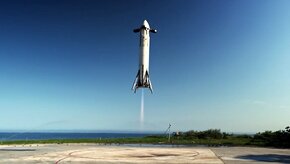
Thank you for sharing, it is impressive that Honde developed this independently. Also the way the landing legs/struts extend is different with the rockets from Space X.
Here is a video from Honda's Youtube channel.
 
The European-Japanese BepiColombo spacecraft has entered the arrival phase with the separation of the Mercury Transfer Module (MTM) from the spacecraft stack on 3 September 2026. The composite spacecraft will enter orbit around Mercury on 21 November 2026, and MPO and Mio will separate from each other on 9–10 December 2026. The mission’s science phase is set to begin in April 2027.
https://youtube.com/shorts/LbQ46zVgKtA?si=FCvkZu0HCVeh56rK

More details at Latest updates: BepiColombo's arrival at Mercury
 
The MMX is a robotic space probe set for launch tomorrow on 20 October 2026 around 4:00 in the morning Japanese/East Indonesian time. Next year the spacecraft will enter orbit around Mars before transferring to Phobos, where it will land once or twice and collect regolith samples using a pneumatic sampling system. The mission is designed to return at least 10 grams of material from the moon's surface. After departing Phobos, the spacecraft will conduct several flybys of Deimos before releasing a return capsule for Earth, with sample return planned for 2031.

MMX - Martian Moons eXploration
 
Back
Top