Royal Australian Navy Discussions and Updates 2.0

ADMk2

Just a bloke
Staff member
Verified Defense Pro
Can a cradle be fitted for heavyweight torpedoes ?
Pat Conroy and chief of Anduril Australia said “lightweight torpedoes and heavy weight torpedoes”.

He didn’t mention type, numbers or method of firing for any of those things.

The weapons bay is entirely modular, so what we have seen so far is only “some” of it’s capabilities. If RAN is introducing a new type of operational torpedo I am sure we will hear about it in due course, but for the moment I am going to assume by “heavy weight” he meant a Mk.48 torpedo and by “light weight” torpedoes he meant Mk.54 (because they are American and in-service with RAN, though there is nothing to say they haven’t integrated MU-90).


And finally, torpedoes and effectors. Ghost Shark’s large payload bays also support the deployment of heavyweight and lightweight torpedoes, including modern, unmanned, cost-effective, undersea effectors, and the vehicle will be capable of engaging threats independently. This only happens with an engineering approach that supports it. Anduril’s open system architecture means new payloads can be integrated quickly as they develop and mature over time, ensuring that Ghost Shark’s potency is always at the cutting edge and at least one step ahead of the emerging threats.
So if as mentioned a Ghostshark is capable of deploying a pair of heavyweight torpedoes, then perhaps a pair of anti-ship missiles might also be a capability it can deploy at some future point, as mentioned by Markmiles77.

How this is to be deployed, hasn’t been revealed, the initial 3 payloads - sea mines, logistics caches and ISR / strike via Anduril Altius UAS are the “initial” operational capability.

Additional capability drops will undoubtedly be revealed over time.

@StingrayOZ both Anduril and Pat Conroy have confirmed the platform is capable of deploying and employing both lightweight torpedoes and heavyweight torpedoes. This is a capability that has not yet been delivered, but it is coming. ASM’s / land attack cruise missiles may well too. If it can manage multiple Mk.48 Mod 7 ADCAP, then it could handle a missile all the way up to Tomahawk TLAM from a size / weight POV…

One might question whether a pair of torpedoes or a pair of Tomahawks was worth the effort?

Well, what if you deployed 20 or 30 of these to a single operation? Or 50? Would that be worth the effort? Could an SSN or a Hunter perhaps control up to 50x Ghostsharks on a single deployment? Maybe…


We are buying “dozens and dozens” of these afterall. I don’t think the “rule of 3” applies so well to this capability…
 
Last edited:

Reptilia

Well-Known Member
The Australian.


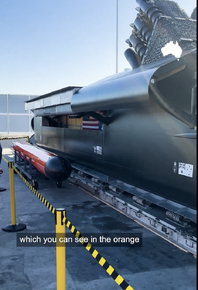
shows the extended ghost shark with multiple modules.
altius + mk48 or copperhead 500 torps.
 

hauritz

Well-Known Member
I think there are legal and ethical cociderations as well. Loitering weapons are less problematic than torps or missiles. In the case of loitering munitions such as drones there is the possibility of a human overseeing its deployment. Sea Mines are controlled through conventions. You are required to record where you lay those mines and warn friendly shipping. After the conflict has ended you are required to clear those mines.

Torpedoes and missiles are a different category of weapon. You might get away with missiles if you can surface and establish communication before you launch. I notice from the video of the Altius launch, an antenna and what I think might have been a satellite dish deployed first. Torpedos might still be a step too far.
 

spoz

The Bunker Group
Verified Defense Pro
Perhaps some of the members here with some naval experience could provide an answer to the new frigates are stated as for escort roles ,but Mogami,s and Hunter class have different A.S.W more so that the Hunter being designed to be accoustically quiet even against waves so its sensors are not getting outside background noise when searching for submarines ,if in an escort role with the near by ships noise will this lessen the effectiveness of the Hunter class in this role . Would it be fair to suggest these two designs of ships will operate differently in the escort role
To some extent radiated noise from nearby shipping does have an effect on sonar capability. However, invariably the ships being escorted will be noisier, and closer to you that other escorts. Further, while Mogami will be noisier than Hunter, she does have some quieting features and also has a significant ASW capability of her own.

There are techniques in ASW under the general heading of ”multi statics” which allow two or more sonars, potentially on two or more platforms, to effectively share information and improve on the capability of one on its own. Such techniques are particularly effective when the sonars concerned are not in the same hull. I have no doubt a mixed Hunter/Mogami force would employ those.
 
Last edited:

StevoJH

The Bunker Group
To some extent radiated noise from nearby shipping does have an effect on sonar capability. However, invariably the ships being escorted will be noisier, and closer to you that other escorts. Further, while Mogami will be noisier than Hunter, she does have some quieting features and also has a significant ASW capability of her own.

There are techniques in ASW under the general heading of ”multi statics” which allow two or more sonars, potentially on two or more platforms, to effectively share information and improve on the capability of one on its own. Such techniques are particularly effective when the sonars concerned are not in the same hull. I have no doubt a mixed Hunter/Mogami force would employ those.
Which I believe is how bluebottle is supposed to work.

I do wonder at what point the hydrophone array becomes small enough that it lacks the sensitivity required to discriminate a target effectively. You can only process the data that you collect.
 

SammyC

Well-Known Member
Pat Conroy and chief of Anduril Australia said “lightweight torpedoes and heavy weight torpedoes”.

He didn’t mention type, numbers or method of firing for any of those things.

The weapons bay is entirely modular, so what we have seen so far is only “some” of it’s capabilities. If RAN is introducing a new type of operational torpedo I am sure we will hear about it in due course, but for the moment I am going to assume by “heavy weight” he meant a Mk.48 torpedo and by “light weight” torpedoes he meant Mk.54 (because they are American and in-service with RAN, though there is nothing to say they haven’t integrated MU-90).


So if as mentioned a Ghostshark is capable of deploying a pair of heavyweight torpedoes, then perhaps a pair of anti-ship missiles might also be a capability it can deploy at some future point, as mentioned by Markmiles77.

How this is to be deployed, hasn’t been revealed, the initial 3 payloads - sea mines, logistics caches and ISR / strike via Anduril Altius UAS are the “initial” operational capability.

Additional capability drops will undoubtedly be revealed over time.

@StingrayOZ both Anduril and Pat Conroy have confirmed the platform is capable of deploying and employing both lightweight torpedoes and heavyweight torpedoes. This is a capability that has not yet been delivered, but it is coming. ASM’s / land attack cruise missiles may well too. If it can manage multiple Mk.48 Mod 7 ADCAP, then it could handle a missile all the way up to Tomahawk TLAM from a size / weight POV…

One might question whether a pair of torpedoes or a pair of Tomahawks was worth the effort?

Well, what if you deployed 20 or 30 of these to a single operation? Or 50? Would that be worth the effort? Could an SSN or a Hunter perhaps control up to 50x Ghostsharks on a single deployment? Maybe…


We are buying “dozens and dozens” of these afterall. I don’t think the “rule of 3” applies so well to this capability…
I would agree that the "rule of three" principle with drones, is one that quickly becomes obsolete.

I would view that drone strategy rapidly moves to managing scores of drones across upwards of a 1000kms. It is the only way to properly create an asymetric force of capability.

I'll note that while we are building a drone fleet in the dozens, so are our future enemies. The asymetric capability will not last long. It pushes to larger and larger drone fleets that have more and more autonomy to maintain this edge. With the upgrade cycle becomming quicker and quicker.

I'll also note that while the Mk48s and Mk54s are probably the first torpedo integration solutions for the ghost shark, as we have them, these are expensive and in small inventory numbers. Its not the medium or long term solution.

Drones like the ghost shark are going to need to be the shield against an enemy fleet of similar drones (all armed), and a Mk48 is an inappropriate option for that task. Keep the Mk48s for the crewed capital ships, and develop a mass produced lower cost torpedo for the anti undersea drone defence. This will in short time become a necessity.
 

SammyC

Well-Known Member
The Australian.


shows the extended ghost shark with multiple modules.
altius + mk48 or copperhead 500 torps.
That is some very interesting video of the launching systems. It looks like a single ghost shark could be fitted with the 24 Altius 600s and a pair of torpedos as a combined module. That's a decent payload.

Air launched missiles like the NSM or Tomahawk might be more difficult as the rocket exhaust will need to be safely vented without melting the drone.

It would be interesting to see what sea state the ghost shark can air launch payloads. These videos are all done in mill pond flat conditions.
 

SammyC

Well-Known Member
I think there are legal and ethical cociderations as well. Loitering weapons are less problematic than torps or missiles. In the case of loitering munitions such as drones there is the possibility of a human overseeing its deployment. Sea Mines are controlled through conventions. You are required to record where you lay those mines and warn friendly shipping. After the conflict has ended you are required to clear those mines.

Torpedoes and missiles are a different category of weapon. You might get away with missiles if you can surface and establish communication before you launch. I notice from the video of the Altius launch, an antenna and what I think might have been a satellite dish deployed first. Torpedos might still be a step too far.
I think we are going to fairly quickly cross this Rubicon River. Ukraine os already past this point.

Our adversiaries are going to do it, meaning we will be at a disadvantage if we don't.

I would view that we will be talking about autonomous drone hunters with the capability to attack at will being in service within the next couple of years.

The focus becomes less how a drone receives an order to launch an individual weapon, and more how it self manages rules of engagement and its capability to descriminate targets from non targets.
 
Last edited:

MARKMILES77

Well-Known Member
The Australian.


shows the extended ghost shark with multiple modules.
altius + mk48 or copperhead 500 torps.
Very interesting video.
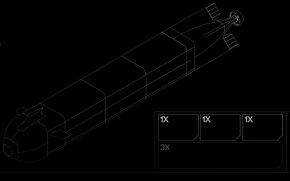
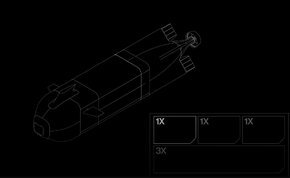
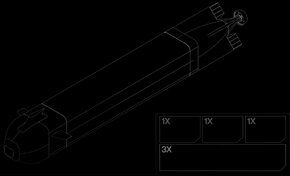
Confirms that Ghost Shark can carry multiple Mission Modules.
So VERY long objects can be carried in the mission bay.
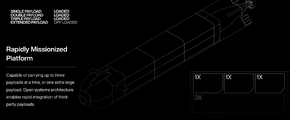
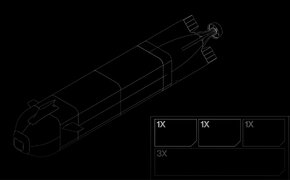
To me it looks like the twin Altius launchers only occupy a single Module.
So you don't get a maximum of 2 X 12 Altius UAVs i.e. 24.
With 3 Modules fitted you get 6 Altius launchers with 72 UAVs.
Screenshot 2026-10-24 at 12.32.29.pngScreenshot 2025-09-13 at 20.26.54.png
 

MARKMILES77

Well-Known Member
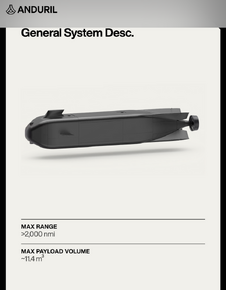
Also note on Anduril's website there is now a guide as to Ghost Shark's range, which I don't think has been revealed before.
Screenshot 2026-10-23 at 13.50.05.png
With the ability to carry three mission modules, likely possible to carry one module with a payload, say 2 Altius launchers and the other two modules with extra batteries, giving a vastly longer range! How long? Impossible to say but probably a multiple of 2000 nmi.
This capability just looks more and more impressive.
 
Last edited:

Reptilia

Well-Known Member
Also note on Anduril's website there is now a guide as to Ghost Shark's range, which I don't think has been revealed before.
View attachment 55869
With the ability to carry three mission modules, likely possible to carry one module with a payload, say 2 Altius launchers and the other two modules with extra batteries, giving a vastly longer range! How long? Impossible to say but probably a multiple of 2000 nmi.
This capability just looks more and more impressive.
 

Attachments

iambuzzard

Well-Known Member
That is some very interesting video of the launching systems. It looks like a single ghost shark could be fitted with the 24 Altius 600s and a pair of torpedos as a combined module. That's a decent payload.

Air launched missiles like the NSM or Tomahawk might be more difficult as the rocket exhaust will need to be safely vented without melting the drone.

It would be interesting to see what sea state the ghost shark can air launch payloads. These videos are all done in mill pond flat conditions.
Is there any missile similar to NSM or Tomahawk that could be cold launched? The RN have surface to air that are cold launched.
 

iambuzzard

Well-Known Member
Very interesting video.
Confirms that Ghost Shark can carry multiple Mission Modules.
So VERY long objects can be carried in the mission bay.
To me it looks like the twin Altius launchers only occupy a single Module.
So you don't get a maximum of 2 X 12 Altius UAVs i.e. 24.
With 3 Modules fitted you get 6 Altius launchers with 72 UAVs.
View attachment 55867View attachment 55868
Note the US flag.
 

seaspear

Well-Known Member
Re extra batteries increasing range does the added power give it the possibility to increase speed for short duration? previously a top spedd given of seven knots ,it would seem to have to be waiting for target to come to it making it harder to intercept before launching , is there a consideration for the vessel to be carried on manned submarines for deployment
 

SammyC

Well-Known Member
Re extra batteries increasing range does the added power give it the possibility to increase speed for short duration? previously a top spedd given of seven knots ,it would seem to have to be waiting for target to come to it making it harder to intercept before launching , is there a consideration for the vessel to be carried on manned submarines for deployment
I think, given the shape of its hull and size of its propellor, that ghost shark is pretty much at its hull speed regardless of battery size.

It would be designed for either shore launching or launching from an offshore supply platform with a heave crane. I don't think it will ever be carried into theatre by a crewed submarine or surface ship. Its too big for that. Speartooth is intended for that purpose.

Ghost shark would not be used for high speed interception. It will be used for area denial or covalent penetration behind enemy lines. A bunch of ghost sharks could spread out over a region, and jointly cover it for anything that comes through.

Ships also move very slowly, with days worth of notice before one enters a region that we want to protect. Plently of time to manoeuvre to cover.
 

StevoJH

The Bunker Group
I wouldn't have thought hull speed would have been a thing when operating submerged? Wetted surface would be though.

These things are probably more like a mobile minefield or mobile sensor platform than anything else?

I don't think these things have a way to recharge the batteries while on task, so I doubt they are going to be sprinting anywhere except in an emergency bad enough that the RAN are willing to expend the platform.
 

Reptilia

Well-Known Member
Civmec Q+A


23/10/2026

‘Q3. With Civmec Defence Industries being a core segment:

i) What is the outlook like after the OPV program completion by 2028/29?

Company Answer:
The SEA 1180 Arafura Class Offshore Patrol Vessel programme remains the central focus for Civmec Defence Industries (CDI). Since CDI assumed the role of prime contractor on 1 July 2025, HMAS Eyre has been delivered and commissioned, NUSHIP Pilbara has been launched as the first vessel built in Western Australia, and the remaining vessels are progressing through construction at Henderson. Shipbuilding activity for the OPV programme continues to progress well at Henderson, with all four remaining vessels under construction: NUSHIP Pilbara (OPV 3), NUSHIP Gippsland (OPV 4), NUSHIP Illawarra (OPV 5) and NUSHIP Carpentaria (OPV 6). The Group sees CDI’s role continuing well beyond the build phase. The Australian Government’s 2026 National Defence Strategy, released in April 2026, re-committed to all six Arafura Class vessels. It also added A$1.0 to A$1.5 billion of funding over ten years, primarily directed at sustainment. As builder and prime contractor, CDI holds the design knowledge, engineering systems, skilled workforce and Henderson infrastructure to support the class through its service life. Civmec has also put forward an Arafura Capability Enhancement concept to enhance the vessels’ capability. The National Defence Strategy also confirmed a A$25 billion funding envelope for the Henderson Defence Precinct. On 24 August 2026, the Western Australian and Commonwealth Governments jointly confirmed the zone allocation for the Precinct, where Civmec is headquartered. Under the confirmed plan, defence expansion activity will be located to the north of Civmecs Henderson facility, including shipbuilding and sustainment and nuclear-powered submarine sustainment. The area immediately in front of the facility has been allocated to non-defence industry. This outcome allows Civmec to continue operating across all of its sectors from Henderson with minimal interference to its operations. It also leavethe Group well positioned to pursue opportunities in the build and development programmes associated with the Precinct. Civmec looks forward to further detail on the scope and timing of the planned investment, and continues to engage with the Commonwealth and the State on additional defence contracts and naval programmes.

ii) What is the company strategy for CDI in the long term?

Company Answer:
The Board’s long-term objective is for CDI to be an enduring Australian sovereign shipbuilder and prime defence contractor, not a single-programme business. The acquisition of Luerssen Australia brought a skilled naval shipbuilding workforce and established engineering and training systems. It also gave Civmec full ownership of the operations, assets and licences required to contract directly with the Commonwealth.
CDI’s strategy focuses on three areas:

-through-life support and capability enhancement of the Arafura Class including any international opportunities;
-pursuing future naval shipbuilding and sustainment programmes at Henderson;
-applying the Group’s broader heavy engineering, fabrication and construction capability to defence infrastructure.
Defence complements Civmec’s resources, energy and infrastructure businesses. It provides a long-duration, structurally growing revenue stream that supports the Group’s diversification strategy.


Q4. With Austal being now the strategic shipbuilder for the LCM, LCH contracts, what are the odds and options now of CDI being able to participate in the Mogami frigates local orders build which is expecting to start in 2030 in WA?

Company Answer:
Civmec acknowledges the Commonwealth’s Strategic Shipbuilding Agreement with Austal and its role as Strategic Shipbuilder at Henderson.
The Group does not comment on the likelihood of securing any particular contract. However, it believes Civmec and CDI are well placed to contribute to the upgraded Mogami class frigate programme and to the broader continuous naval shipbuilding enterprise at Henderson.
Globally, successful naval shipbuilding is delivered through precincts, where large integrated shipyards are supported by co-located specialist industry. This model concentrates capability, workforce and infrastructure in one location, allowing prime shipbuilders to draw on specialist fabrication, engineering and maintenance capacity alongside them. The Henderson Defence Precinct is being developed on this model, and Civmec’s established facilities, capability and location within the Precinct position it to play an important role as part of that industrial base.
The local build of the frigates represents a significant increase in naval shipbuilding activity in Western Australia. Delivering a programme of this
scale will require a broad and capable local industrial base. Civmec offers a combination of capabilities that is unique within the Henderson precinct:

-large-scale undercover fabrication and assembly facilities;
-heavy engineering, structural, mechanical and piping capability;
-an established naval shipbuilding workforce and quality systems, proven through the Arafura Class programme;
-CDI’s experience as a prime defence contractor.

Potential avenues for participation include fabrication and outfitting of hull blocks, modules and major structures, as well as supply-chain and specialist manufacturing scopes. They also include sustainment activity and the construction of the precinct infrastructure required to support the
programme. Civmec continues to engage with the Commonwealth, the State and othermindustry participants. The Group will pursue opportunities where its capabilities can add value to the programme and deliver appropriate returns for shareholders.


Q5. With Henderson defence precinct boundary now defined:

i) What are the kind of expected specific opportunities that Civmec is capable to bid on to be part of the infrastructure build out for the defence precinct?

Company Answer:
As outlined in our response to Q3, the confirmed zone allocation CIvmec well positioned to pursue opportunities in the Precinct’s build and development programmes. The Commonwealth has indicated that the

Precinct will include:
-construction facilities for shipbuilding and sustainment;
-support infrastructure for submarines and surface combatants;
-contingency docking capability for Australia’s future nuclear-powered submarines;
-depot-level maintenance facilities;
-construction of alternative common user facilities.

Delivering this infrastructure will involve substantial marine and civil works, piling and structural concrete, and heavy structural steel fabrication and
erection. It will also involve structural, mechanical and piping, and electrical and instrumentation installation, along with modular construction. These are core Civmec capabilities that the Group delivers routinely for major resources, energy and infrastructure clients. Civmec’s location within the Precinct and its large-scale fabrication facilities at Henderson are further advantages. The Group expects to pursue packages across both the construction of Precinct infrastructure and the fabrication of major structures. It will also look at the ongoing maintenance and support of Precinct facilities once they are operational. Civmec will assess each opportunity on its merits, consistent with its disciplined approach to tendering.

ii) What are the kind of engagements that Civmec are having with Bechtel in the master planning stage?

Company Answer:
Bechtel Infrastructure Australia has been appointed by the Commonwealth to develop the master plan for the Henderson Defence Precinct, working
with Defence, the Western Australian Government and industry. Bechtel’s engagement is with the Commonwealth and is not through Civmec.
As a long-standing operator within the Australian Marine Complex, Civmec participates in stakeholder engagement on the Precinct’s development,
including with the Commonwealth, the State and the master planning team. The Group’s focus in these engagements is on ensuring the Precinct’s
design supports continuity of operations for existing industry. It also seeks to make Civmec’s capabilities and facilities known as planning progresses. CIvmec does not comment on the detail of these discussions. The Group looks forward to further information on the scope, staging and procurement approach for the Precinct as master planning is completed.

iii) What are the potential impacts to your non defence businesses with expected high

Company Answer:
The Group’s primary focus is workforce. As a Registered Training Organisation, Civmec trains and upskills its people in-house. It maintains a substantial apprenticeship and graduate programme and continues to invest in recruitment to secure the skilled workforce needed for current and
future projects. The Group is also broadening its recruitment channels to support growth. Civmec continues to work with the Commonwealth and the State on transitional and logistics arrangements as the Precinct develops, so that existing operations can continue to be delivered efficiently. The Group’s regional facilities in Newcastle, Gladstone and Port Hedland give it additional capacity and flexibility to allocate work across its network where appropriate.’

 

SammyC

Well-Known Member
I wouldn't have thought hull speed would have been a thing when operating submerged? Wetted surface would be though.

These things are probably more like a mobile minefield or mobile sensor platform than anything else?

I don't think these things have a way to recharge the batteries while on task, so I doubt they are going to be sprinting anywhere except in an emergency bad enough that the RAN are willing to expend the platform.
Yea OK, wrong term to use, however drag will be a problem for a hull of this shape. It's shape is not made to be speedy.

From what I've read they don't have any internal recharging, however that would either be a large fuel tank or a trickle charge solar panel. Neither would be advantageous.

I would have thought however a ghost shark could be picked up by an offshore supply platform near its station, recharged on a flat deck cradle, given a scrub and then plonked back in a few hours later. If it had a payload then this could also be replenished or swapped at the same time.

A small number of such vessels could easily keep a large fleet of ghost sharks permanently on patrol
 
Last edited:

SammyC

Well-Known Member
Civmec Q+A


23/10/2026

‘Q3. With Civmec Defence Industries being a core segment:

i) What is the outlook like after the OPV program completion by 2028/29?

Company Answer:
The SEA 1180 Arafura Class Offshore Patrol Vessel programme remains the central focus for Civmec Defence Industries (CDI). Since CDI assumed the role of prime contractor on 1 July 2025, HMAS Eyre has been delivered and commissioned, NUSHIP Pilbara has been launched as the first vessel built in Western Australia, and the remaining vessels are progressing through construction at Henderson. Shipbuilding activity for the OPV programme continues to progress well at Henderson, with all four remaining vessels under construction: NUSHIP Pilbara (OPV 3), NUSHIP Gippsland (OPV 4), NUSHIP Illawarra (OPV 5) and NUSHIP Carpentaria (OPV 6). The Group sees CDI’s role continuing well beyond the build phase. The Australian Government’s 2026 National Defence Strategy, released in April 2026, re-committed to all six Arafura Class vessels. It also added A$1.0 to A$1.5 billion of funding over ten years, primarily directed at sustainment. As builder and prime contractor, CDI holds the design knowledge, engineering systems, skilled workforce and Henderson infrastructure to support the class through its service life. Civmec has also put forward an Arafura Capability Enhancement concept to enhance the vessels’ capability. The National Defence Strategy also confirmed a A$25 billion funding envelope for the Henderson Defence Precinct. On 24 August 2026, the Western Australian and Commonwealth Governments jointly confirmed the zone allocation for the Precinct, where Civmec is headquartered. Under the confirmed plan, defence expansion activity will be located to the north of Civmecs Henderson facility, including shipbuilding and sustainment and nuclear-powered submarine sustainment. The area immediately in front of the facility has been allocated to non-defence industry. This outcome allows Civmec to continue operating across all of its sectors from Henderson with minimal interference to its operations. It also leavethe Group well positioned to pursue opportunities in the build and development programmes associated with the Precinct. Civmec looks forward to further detail on the scope and timing of the planned investment, and continues to engage with the Commonwealth and the State on additional defence contracts and naval programmes.

ii) What is the company strategy for CDI in the long term?

Company Answer:
The Board’s long-term objective is for CDI to be an enduring Australian sovereign shipbuilder and prime defence contractor, not a single-programme business. The acquisition of Luerssen Australia brought a skilled naval shipbuilding workforce and established engineering and training systems. It also gave Civmec full ownership of the operations, assets and licences required to contract directly with the Commonwealth.
CDI’s strategy focuses on three areas:

-through-life support and capability enhancement of the Arafura Class including any international opportunities;
-pursuing future naval shipbuilding and sustainment programmes at Henderson;
-applying the Group’s broader heavy engineering, fabrication and construction capability to defence infrastructure.
Defence complements Civmec’s resources, energy and infrastructure businesses. It provides a long-duration, structurally growing revenue stream that supports the Group’s diversification strategy.


Q4. With Austal being now the strategic shipbuilder for the LCM, LCH contracts, what are the odds and options now of CDI being able to participate in the Mogami frigates local orders build which is expecting to start in 2030 in WA?

Company Answer:
Civmec acknowledges the Commonwealth’s Strategic Shipbuilding Agreement with Austal and its role as Strategic Shipbuilder at Henderson.
The Group does not comment on the likelihood of securing any particular contract. However, it believes Civmec and CDI are well placed to contribute to the upgraded Mogami class frigate programme and to the broader continuous naval shipbuilding enterprise at Henderson.
Globally, successful naval shipbuilding is delivered through precincts, where large integrated shipyards are supported by co-located specialist industry. This model concentrates capability, workforce and infrastructure in one location, allowing prime shipbuilders to draw on specialist fabrication, engineering and maintenance capacity alongside them. The Henderson Defence Precinct is being developed on this model, and Civmec’s established facilities, capability and location within the Precinct position it to play an important role as part of that industrial base.
The local build of the frigates represents a significant increase in naval shipbuilding activity in Western Australia. Delivering a programme of this
scale will require a broad and capable local industrial base. Civmec offers a combination of capabilities that is unique within the Henderson precinct:

-large-scale undercover fabrication and assembly facilities;
-heavy engineering, structural, mechanical and piping capability;
-an established naval shipbuilding workforce and quality systems, proven through the Arafura Class programme;
-CDI’s experience as a prime defence contractor.

Potential avenues for participation include fabrication and outfitting of hull blocks, modules and major structures, as well as supply-chain and specialist manufacturing scopes. They also include sustainment activity and the construction of the precinct infrastructure required to support the
programme. Civmec continues to engage with the Commonwealth, the State and othermindustry participants. The Group will pursue opportunities where its capabilities can add value to the programme and deliver appropriate returns for shareholders.


Q5. With Henderson defence precinct boundary now defined:

i) What are the kind of expected specific opportunities that Civmec is capable to bid on to be part of the infrastructure build out for the defence precinct?

Company Answer:
As outlined in our response to Q3, the confirmed zone allocation CIvmec well positioned to pursue opportunities in the Precinct’s build and development programmes. The Commonwealth has indicated that the

Precinct will include:
-construction facilities for shipbuilding and sustainment;
-support infrastructure for submarines and surface combatants;
-contingency docking capability for Australia’s future nuclear-powered submarines;
-depot-level maintenance facilities;
-construction of alternative common user facilities.

Delivering this infrastructure will involve substantial marine and civil works, piling and structural concrete, and heavy structural steel fabrication and
erection. It will also involve structural, mechanical and piping, and electrical and instrumentation installation, along with modular construction. These are core Civmec capabilities that the Group delivers routinely for major resources, energy and infrastructure clients. Civmec’s location within the Precinct and its large-scale fabrication facilities at Henderson are further advantages. The Group expects to pursue packages across both the construction of Precinct infrastructure and the fabrication of major structures. It will also look at the ongoing maintenance and support of Precinct facilities once they are operational. Civmec will assess each opportunity on its merits, consistent with its disciplined approach to tendering.

ii) What are the kind of engagements that Civmec are having with Bechtel in the master planning stage?

Company Answer:
Bechtel Infrastructure Australia has been appointed by the Commonwealth to develop the master plan for the Henderson Defence Precinct, working
with Defence, the Western Australian Government and industry. Bechtel’s engagement is with the Commonwealth and is not through Civmec.
As a long-standing operator within the Australian Marine Complex, Civmec participates in stakeholder engagement on the Precinct’s development,
including with the Commonwealth, the State and the master planning team. The Group’s focus in these engagements is on ensuring the Precinct’s
design supports continuity of operations for existing industry. It also seeks to make Civmec’s capabilities and facilities known as planning progresses. CIvmec does not comment on the detail of these discussions. The Group looks forward to further information on the scope, staging and procurement approach for the Precinct as master planning is completed.

iii) What are the potential impacts to your non defence businesses with expected high

Company Answer:
The Group’s primary focus is workforce. As a Registered Training Organisation, Civmec trains and upskills its people in-house. It maintains a substantial apprenticeship and graduate programme and continues to invest in recruitment to secure the skilled workforce needed for current and
future projects. The Group is also broadening its recruitment channels to support growth. Civmec continues to work with the Commonwealth and the State on transitional and logistics arrangements as the Precinct develops, so that existing operations can continue to be delivered efficiently. The Group’s regional facilities in Newcastle, Gladstone and Port Hedland give it additional capacity and flexibility to allocate work across its network where appropriate.’
So they will aim to pick up some subcontracted work on the upcoming builds and be part of the yard construction. Probably suits them nicely.
 

Murse

Member
Civmec Q+A


23/10/2026

‘Q3. With Civmec Defence Industries being a core segment:

i) What is the outlook like after the OPV program completion by 2028/29?

Company Answer:
The SEA 1180 Arafura Class Offshore Patrol Vessel programme remains the central focus for Civmec Defence Industries (CDI). Since CDI assumed the role of prime contractor on 1 July 2025, HMAS Eyre has been delivered and commissioned, NUSHIP Pilbara has been launched as the first vessel built in Western Australia, and the remaining vessels are progressing through construction at Henderson. Shipbuilding activity for the OPV programme continues to progress well at Henderson, with all four remaining vessels under construction: NUSHIP Pilbara (OPV 3), NUSHIP Gippsland (OPV 4), NUSHIP Illawarra (OPV 5) and NUSHIP Carpentaria (OPV 6). The Group sees CDI’s role continuing well beyond the build phase. The Australian Government’s 2026 National Defence Strategy, released in April 2026, re-committed to all six Arafura Class vessels. It also added A$1.0 to A$1.5 billion of funding over ten years, primarily directed at sustainment. As builder and prime contractor, CDI holds the design knowledge, engineering systems, skilled workforce and Henderson infrastructure to support the class through its service life. Civmec has also put forward an Arafura Capability Enhancement concept to enhance the vessels’ capability. The National Defence Strategy also confirmed a A$25 billion funding envelope for the Henderson Defence Precinct. On 24 August 2026, the Western Australian and Commonwealth Governments jointly confirmed the zone allocation for the Precinct, where Civmec is headquartered. Under the confirmed plan, defence expansion activity will be located to the north of Civmecs Henderson facility, including shipbuilding and sustainment and nuclear-powered submarine sustainment. The area immediately in front of the facility has been allocated to non-defence industry. This outcome allows Civmec to continue operating across all of its sectors from Henderson with minimal interference to its operations. It also leavethe Group well positioned to pursue opportunities in the build and development programmes associated with the Precinct. Civmec looks forward to further detail on the scope and timing of the planned investment, and continues to engage with the Commonwealth and the State on additional defence contracts and naval programmes.

ii) What is the company strategy for CDI in the long term?

Company Answer:
The Board’s long-term objective is for CDI to be an enduring Australian sovereign shipbuilder and prime defence contractor, not a single-programme business. The acquisition of Luerssen Australia brought a skilled naval shipbuilding workforce and established engineering and training systems. It also gave Civmec full ownership of the operations, assets and licences required to contract directly with the Commonwealth.
CDI’s strategy focuses on three areas:

-through-life support and capability enhancement of the Arafura Class including any international opportunities;
-pursuing future naval shipbuilding and sustainment programmes at Henderson;
-applying the Group’s broader heavy engineering, fabrication and construction capability to defence infrastructure.
Defence complements Civmec’s resources, energy and infrastructure businesses. It provides a long-duration, structurally growing revenue stream that supports the Group’s diversification strategy.


Q4. With Austal being now the strategic shipbuilder for the LCM, LCH contracts, what are the odds and options now of CDI being able to participate in the Mogami frigates local orders build which is expecting to start in 2030 in WA?

Company Answer:
Civmec acknowledges the Commonwealth’s Strategic Shipbuilding Agreement with Austal and its role as Strategic Shipbuilder at Henderson.
The Group does not comment on the likelihood of securing any particular contract. However, it believes Civmec and CDI are well placed to contribute to the upgraded Mogami class frigate programme and to the broader continuous naval shipbuilding enterprise at Henderson.
Globally, successful naval shipbuilding is delivered through precincts, where large integrated shipyards are supported by co-located specialist industry. This model concentrates capability, workforce and infrastructure in one location, allowing prime shipbuilders to draw on specialist fabrication, engineering and maintenance capacity alongside them. The Henderson Defence Precinct is being developed on this model, and Civmec’s established facilities, capability and location within the Precinct position it to play an important role as part of that industrial base.
The local build of the frigates represents a significant increase in naval shipbuilding activity in Western Australia. Delivering a programme of this
scale will require a broad and capable local industrial base. Civmec offers a combination of capabilities that is unique within the Henderson precinct:

-large-scale undercover fabrication and assembly facilities;
-heavy engineering, structural, mechanical and piping capability;
-an established naval shipbuilding workforce and quality systems, proven through the Arafura Class programme;
-CDI’s experience as a prime defence contractor.

Potential avenues for participation include fabrication and outfitting of hull blocks, modules and major structures, as well as supply-chain and specialist manufacturing scopes. They also include sustainment activity and the construction of the precinct infrastructure required to support the
programme. Civmec continues to engage with the Commonwealth, the State and othermindustry participants. The Group will pursue opportunities where its capabilities can add value to the programme and deliver appropriate returns for shareholders.


Q5. With Henderson defence precinct boundary now defined:

i) What are the kind of expected specific opportunities that Civmec is capable to bid on to be part of the infrastructure build out for the defence precinct?

Company Answer:
As outlined in our response to Q3, the confirmed zone allocation CIvmec well positioned to pursue opportunities in the Precinct’s build and development programmes. The Commonwealth has indicated that the

Precinct will include:
-construction facilities for shipbuilding and sustainment;
-support infrastructure for submarines and surface combatants;
-contingency docking capability for Australia’s future nuclear-powered submarines;
-depot-level maintenance facilities;
-construction of alternative common user facilities.

Delivering this infrastructure will involve substantial marine and civil works, piling and structural concrete, and heavy structural steel fabrication and
erection. It will also involve structural, mechanical and piping, and electrical and instrumentation installation, along with modular construction. These are core Civmec capabilities that the Group delivers routinely for major resources, energy and infrastructure clients. Civmec’s location within the Precinct and its large-scale fabrication facilities at Henderson are further advantages. The Group expects to pursue packages across both the construction of Precinct infrastructure and the fabrication of major structures. It will also look at the ongoing maintenance and support of Precinct facilities once they are operational. Civmec will assess each opportunity on its merits, consistent with its disciplined approach to tendering.

ii) What are the kind of engagements that Civmec are having with Bechtel in the master planning stage?

Company Answer:
Bechtel Infrastructure Australia has been appointed by the Commonwealth to develop the master plan for the Henderson Defence Precinct, working
with Defence, the Western Australian Government and industry. Bechtel’s engagement is with the Commonwealth and is not through Civmec.
As a long-standing operator within the Australian Marine Complex, Civmec participates in stakeholder engagement on the Precinct’s development,
including with the Commonwealth, the State and the master planning team. The Group’s focus in these engagements is on ensuring the Precinct’s
design supports continuity of operations for existing industry. It also seeks to make Civmec’s capabilities and facilities known as planning progresses. CIvmec does not comment on the detail of these discussions. The Group looks forward to further information on the scope, staging and procurement approach for the Precinct as master planning is completed.

iii) What are the potential impacts to your non defence businesses with expected high

Company Answer:
The Group’s primary focus is workforce. As a Registered Training Organisation, Civmec trains and upskills its people in-house. It maintains a substantial apprenticeship and graduate programme and continues to invest in recruitment to secure the skilled workforce needed for current and
future projects. The Group is also broadening its recruitment channels to support growth. Civmec continues to work with the Commonwealth and the State on transitional and logistics arrangements as the Precinct develops, so that existing operations can continue to be delivered efficiently. The Group’s regional facilities in Newcastle, Gladstone and Port Hedland give it additional capacity and flexibility to allocate work across its network where appropriate.’
My gut feeling was that they should have got the Mogami contract based on their Arafura class build experience.

What could they build? Hunter-class blocks to speed that mess up?
 
Top