Japanese Maritime Self Defense Force Thread

Musashi_kenshin

Well-Known Member
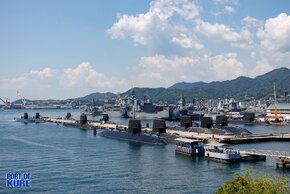
Seems like a risky concentration of essential naval defence kit at a single location. Must be 40-50% of Japan's submarine force?
What do you mean? Most countries have only a few submarine bases.

As for the way the submarines are berthed, why would you assume Japan would arrange them that way in time of war or even if war were deemed likely?

Look Kure up on a map. It's very well defended geographically. No way to approach via sea without detection because it's on the Inland Sea, and any attacking airforce would have to cross and recross land several times, with lots of places to base air defences and mountains in the way.

As for ultra long range munitions, they'd have to be fired from such extreme ranges they'd be fairly easy to intercept.

The only way to reliably take out the Kure base is with a nuclear weapon, in which case the loss of a few submarines would be the least concern.
 

John Fedup

The Bunker Group
What do you mean? Most countries have only a few submarine bases.

As for the way the submarines are berthed, why would you assume Japan would arrange them that way in time of war or even if war were deemed likely?

Look Kure up on a map. It's very well defended geographically. No way to approach via sea without detection because it's on the Inland Sea, and any attacking airforce would have to cross and recross land several times, with lots of places to base air defences and mountains in the way.

As for ultra long range munitions, they'd have to be fired from such extreme ranges they'd be fairly easy to intercept.

The only way to reliably take out the Kure base is with a nuclear weapon, in which case the loss of a few submarines would be the least concern.
Black Sea events show the risk. Just ask the Russians. No idea about the Kure base but I still think too many eggs in the basket sucks.
 

Musashi_kenshin

Well-Known Member
Black Sea events show the risk. Just ask the Russians. No idea about the Kure base but I still think too many eggs in the basket sucks.
John, come on, you know full well the Black Sea is an enclosed sea and that it's easy for Ukraine to attack Russian targets there because of the short distances between Ukrainian bases and Russian targets. It couldn't be further from the situation Japan is in.

Look at Kure on Google Maps. Would take you 60 seconds.
 

Sandhi Yudha

Well-Known Member
Both are actually right, on one hand many navies keep their (submarine) fleet centered at one or a small amount of bases. On the other hand, in the unlikely scenario of a surprise attack from china, the JMSDF will be in troubles if such a large amount of important assets will be instantly destroyed. These days a Pearl Harbour style of surprise attack will be very hard to execute, but luckily the political situation is now not that worrying as in 1941.
 

swerve

Super Moderator
Black Sea events show the risk. Just ask the Russians. No idea about the Kure base but I still think too many eggs in the basket sucks.
Black Sea is totally different. It's 400,000 sq km of open water, with Ukraine having a coastline on it. Russia has no control over access to it. Ukrainians can launch USVs into it directly from their own coast. They can also fire missiles directly, as when they sank Moskva, & launch drones directly, to fly over open water & attack Russian ports.

The Sea of Azov is surrounded by Russian-controlled territory & has a narrow entrance, but Ukrainian-controlled territory isn't much more than 100km away. Hitting ships in it isn't difficult. Ukraine's done it mostly with drones, I think.

The Seto Sea is just 23000 sq km, with three narrow entrances & many islands. There are bridges across it, via islands. I've seen the biggest. To get to Kure one has to pass through at least two narrow passages, either the Kanmon strait between Honshu & Kyushu (<1km in places, bridged, & very busy, with cities on both sides), or, more realistically, the Hōyo Strait (14 km & deep), & then one of a few narrow channels through a chain of islands. The biggest one is ca. 3km, & is the main shipping channel. Approaching from the east is worse: under three bridges.

The JMSDF has proven itself to be rather good at tracking submarines. Chinese submarines have tried to sneak through some of the channels between Ryukyu islands & been tracked all the way. Japan has a sophisticated SOSUS system.

Missiles or drones would have to fly a long way including over at least one of the Japanese main islands, through Japan's air defence system.
 

Sandhi Yudha

Well-Known Member
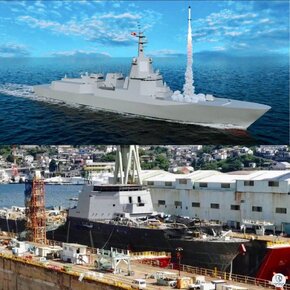
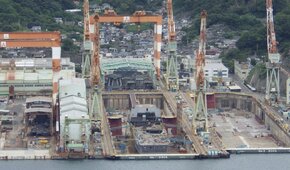
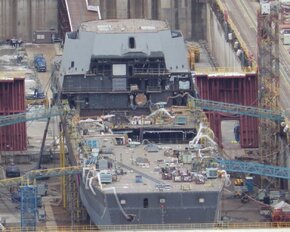
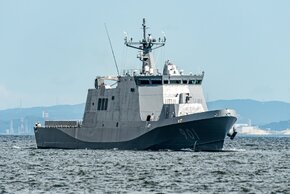
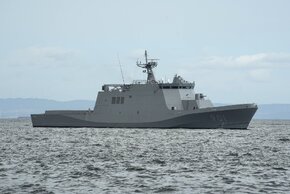
Japan Marine United have just completed four days of sea trials on there new Offshore Patrol Vessel lead ship Sakura.

And here pictured in Yokohama harbour.

View attachment 55478

View attachment 55479
|"Amidst the rising tensions over the Senkaku Islands and to replace older vessels such as the Hayabusa-class patrol boats, in 2022, the Japan Maritime Self-Defense Force launched the Next-Generation Offshore Patrol Vessel (OPV) program. Construction of the Sakura-class began as part of the program in 2023, and from March 2026 the first four ships have been launched."|

The new Sakura class design has the size of a corvette, but the Hayabusa-class patrolvessels, which it supposed to replace, have a far more superior armament.

Maybe there was more emphasis given to range/endurance, the helicopterdeck and hangar.
 

Musashi_kenshin

Well-Known Member
The new Sakura class design has the size of a corvette, but the Hayabusa-class patrolvessels, which it supposed to replace, have a far more superior armament.

Maybe there was more emphasis given to range/endurance, the helicopterdeck and hangar.
The Sakura class are OPVs, which are usually lightly armed as they're not designed for peer-to-peer warfare. There's no reason to put anti-ship missiles on them, because then they'd also need AA defences. That said they are designed with container modules in mind, so they can form other tasks in principle.
 

Ananda

The Bunker Group


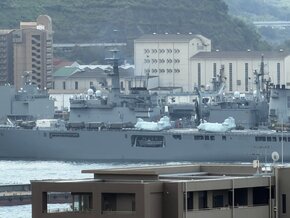
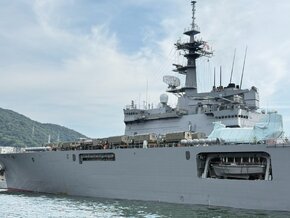
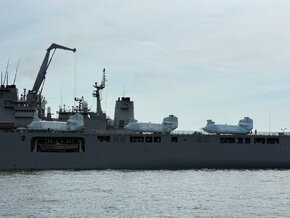
JS Kunisaki already arrive in West Kalimantan. The plan that by 12th they are begin operation on helping handling forest fire.

Add

Chinook already ready on board JS Kunisaki.
 
Last edited:

JudgeKing

New Member
The Japanese government is considering whether it should potentially acquiring nuclear submarines in its revision of the National Security Strategy, National Defense Strategy and Defense Buildup Program.

Japan’s Defense Minister: Nuclear-Powered Submarines Will Not Be Ruled Out
Japan’s Defense Minister Shinjiro Koizumi said Tokyo will not rule out nuclear-powered submarines as it considers future defense capabilities, marking another step in Japan’s growing debate over whether to acquire SSNs.
Speaking at a press conference on September 11, Koizumi was asked about reports that a U.S. Navy official had expressed a positive view of Japan potentially acquiring nuclear-powered submarines. While declining to comment directly on individual media reports, Koizumi said the option would be considered as part of the government’s planned revision of Japan’s three key national security documents: the National Security Strategy, National Defense Strategy and Defense Buildup Program. The three documents are expected to be revised by year-end.
“As I have said before, in the course of revising the three documents, we will consider all options without ruling anything out,”
“Of course, we will also proceed with our consideration without ruling out nuclear-powered submarines as an option.”

Japan’s Defense Minister Shinjiro Koizumi
Koizumi stressed that no decision had been made and that the government was not working toward a predetermined conclusion.

Asked about the strategic advantages of nuclear-powered submarines and the challenges Japan would face if it decided to acquire them, Koizumi offered one of his most detailed public assessments of SSNs to date. Speaking in general terms, he said nuclear-powered submarines can remain submerged for long periods, conduct extended operations, and are said to be capable of speeds several times higher than those of conventionally powered submarines.

“These characteristics make it possible to conduct the required activities while ensuring a higher level of safety for the crew,” Koizumi said.

At the same time, he acknowledged significant disadvantages. He said nuclear-powered submarines are said to be less quiet underwater than conventionally powered submarines. He also cited the high cost of nuclear propulsion systems, the need for larger hulls, and the specialized technical expertise required to operate, maintain, and service nuclear propulsion plants.

“In an increasingly rapidly changing security environment across various fields, we will examine the measures necessary to improve deterrence and response capabilities without ruling out any options,” Koizumi said.

U.S. Navy Official Voices Support for Japan Considering SSNs

Koizumi’s remarks came two days after a U.S. Navy official reportedly expressed a positive view of Japan considering nuclear-powered submarines.

The unnamed U.S. Navy official spoke to Japanese, South Korean, and other Asia-Pacific journalists at Joint Base Pearl Harbor-Hickam in Hawaii on September 9.

According to Japanese media reports, when asked whether Japan should consider acquiring nuclear-powered submarines, the official responded positively, pointing out that Japan operates nuclear power plants and possesses relevant nuclear technology. The same official also drew attention in South Korea by saying Seoul needed a “valid reason” for acquiring nuclear-powered submarines and warning against pursuing them merely as a “status symbol.”

Japan currently operates only conventionally powered diesel-electric submarines, but the debate over nuclear propulsion has accelerated over the past year.


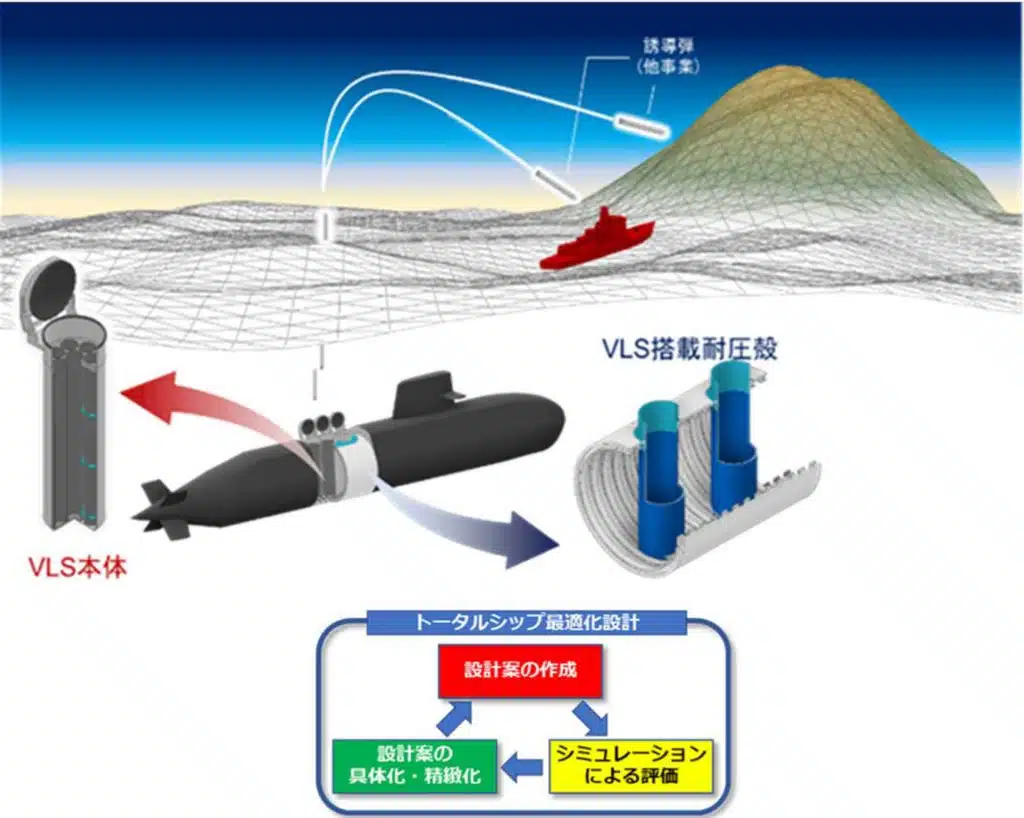
In September 2025, a Japanese Ministry of Defense expert panel recommended examining “next-generation propulsion systems” for future submarines equipped with vertical launch systems (VLS) capable of carrying long-range missiles. The panel emphasized the need for submarines capable of remaining submerged for long periods and operating over extended distances.

Koizumi himself pushed the debate further in November 2025, following U.S. President Donald Trump’s approval for South Korea to pursue nuclear-powered submarines.

“There are new developments, and all the countries around us are acquiring nuclear submarines,” Koizumi said at the time. He argued that Japan’s increasingly severe security environment required a fundamental debate over whether future submarines should continue using diesel-electric propulsion or move toward nuclear power.

Former Defense Minister Gen Nakatani went further later that month, saying Japan’s next-generation submarine would “eventually need nuclear propulsion.”

In January 2026, JMSDF Chief of Staff Adm. Akira Saito also acknowledged the operational advantages of SSNs, saying their long submerged endurance and high speed could provide a significant improvement in tactical capability.

Major obstacles remain, however. Nuclear-powered submarines would be far more expensive than Japan’s current conventional boats and would require an entirely new infrastructure for naval nuclear propulsion, including reactor maintenance, nuclear fuel management, and specialized personnel. There are also legal and political questions. Japan’s Atomic Energy Basic Act restricts the use of nuclear energy to peaceful purposes, raising longstanding questions about the compatibility of nuclear-powered warships with the existing legal framework.

Koizumi’s September 11 remarks do not mean Japan has decided to acquire SSNs. But his explicit statement that nuclear-powered submarines will not be excluded from consideration, combined with his detailed public assessment of their advantages and disadvantages, suggests that the issue is moving from a largely theoretical debate toward a concrete defense policy discussion.

[/QUOTE]
 

John Fedup

The Bunker Group
The Japanese government is considering whether it should potentially acquiring nuclear submarines in its revision of the National Security Strategy, National Defense Strategy and Defense Buildup Program.

Japan’s Defense Minister: Nuclear-Powered Submarines Will Not Be Ruled Out
[/QUOTE]
Just a matter of time and SKorea will also. After that, WMD may be next for both countries albeit a tougher goal for Japan. WMD development will be dependent on how much further relations deteriorate with NK (especially) and China.
 
Top