
Sattifarhan
New Member
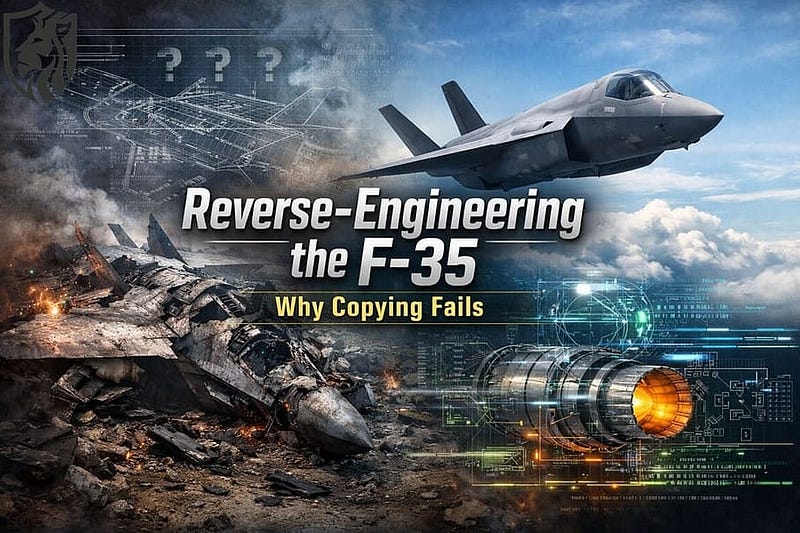
Reverse-Engineering the F-35: Why Copying Fails
Modern defense folklore loves the “found a wreck, built a copy” story. However, the F-35 Lightning II punishes that fantasy. Even a largely intact airframe would not hand you a working fifth-generation fighter. It would hand you a long, expensive lesson in manufacturing science, secure software, and industrial discipline.
If a state ever tried to reverse-engineer the F-35, it would face a problem set that grows more complex the deeper you look. The aircraft is not one secret. It is thousands of small, interacting advantages—many of them process-driven, not shape-driven.
Crash Wreckage Isn’t a Blueprint
A damaged aircraft tells you what exists, not how to reproduce it. In practice, “how” is the real weapon: material batches, curing cycles, tolerances, adhesives, edge treatments, thermal pathways, and inspection standards. Moreover, the F-35 program keeps evolving, so a recovered jet may represent an older baseline while the operator moves on. For more scholarly articles like these, visit Defense News Today.
Stealth Needs Materials, Not Just Shape
RAM, Composites & Edge Control
The F-35’s low observability depends on its external shaping and its surface treatment. Radar-absorbent materials (RAM) typically involve polymer matrices with tailored fillers and layered application. That means you can measure thickness, but you cannot easily infer the formulation or the manufacturing method.
Even small deviations can raise radar returns or degrade durability. Just as importantly, stealth lives in the seams: fasteners, panel edges, apertures, and maintenance access points. Therefore, copying the outline without replicating the finish risks building a jet that looks stealthy but behaves like a conventional aircraft on radar.
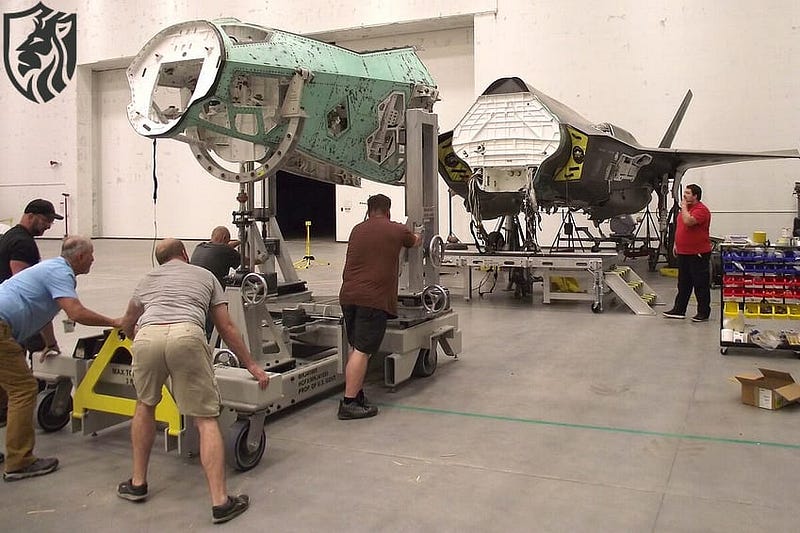
The Jet Is Software-Defined
Millions of Lines, Locked Systems
The F-35 runs on an enormous software stack that governs sensors, displays, weapons employment, electronic warfare, and health monitoring. Public reporting places the codebase at more than 8 million lines. That figure matters because software isn’t a part you can copy with calipers. You need architecture, test harnesses, safety certification, and threat libraries. Most of this code is encrypted and booby-trapped and can self-delete under tampering.
Moreover, secure avionics environments use strong encryption, key management, and controlled loading procedures. So, even if you cloned the boxes, you still must replicate the trusted ecosystem around them. Trying to reverse-engineer the F-35 without source access would force you to rebuild decades of avionics engineering and integration culture—then prove it in flight test.
Supply Chains Enable Capability
DIY Fails on Custom Electronics
The F-35 is not assembled from catalog parts. It draws on a sprawling, tightly managed supplier base—Lockheed Martin cites 1,650 suppliers across the program. That scale is not just procurement trivia. It reflects specialized manufacturing, quality controls, and restricted components.
A would-be copier must reproduce:
Even if one lab prototype successfully flies, maintaining a fleet becomes the next challenge. As a result, “copying” turns into building a national industrial base for fifth-gen production from scratch.
- Low-probability-of-intercept/low-probability-of-detection communications characteristics (often via protected waveforms and cryptography)
- Sensors and apertures are specifically designed to maintain low observability.
- The system allows for repeatable production with tight tolerances and at high volumes.
F135: A Metallurgy Test You Can’t Rush
Power, Heat & Durability
At the center sits the Pratt & Whitney F135 engine, commonly described as producing 40,000+ pounds of thrust. High thrust is only the headline. The real challenge is surviving turbine temperatures, managing thermal loads, and delivering reliability across thousands of cycles. Furthermore, the F-35B’s STOVL system adds lift fan integration and a vectoring rear nozzle arrangement.
That pushes engineering into materials, bearings, coatings, and control laws that only mature after extensive testing. In short, copying an engine is not copying a shape. It is mastering superalloys, single-crystal blades, advanced coatings, precision casting, and quality assurance at scale.
Sensor Fusion: The Hidden Edge
Sensors Need Fusion to Matter
The F-35’s combat edge comes from how it combines information. It blends radar returns, electro-optical data, electronic support measures, and offboard inputs into a coherent picture. Lockheed Martin describes the F-35’s advanced sensor fusion as automatically merging sensor data into relevant pilot information. For example, the AN/AAQ-37 Distributed Aperture System uses six IR sensors to provide spherical coverage and supports missile warning and tracking.
Yet the key is not “six sensors.” It is timing, correlation, track management, user interface design, and threat-library integration. Therefore, a copier might replicate sensor hardware and still field a jet where displays lag, tracks disagree, and pilots fight the cockpit instead of the enemy.
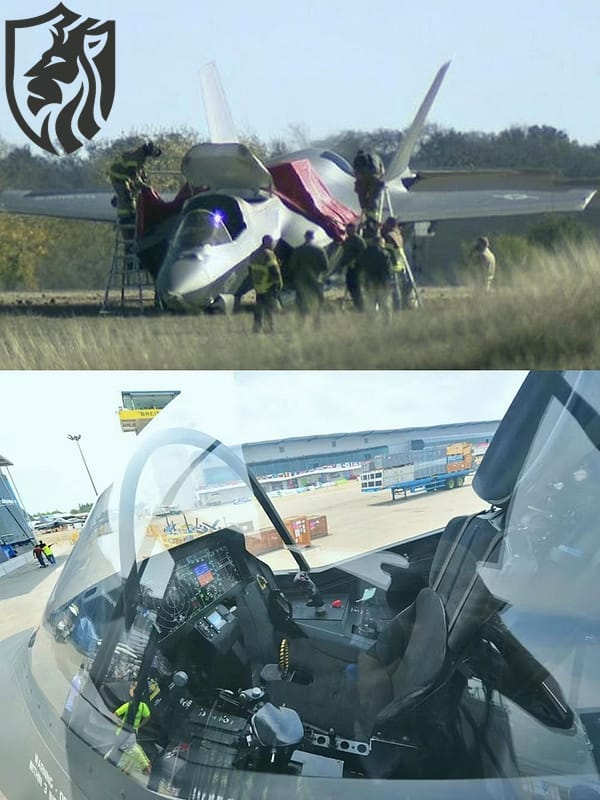
Data Matters as Much as Hardware
The F-35 also ties capability to logistics and data pipelines. The program moved from ALIS towards ODIN to modernize sustainment workflows and reduce burden. Moreover, the jet’s mission effectiveness depends on regularly updated mission data files and threat characterization. Those libraries are hard to steal, harder to validate, and easiest to get wrong. A mis-tuned electronic warfare library can turn “stealth” into “found.”
F-35 vs J-35: Why the “Copy” Story Persists
People often call China’s J-35 a stolen F-35, but that claim is too tidy. Yes, many observers believe espionage and leaked know-how can speed up development. However, a stealth fighter is not a shape you trace from a photograph. The F-35’s advantage sits in hard-to-copy processes: radar-absorbent coatings, composite layups, tight edge tolerances, and secure mission software.
Those pieces take years of testing to mature. The J-35 also follows the FC-31 family and uses two engines with no VTOL support, which points to different design trade-offs. So, even if outside data helped, it would not hand China a ready-made F-35 equivalent. However, the Chinese J-35 and its defense products stand their own ground, as seen during Operation Sindoor when Chinese flagship assets were pitched against Europe’s finest.
Time & Money Are the Real Barriers
The F-35 took 25+ years to develop into today’s operational system, and the U.S. Government Accountability Office notes DoD estimates of nearly $1.7 trillion to buy, operate, and sustain the aircraft and systems over their lifetime. Other watchdog reporting has also warned the lifetime total could exceed $2 trillion under certain assumptions and longer service life. That is why reverse-engineering the F-35 is such a punishing proposition: the attempt consumes the same scarce resources needed to build the next generation.
Conclusion
Reverse-engineering an F-35 isn’t like cloning an old MiG or tinkering with a commercial drone. It’s closer to an expensive act of self-sabotage—soaking up budgets, triggering painful dead ends, and exposing how big the capability gap really is.
Copying an F-35 also isn’t “theft with a shortcut.” You’d have to rebuild an entire ecosystem: advanced materials and coatings, tightly secured software, years of flight testing, specialized suppliers, sustainment and spares pipelines, and a steady cadence of upgrades. In practice, most countries could spend decades on the effort and still end up with a limited, fragile look-alike rather than a true peer.
References